Madame Camus by Degas, Edgar
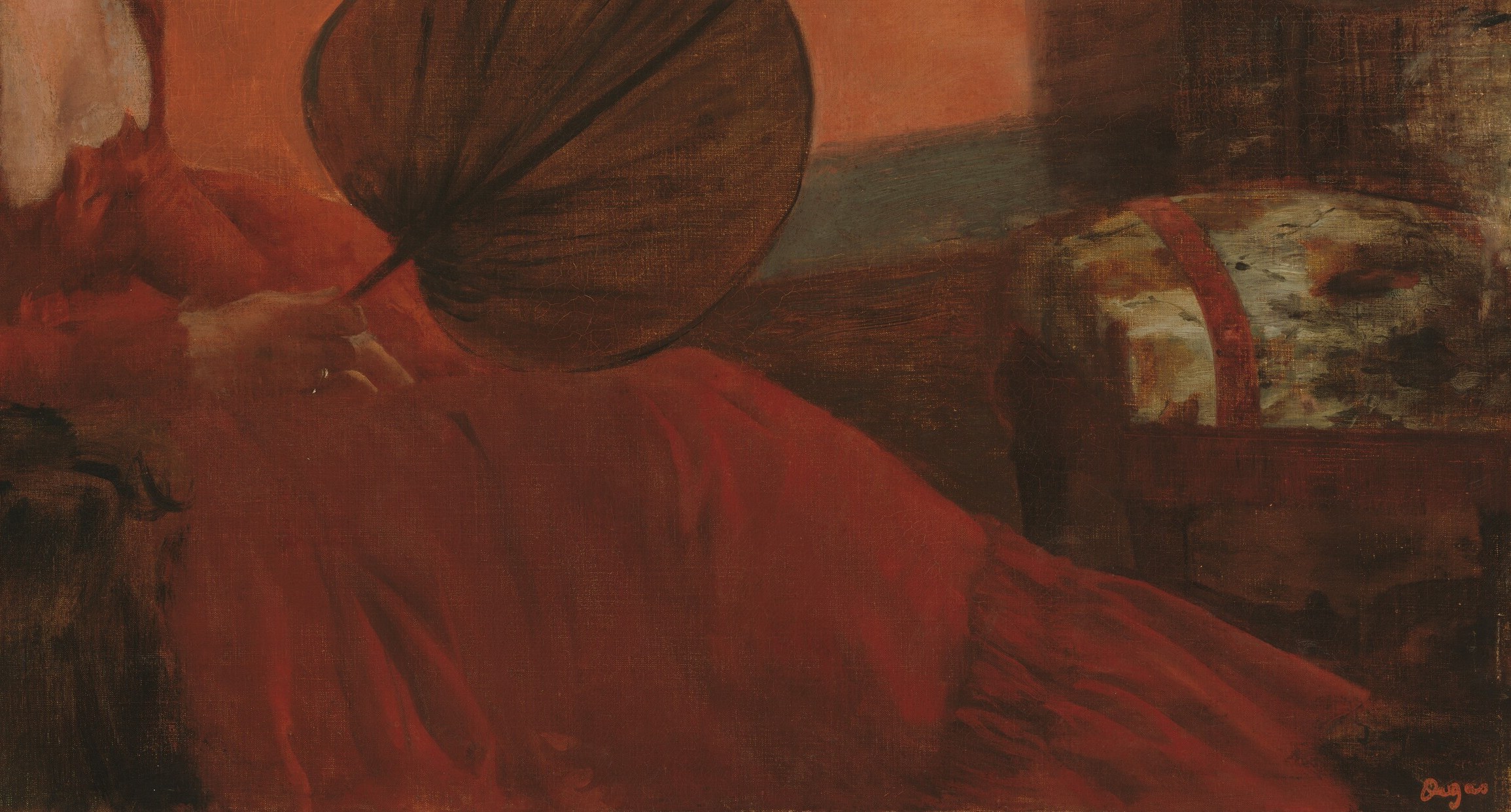
Edgar Degas, often associated with Impressionism but preferring the term Realist, painted Madame Camus in 1870. This oil-on-canvas portrait, now in a public institution, showcases his ability to depict contemporary figures with unidealized detail.
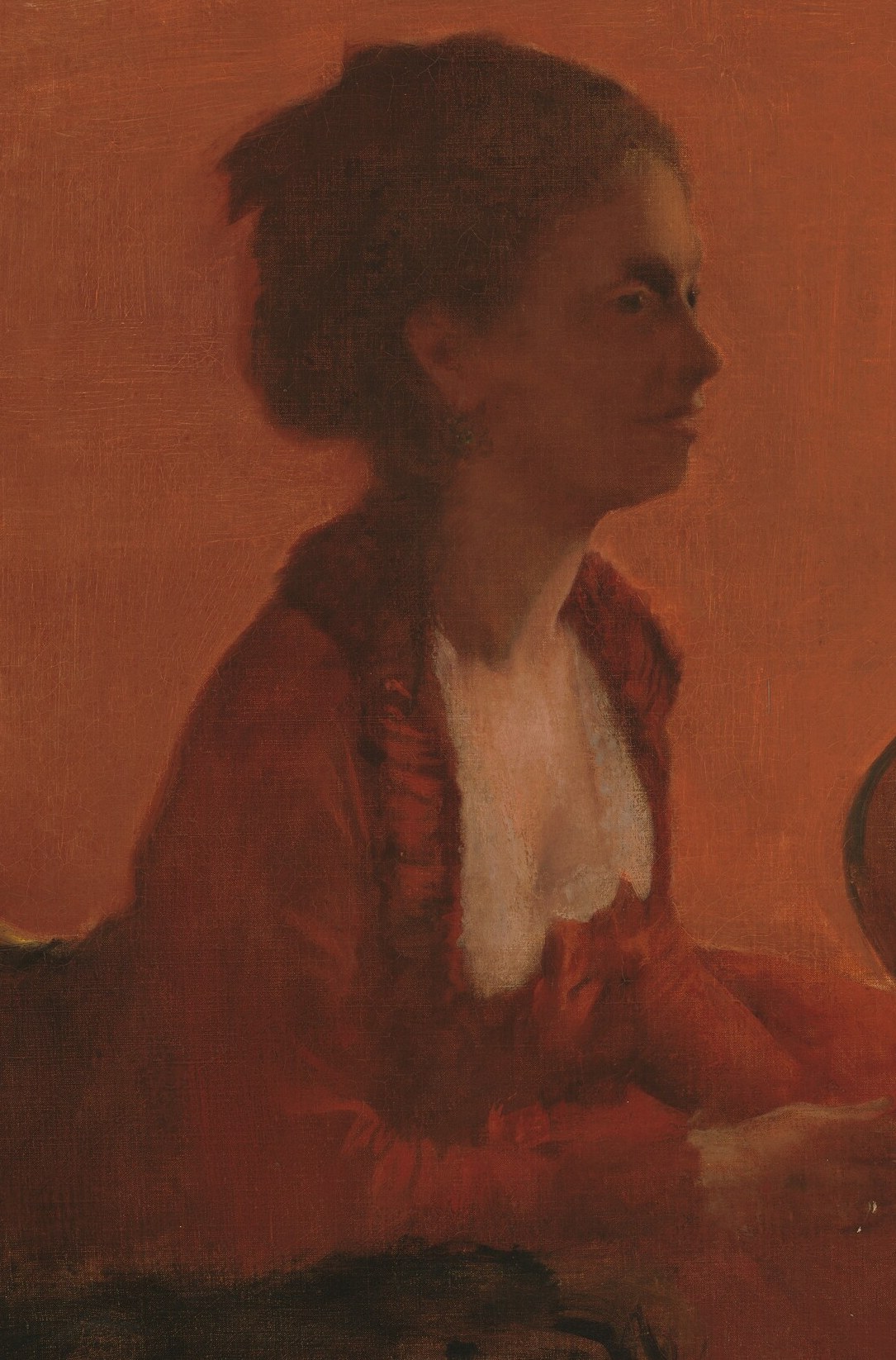
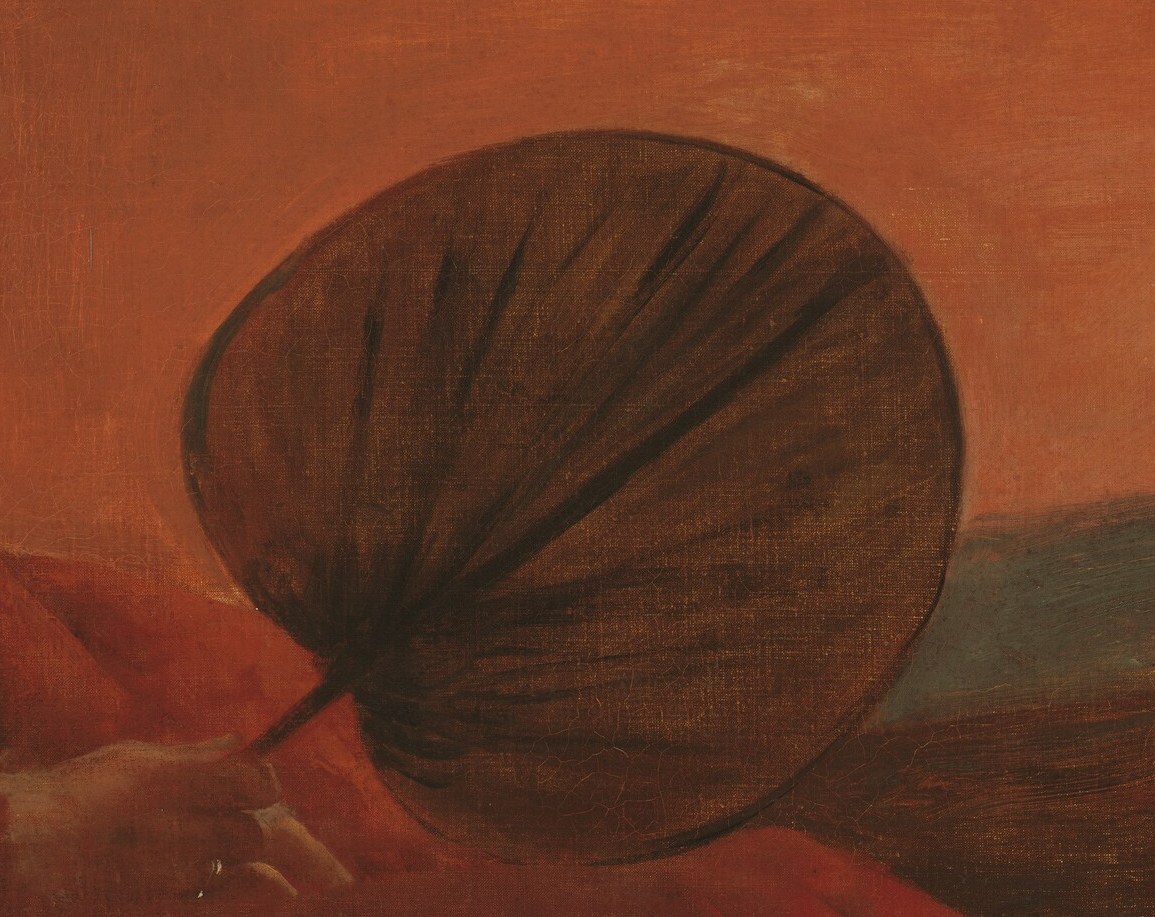
Observe Madame Camus's composed demeanor. Her hair pulled into a neat bun and her crisp white collar highlight her refined appearance, while a ring on her left hand hints at her marital status or social standing. The delicately held fan, a common accessory of the era, could have been used for subtle communication or to convey elegance.
Degas, known for his mastery of drawing and for works depicting dancers and urban life, applied his rigorous academic training to this portrait. He captures a sense of quiet introspection in Madame Camus, inviting viewers to consider her private moment rather than presenting an idealized figure. This work reflects his ongoing interest in portraiture during his early mature period.
Degas's portraits are particularly known for their psychological complexity and the portrayal of human isolation. What do you think her expression reveals?
Details
Transcript
This woman seems lost in thought, avoiding our gaze. She was painted by Edgar Degas, in 1870. Her neat bun and crisp white collar show her refined appearance. And she wears a ring on her left hand. Held delicately, her fan was a tool for subtle communication. Degas captures her private moment and complex inner life.