清 王原祁 江國垂綸圖 卷|Fishing in River Country at Blossom Time by Wang Yuanqi
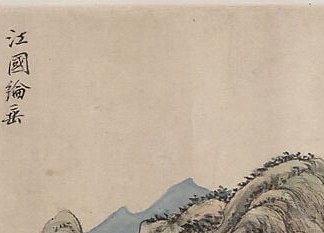
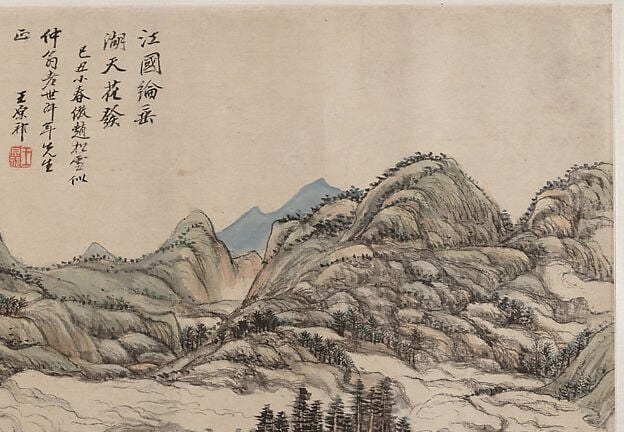
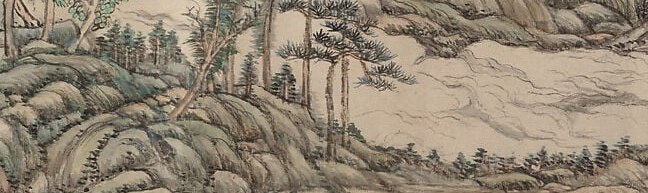
This is Wang Yuanqi's "Fishing in River Country at Blossom Time," a handscroll dated 1709, now held in the collection of the Palace Museum, Beijing. It was painted in the twilight of the artist's career, just a few years after a dramatic confrontation with the Kangxi Emperor nearly ended his life at court.
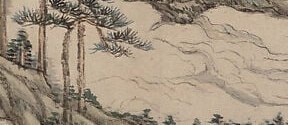
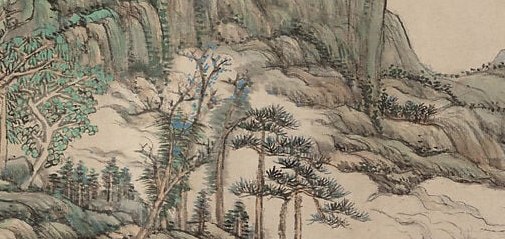
The small figure in the boat is the moral center of the painting. In the Confucian tradition of literati art, the solitary fisherman is not laboring, he is enacting the ideal of the virtuous man in retreat, choosing the rhythms of nature over the corruption or demands of political life. The surrounding pale pink blossoms, scattered throughout the valley, are a deliberate echo of Tao Yuanming's fable of the fisherman who discovers a hidden paradise.
Wang Yuanqi was the most prominent painter at the Qing court and a leading voice of the Orthodox school, artists who sought to reorganize the classical forms of past masters into new compositional structures. But earlier that decade, he had fallen from imperial grace. After publicly refusing to alter a painting the emperor had commissioned, Wang Yuanqi was demoted, his reputation damaged. He withdrew into his work, producing some of his most introspective scrolls in this period.
This landscape is a slow, deliberate meditation. The handscroll format means it was never meant to be seen all at once; a viewer unrolls it section by section, a private journey from quiet hills into towering mountains and back out again. What would you choose, after a public humiliation, to fight back, or to retreat into a landscape like this one?
Details
Transcript
This handscroll was painted in 1709, at the very end of a great career. The artist, Wang Yuanqi, was the foremost painter at the Qing court. But a few years before, he had been publicly disgraced. He painted a scroll the emperor loved. Then the emperor ordered him to change a detail. Wang Yuanqi refused. The emperor was enraged. He was demoted, his salary cut. He retreated deeper into his art. This scroll is his quiet answer: a solitary man, fishing in a river valley at blossom time.