Man with a Steel Gorget by Rembrandt
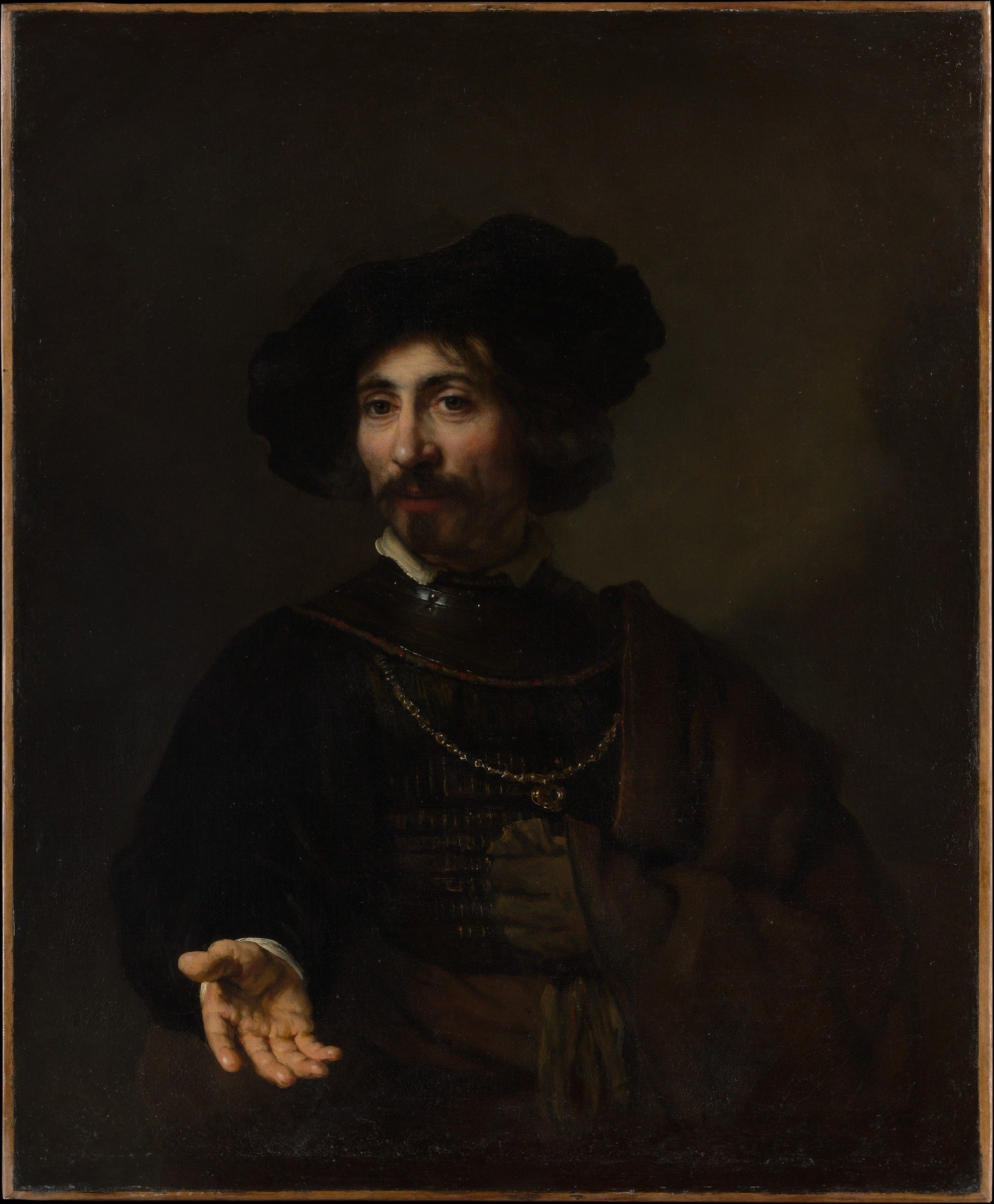
Rembrandt's "Man with a Steel Gorget," painted in 1648, is a compelling portrait from the Dutch Golden Age, housed at The Metropolitan Museum of Art. It captures a deep human moment, reflecting a period of transition in the artist's life.
Notice the dramatic lighting, known as chiaroscuro, which highlights the man's face and hands, drawing attention to his expression and the textures of his clothing. His direct gaze, tinged with melancholy, invites viewers to contemplate his inner state.
Created in 1648, this work comes from a time when Rembrandt was diversifying his artistic output beyond traditional portraiture, even as he faced personal and financial difficulties. Yet, his reputation remained high, and his works continued to be popular.
The painting stands as a testament to Rembrandt's mastery in depicting the human spirit, capturing a moment that resonates across centuries. What do you see in his eyes?
Details


Transcript
This man meets your gaze directly, but his story is hidden. It was painted by Rembrandt in 1648, at a turning point in his life. After early success, the artist was facing personal hardship. His use of light and shadow, chiaroscuro, reveals so much. Look at the texture of his skin, and the subtle melancholy in his eyes. This painting captures a deep human moment, suspended in time.