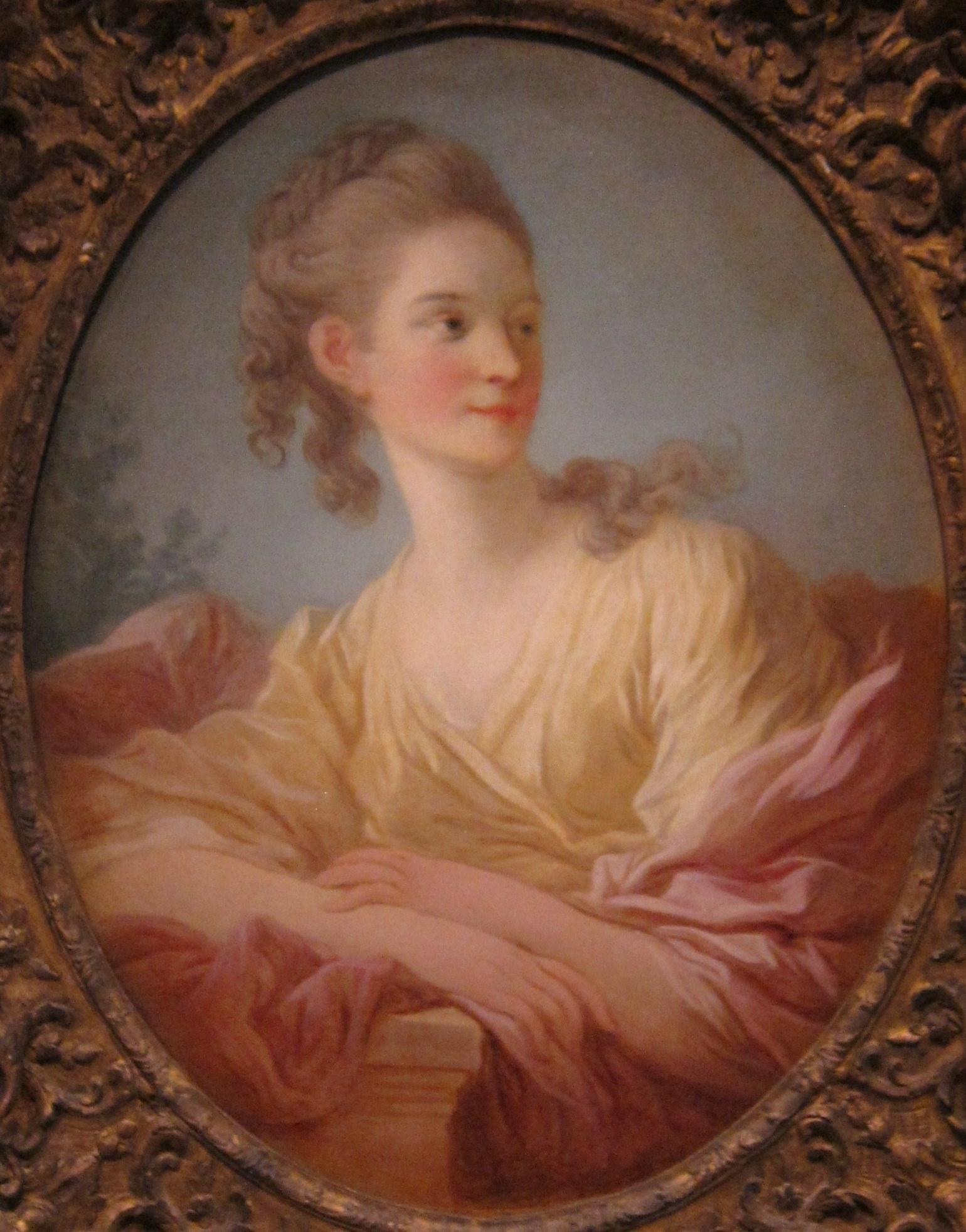
Portrait of a Young Woman, said to be Gabrielle de Caraman, Marquise de la Fare by Jean Honoré Fragonard
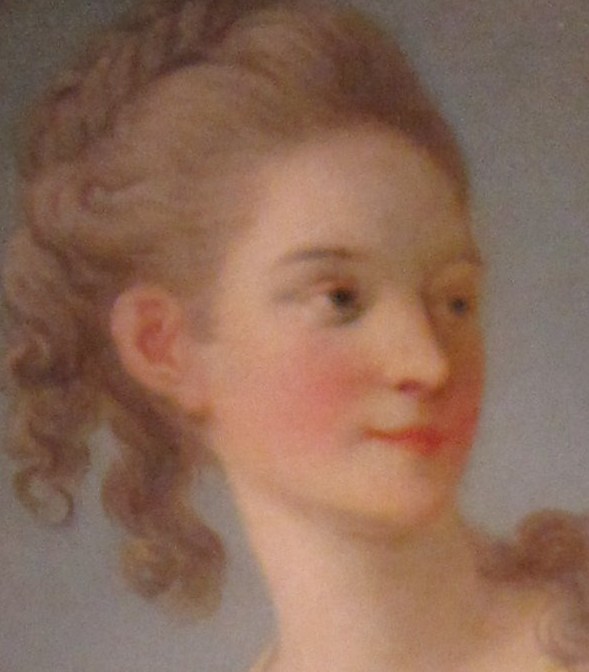
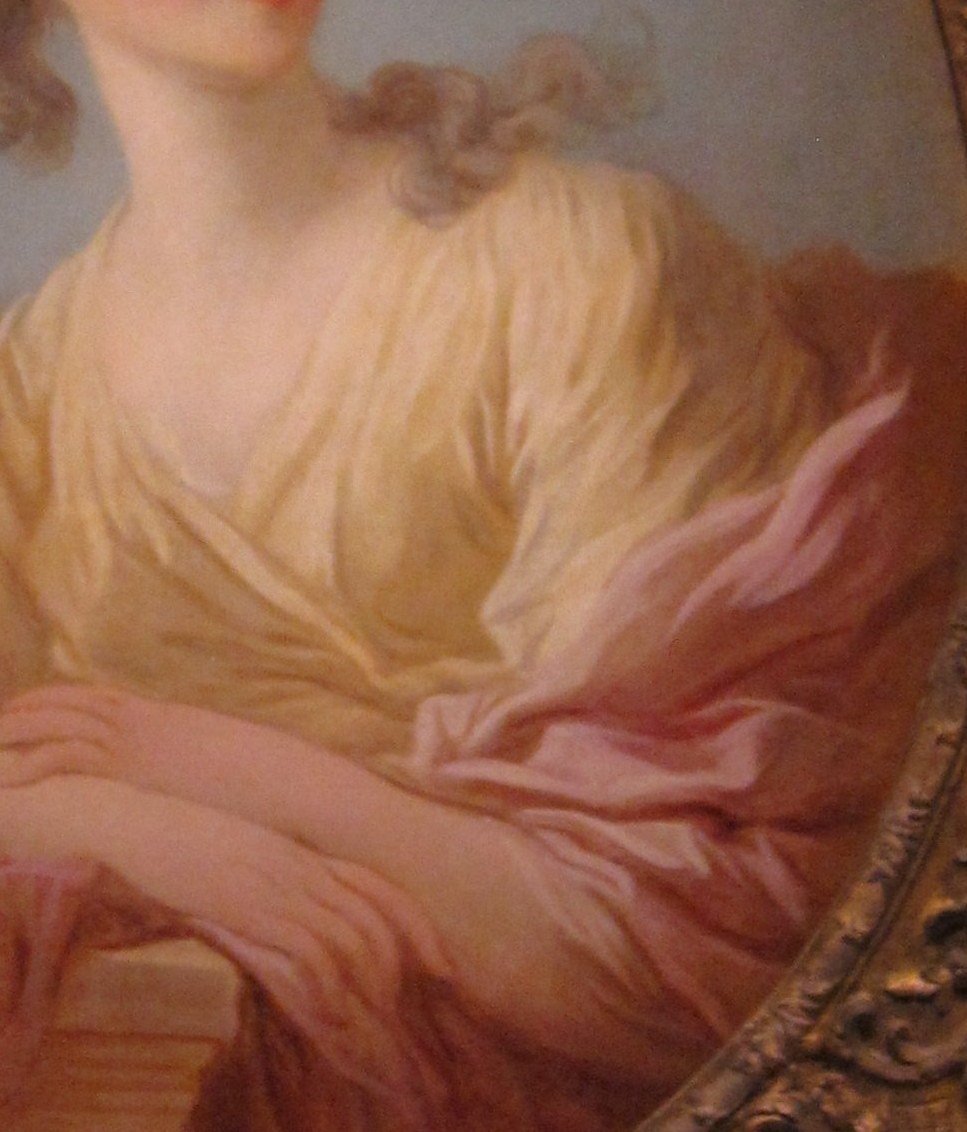
Jean Honoré Fragonard's “Portrait of a Young Woman, said to be Gabrielle de Caraman, Marquise de la Fare,” painted around 1770, is a masterful example of Rococo portraiture. What many viewers overlook is the intricate gilded frame, which is not a separate piece of wood, but painted directly onto the canvas by Fragonard himself.
This detail highlights Fragonard's incredible skill and his playful approach to art. The painted frame creates an illusion, blurring the line between the artwork and its presentation, drawing the viewer deeper into the intimate world of the sitter. Her gentle gaze and the luminous quality of her pale yellow dress are further enhanced by this unique framing.
Fragonard was known for his exuberance and hedonism, often producing genre paintings with an atmosphere of intimacy. Though he created over 550 paintings, only five are dated, making the known date of this work particularly significant.
Next time you encounter a portrait, consider how its presentation might be part of the artist's original vision.
Details
Transcript
This young woman appears in a famous portrait. She looks out with a soft, inviting gaze. The artist, Fragonard, rarely dated his 550 paintings. But this one is known to be from 1770. Look closely at the gilded frame, around her hair. The frame itself is part of the original painting. It was painted, not carved.