Self-Portrait (¿?) by Orazio Borgianni
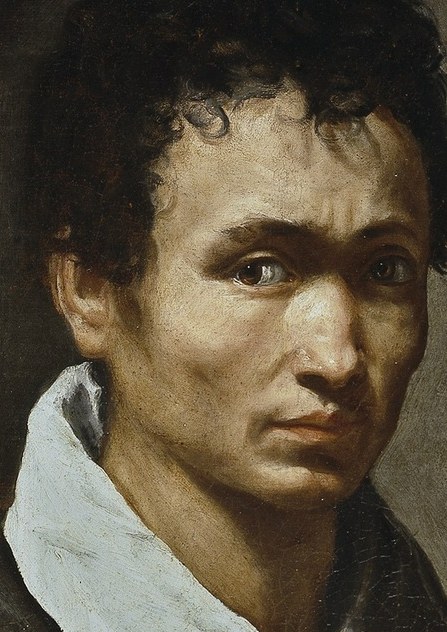
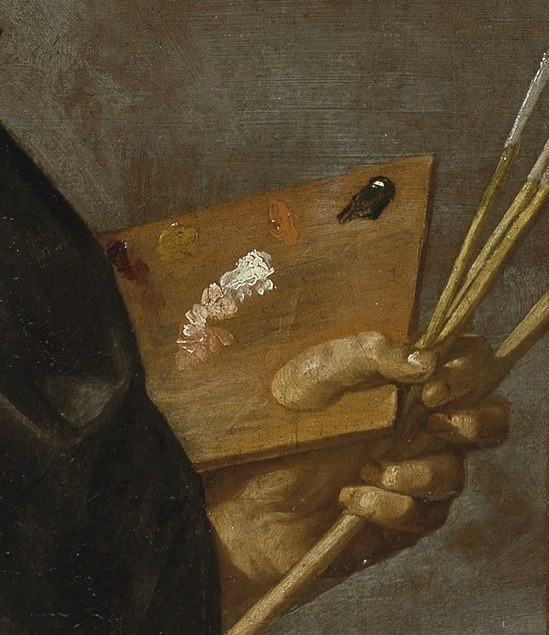
Orazio Borgianni’s Self-Portrait, painted around 1600, offers a glimpse into the early Baroque period. This painting, now housed at the Museo del Prado, captures the artist in a reflective moment, surrounded by the tools of his craft.
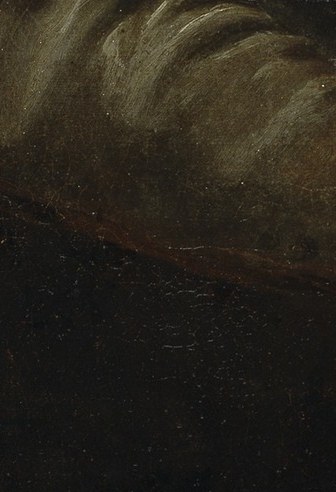
Look closely at the bottom left, near the easel, and you'll find a faint inscription: the number '227.'. This subtle detail is likely an old inventory or catalog number, a small but significant clue to the painting's journey through history.
Borgianni, an Italian painter and etcher, trained in Rome and later worked under the patronage of Philip II of Spain. His use of dramatic lighting and focus on the artist's implements underscore his professional identity and the evolving art styles of the time.
What other small details in paintings tell a larger story?
Details
Transcript
This painter catches himself in a moment of thought. He was an Italian artist, working around 1600. His tools of the trade are clearly visible. But look closely at the bottom, near the easel leg. A faint number, '227.', is barely visible there. It might be an old inventory number, a clue to its past.