The Proposal by William Adolphe Bouguereau
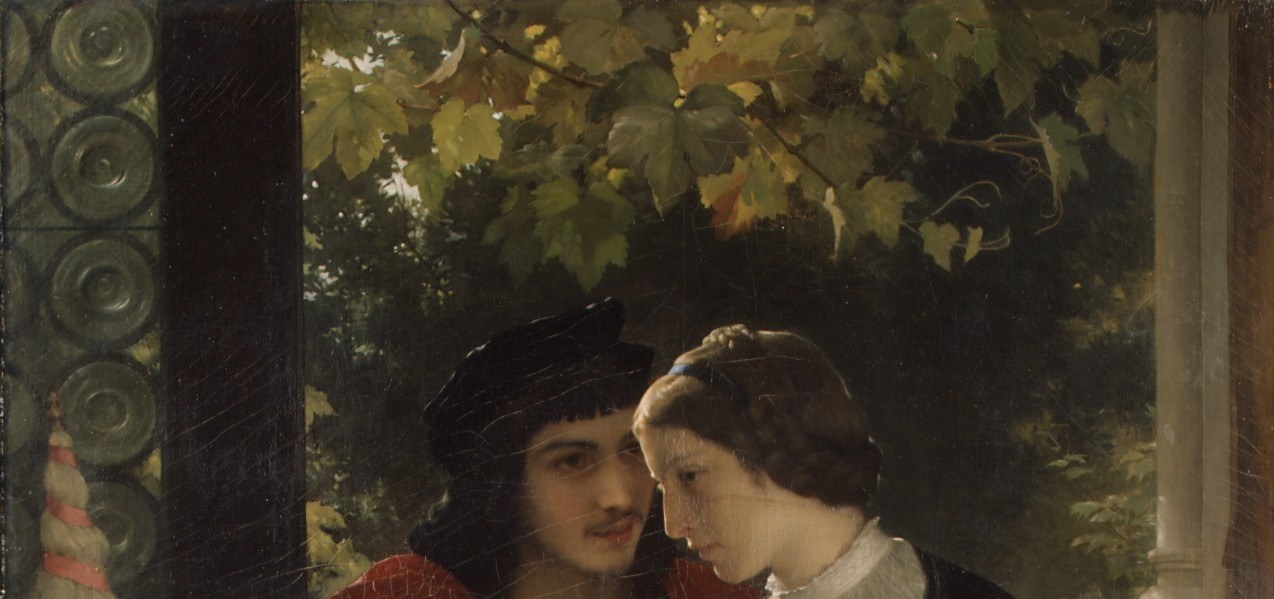
William-Adolphe Bouguereau painted The Proposal in 1872, and for nearly 150 years viewers have focused on the couple at its center. You can see it in person at The Metropolitan Museum of Art.
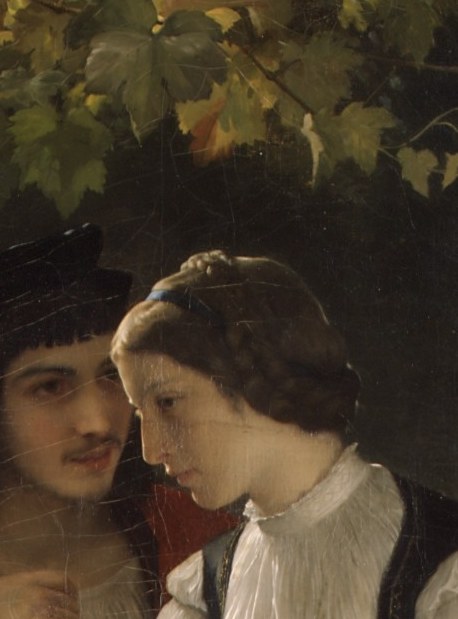
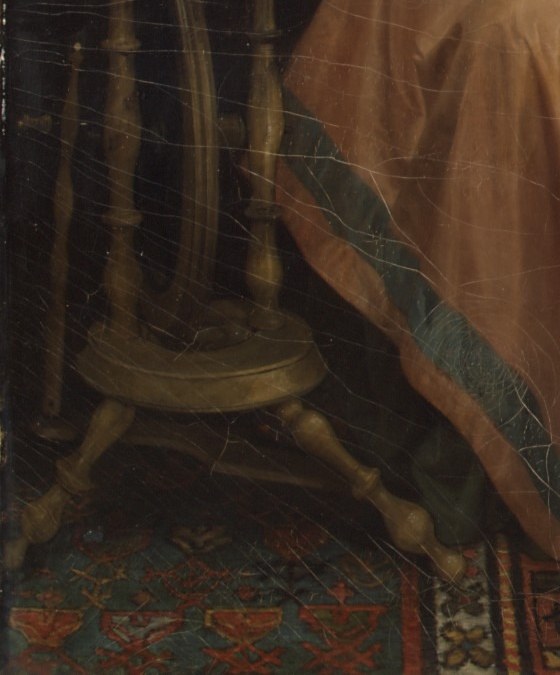
The man in red leans close, his face inches from hers. She looks down. A spinning wheel rests in the lower left, her domestic labor paused mid-motion by his arrival. Every detail in the foreground pulls you into the question hanging between them.
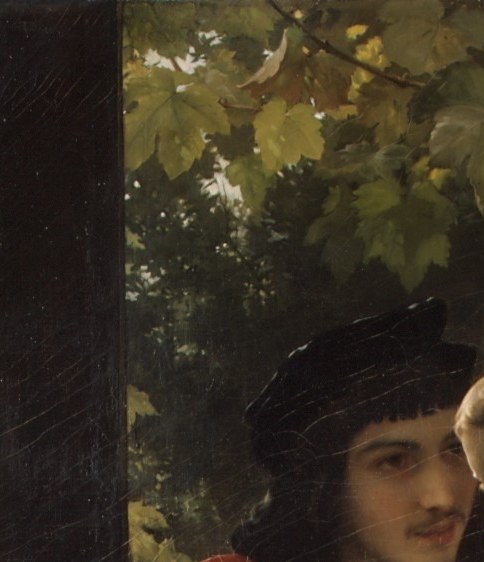
But there is something else. Through the sunlit window behind the couple, a small distant figure stands in the garden. It is easy to miss, a few brushstrokes barely legible at normal viewing distance. Bouguereau placed a witness there, a second person in what feels like a private exchange, watching.
This was the kind of narrative detail Bouguereau excelled at. He was the most celebrated Salon painter of his generation, later dismissed by the Impressionists, and then largely forgotten until a revival of figure painting in the 1980s brought his work back into view. He completed 822 known paintings, though many remain lost.
Next time you stand before a painting like this, look past the main event. Sometimes the real story is in the background.
Details
Transcript
He leans in close, his proposal just above a whisper. She looks down. The answer hangs in the space between them. The spinning wheel has stopped. Her work is interrupted. Bouguereau painted this in 1872, at the height of his Salon fame. Now look through the window, into the sunlit garden beyond. There is a second figure standing in the garden. A hidden witness to a private moment, invisible at a glance.