Two Unidentified North American Indians by Catlin, George
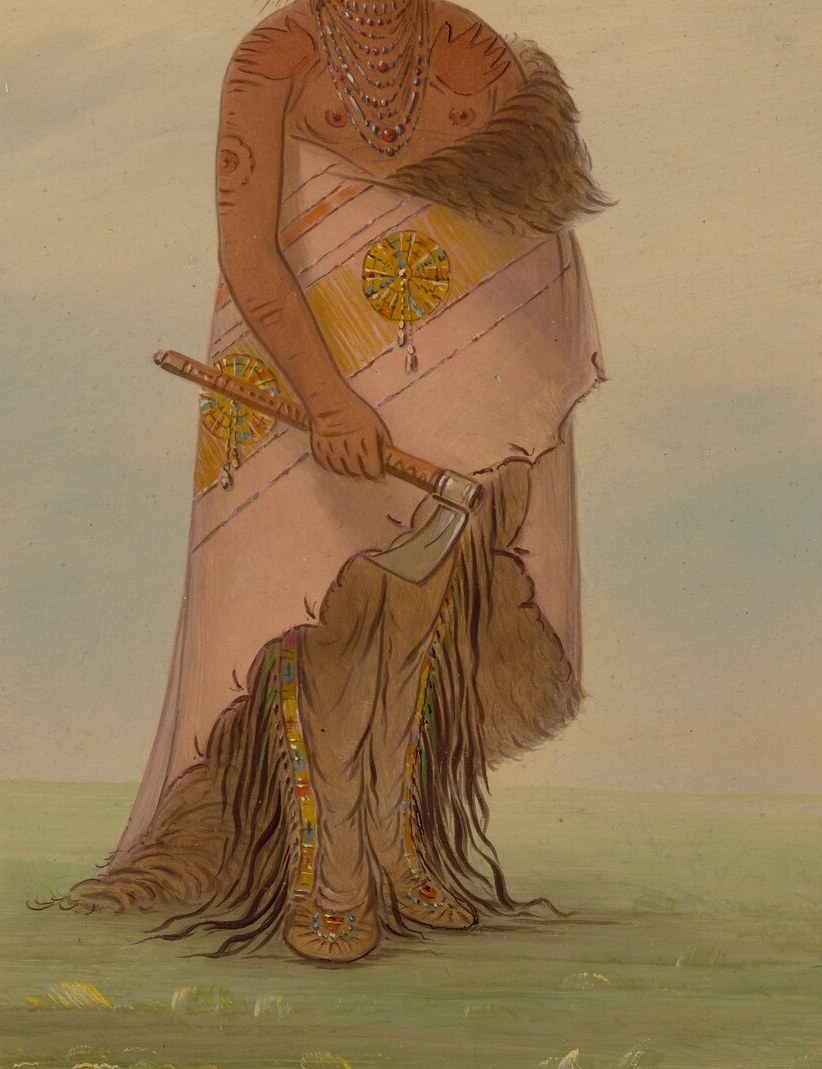
George Catlin, a self-taught American artist, dedicated his life to documenting Native American cultures. His painting, *Two Unidentified North American Indians* (1861/1869), now at the Smithsonian American Art Museum, captures the distinct attire and presence of two individuals.
Observe the details of their clothing: the vibrant, spiky headdress and intricately patterned robe of the figure on the left, and the feathered headdress and spear carried by the figure on the right. These elements provide a glimpse into the diverse cultural identities Catlin sought to preserve.
Catlin, originally a lawyer, traveled the American West extensively in the 1830s. His firsthand observations formed the basis for his numerous portraits, which are considered crucial ethnographic records from the 19th century. He aimed to document what he feared was a vanishing way of life.
His work offers a valuable historical perspective, inviting us to reflect on the lives and traditions of Indigenous peoples during a transformative period.
Details
Transcript
This painter documented Native American life in the mid-19th century. He was a self-taught artist and lawyer, traveling the American West. Look at the vibrant, spiky headdress on the left figure. His patterned robe shows intricate cultural attire and craftsmanship. The figure on the right wears a distinctive feathered headdress. He holds a spear, hinting at hunting traditions or readiness. These portraits were part of his lifelong effort to record Indigenous cultures.