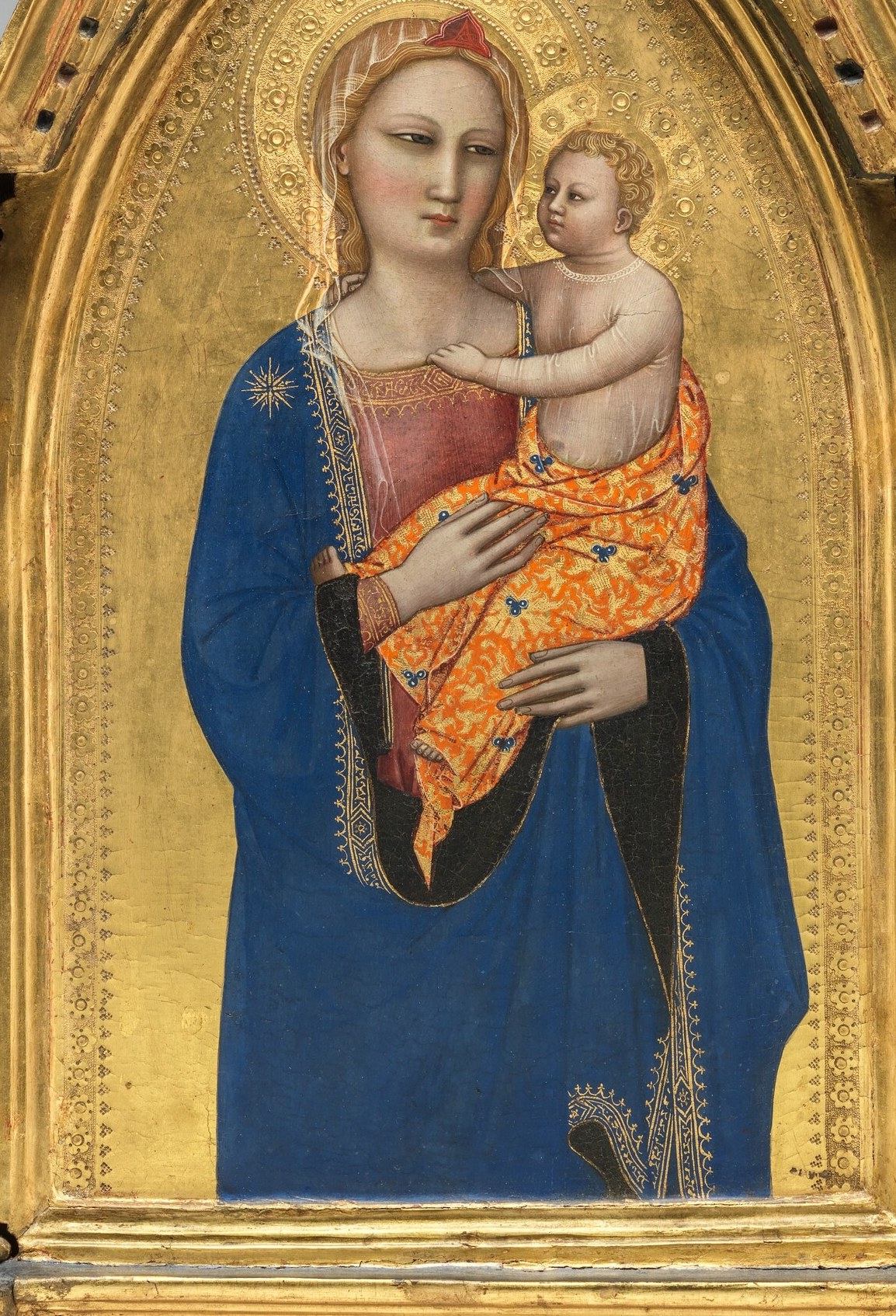
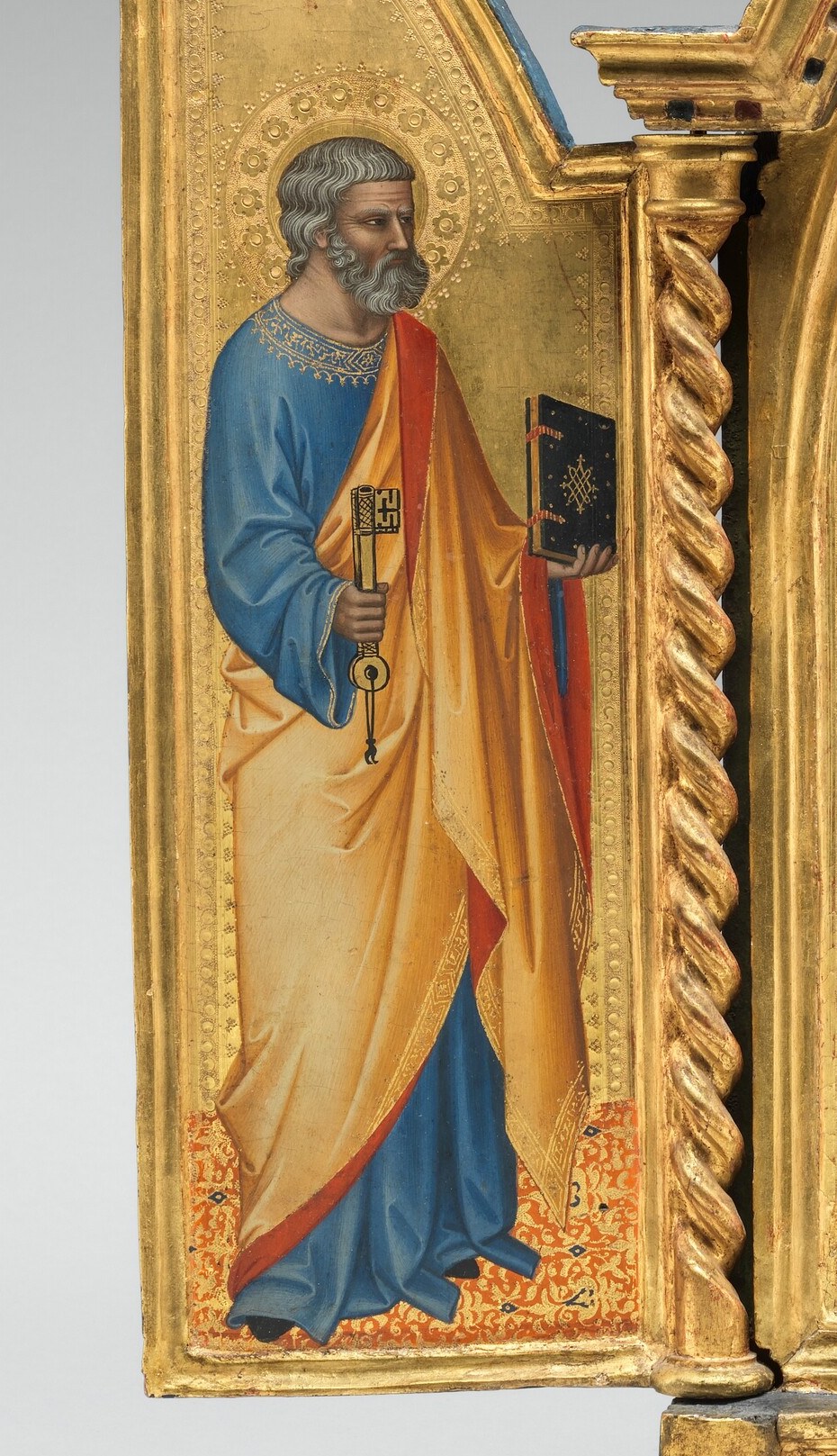
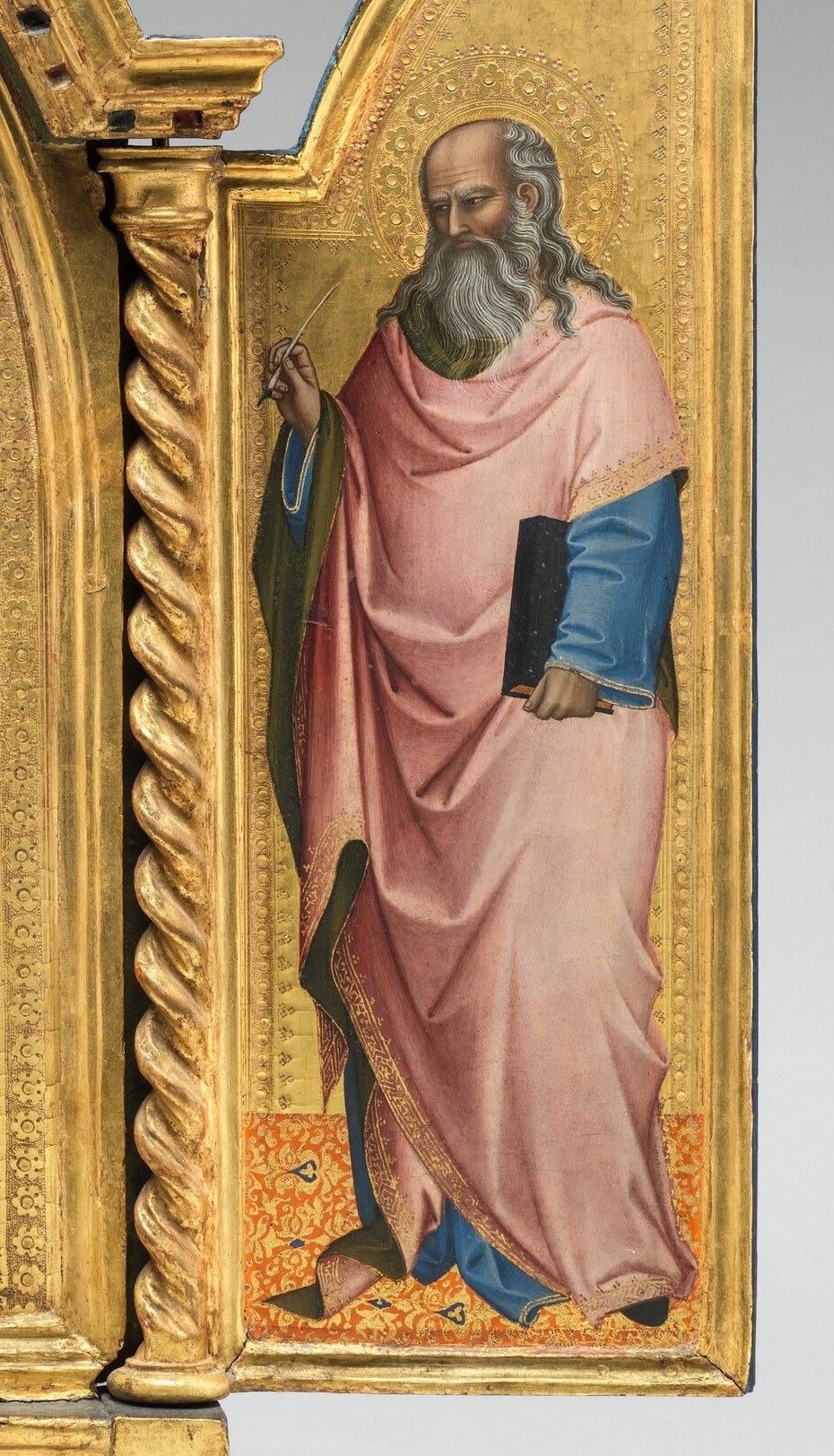
Madonna and Child, with Saints Peter and John the Evangelist, and Man of Sorrows [entire triptych] by Nardo di Cione
Nardo di Cione is a painter known for a single year of documented work, making this triptych, "Madonna and Child, with Saints Peter and John the Evangelist, and Man of Sorrows," c. 1360, at the [Museum Name, if known] a unique piece of his legacy.
His artistic output, including this detailed tempera on panel, is confined to a brief period in the mid-14th century. The central panel with the Madonna and Child, flanked by Saint Peter and Saint John, showcases the precise detail and ethereal quality characteristic of the era. The shimmering gold leaf background emphasizes the divine nature of the scene.
While we might see many artists with long, storied careers, Nardo di Cione's story is one of mystery and brevity. His work, though limited in documented timeframe, stands as a testament to the artistic conventions and spiritual focus of Florentine painting during his time.
What could have led to such a concentrated, yet impactful, period of creation?
Details
Transcript
This triptych was painted around 1360. The artist is Nardo di Cione. Look closely at the Madonna's face. Her calm expression belies a hidden story about the painter. Historians only have records of him working in one single year. Nardo di Cione is known only for the year 1360.