The Young Saint John the Baptist by Piero di Cosimo
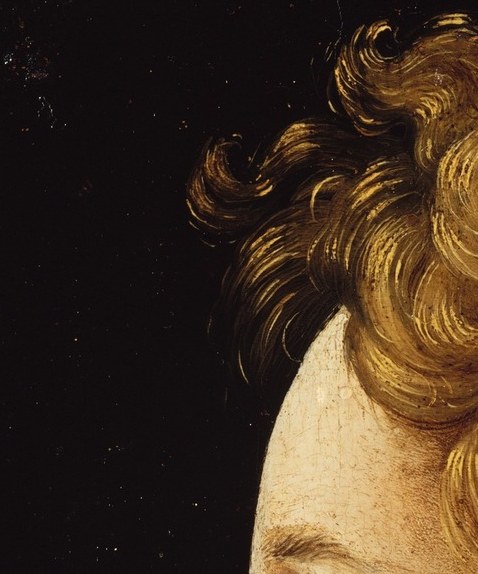
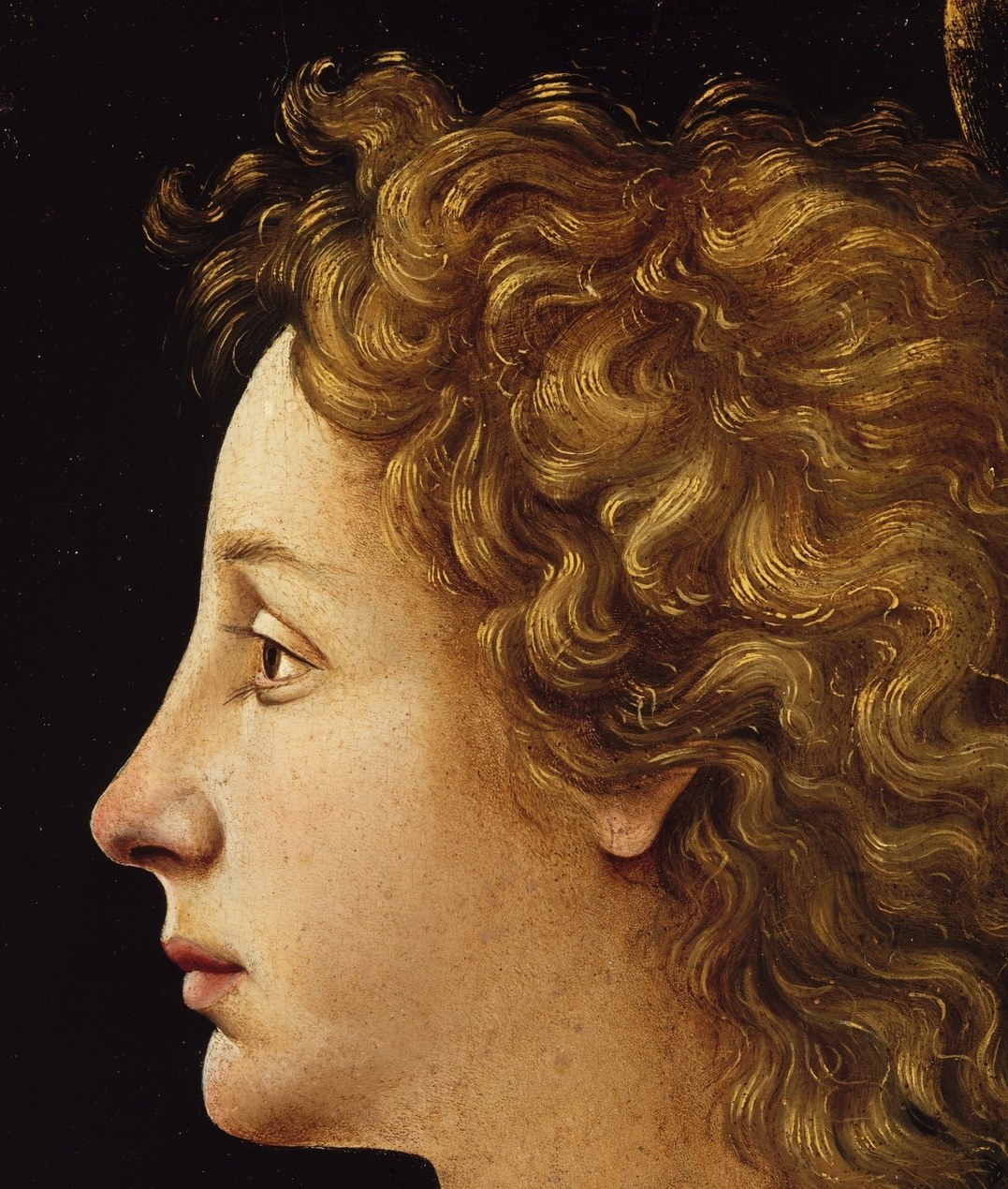
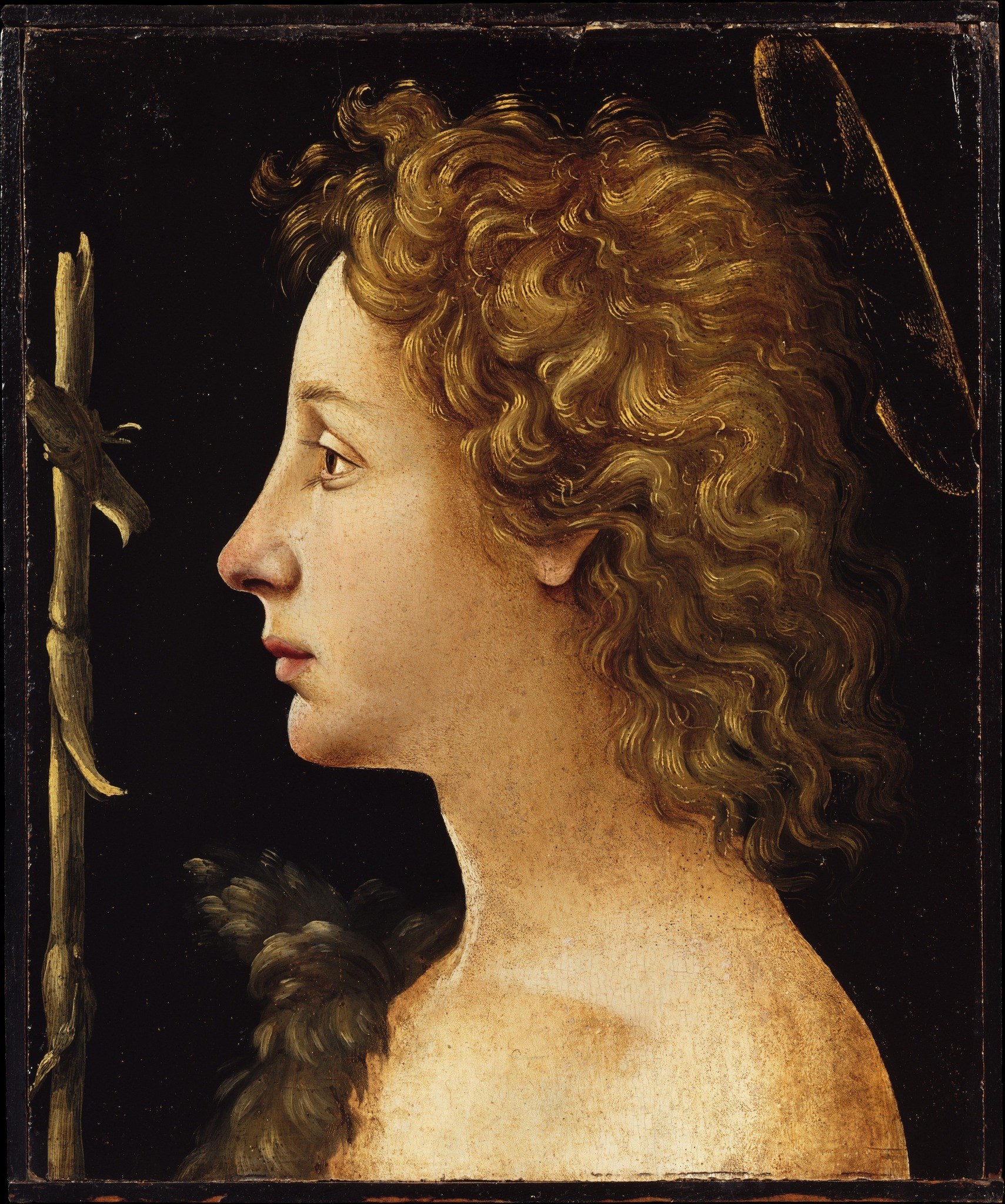
The Young Saint John the Baptist, painted around 1490 by the Florentine artist Piero di Cosimo, now hangs at The Metropolitan Museum of Art. It is a devotional panel of a single figure, stripped almost bare: the gilded background was removed at some unknown point, leaving the adolescent saint isolated in a flat, near-black void.
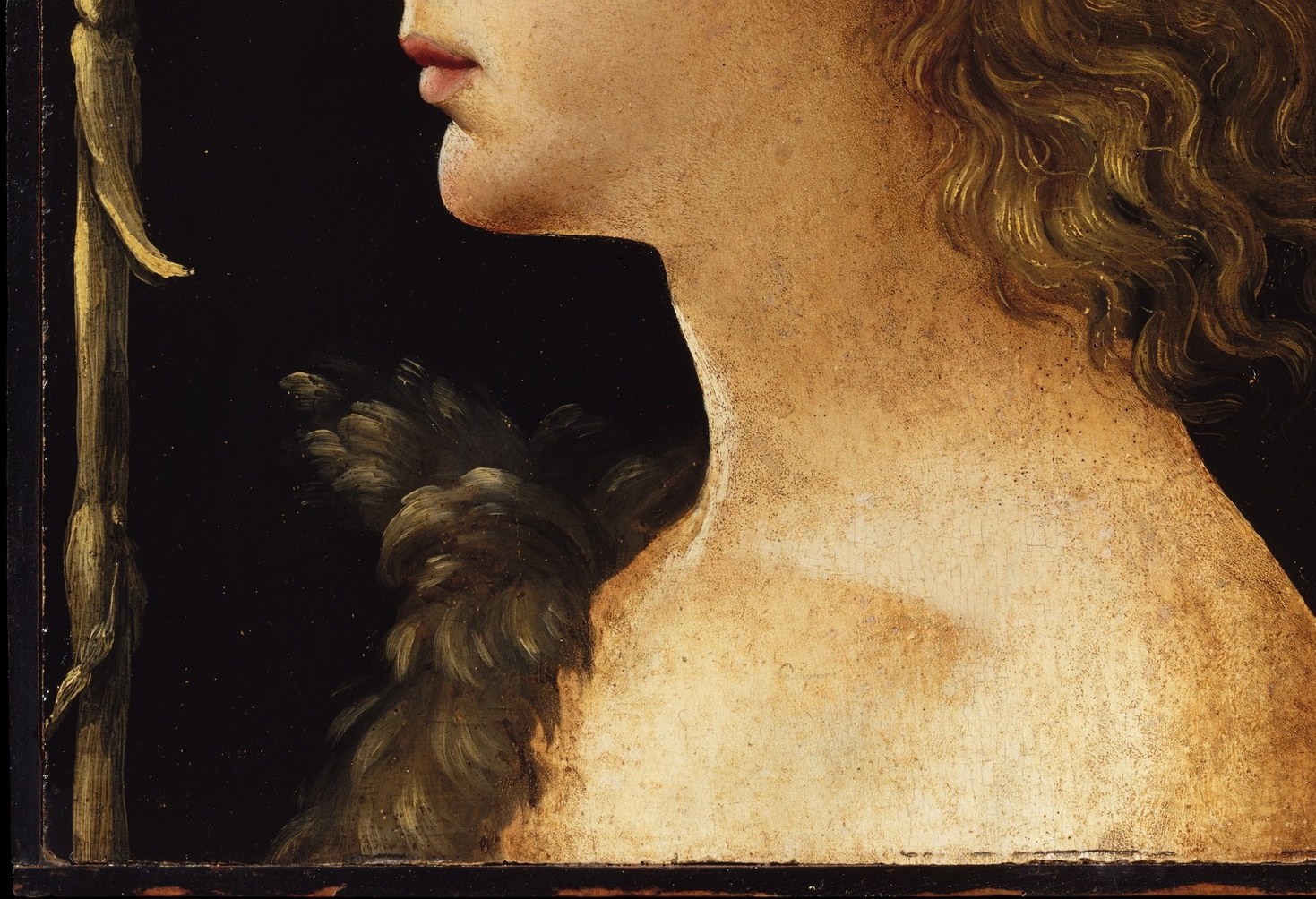
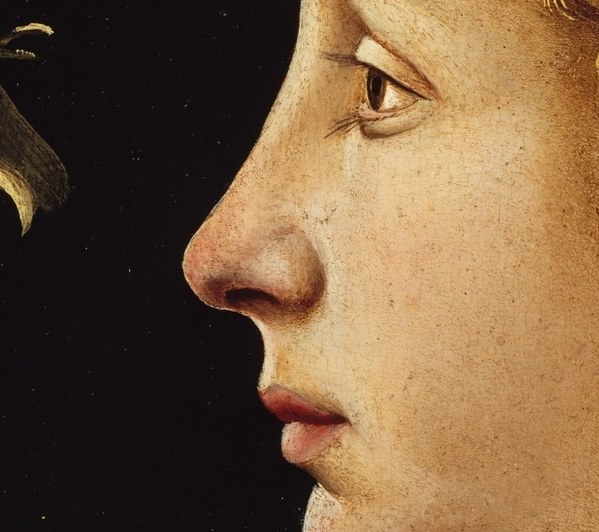
Pause on the profile. The contour from forehead to chin is one unbroken, razor-sharp line, an idealized Renaissance face with softly parted lips and a single downcast eye that never meets yours. Then look at the rough camel-skin cloak across his shoulder. That one attribute is the immediate visual code for John the Baptist, the desert ascetic, and Piero painted every individual hair of the fur with the meticulous thin-layered strokes egg tempera demands.
The Met acquired the panel quietly in 1942. The museum did not publicize the price, but later records pegged the purchase at just two thousand five hundred dollars, a sum that, even adjusted for wartime, reflects how a painting can slip through a market uncatalogued and undervalued. The artist himself, Piero di Cosimo, was a known eccentric who kept to an Early Renaissance manner long after his peers had moved on; his reputation rose and fell, and his prices with it.
A Renaissance saint painted by hand, acquired for less than the cost of a car. The market has since corrected itself.
Details
Transcript
He was painted around 1490, in egg tempera on a poplar panel. The gilded background disappeared long ago, leaving him in darkness. His profile is flawless: an unbroken line from brow to chin. The camel-skin cloak tells you this is John the Baptist. His lips are parted. He seems to be speaking, or breathing. In 1942, the Met acquired it for a sum they never disclosed. Records later showed it cost 2,500 dollars.