Madonna and Child Enthroned with Saints and Angels by Francesco Botticini
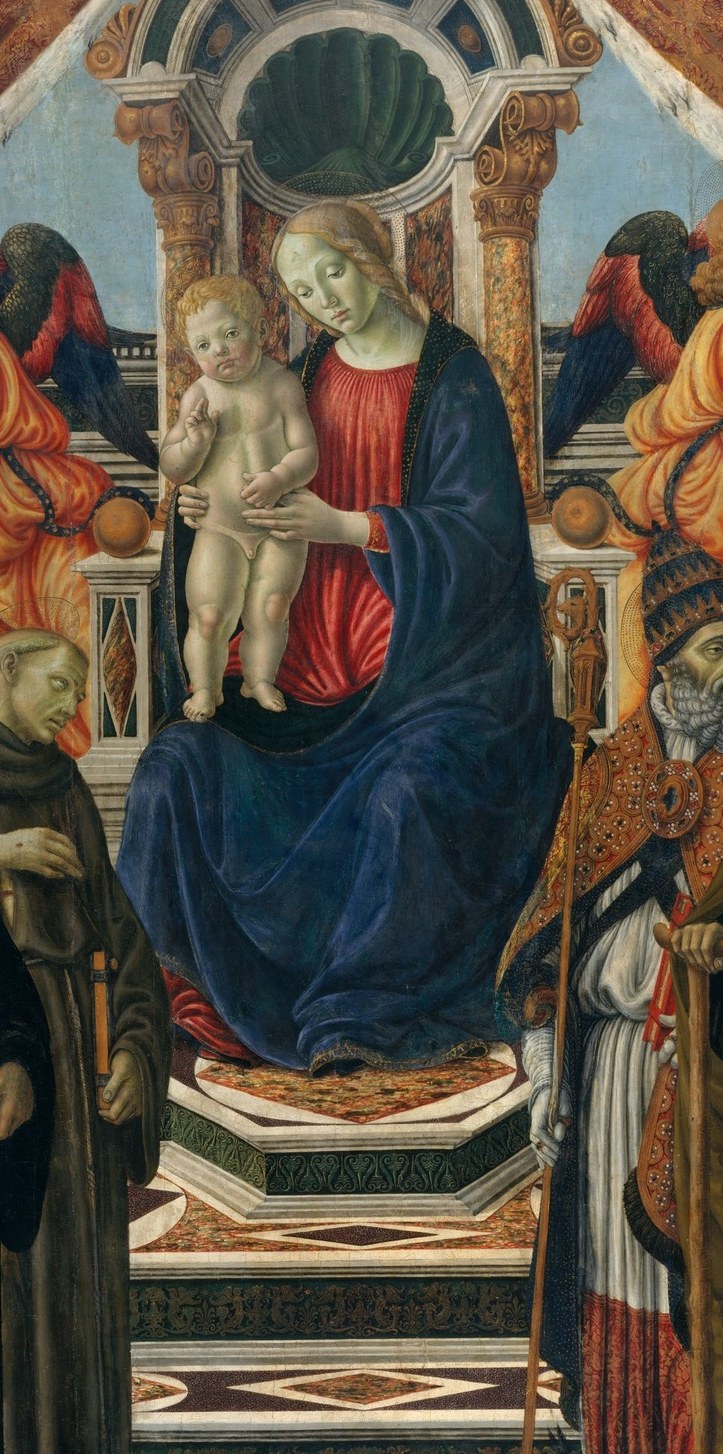
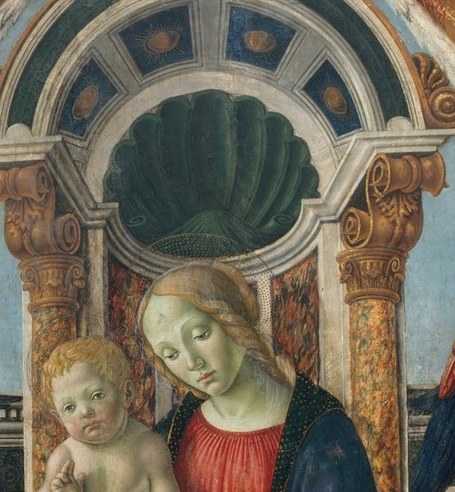
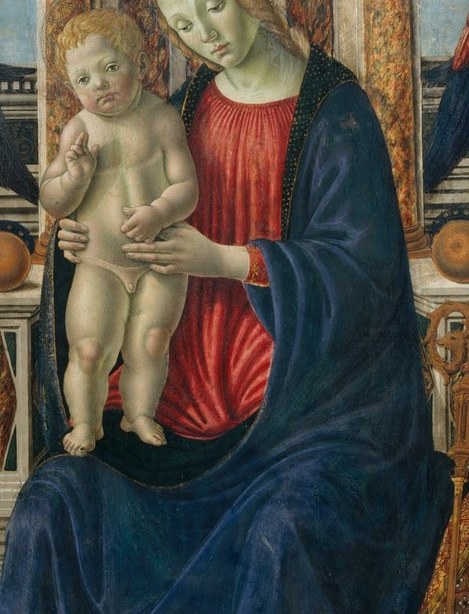
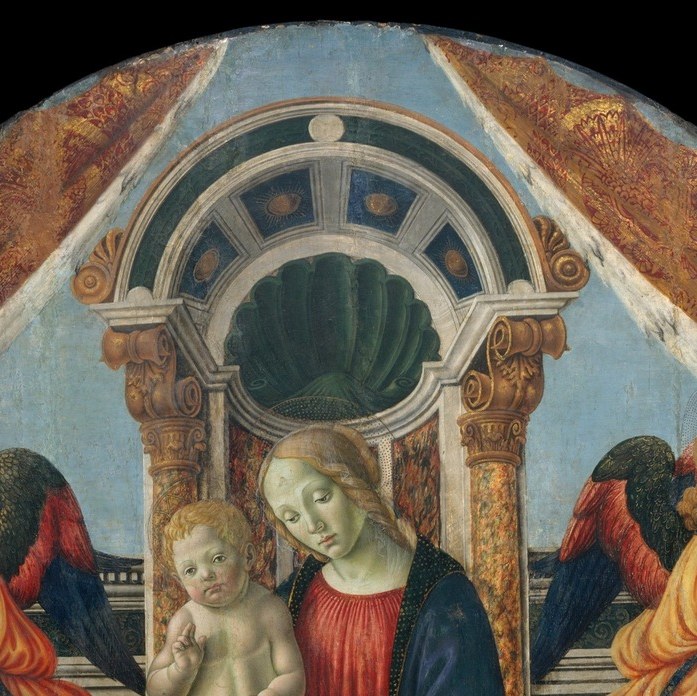
This is Francesco Botticini's 'Madonna and Child Enthroned with Saints and Angels' from 1491, now at The Metropolitan Museum of Art. The Virgin's blue mantle is not just a color choice, it is pure lapis lazuli, ground by hand from stone mined in Afghanistan and shipped to Florence at a price that exceeded gold. For a painter of Botticini's modest fame, using it on this scale was an enormous financial risk.
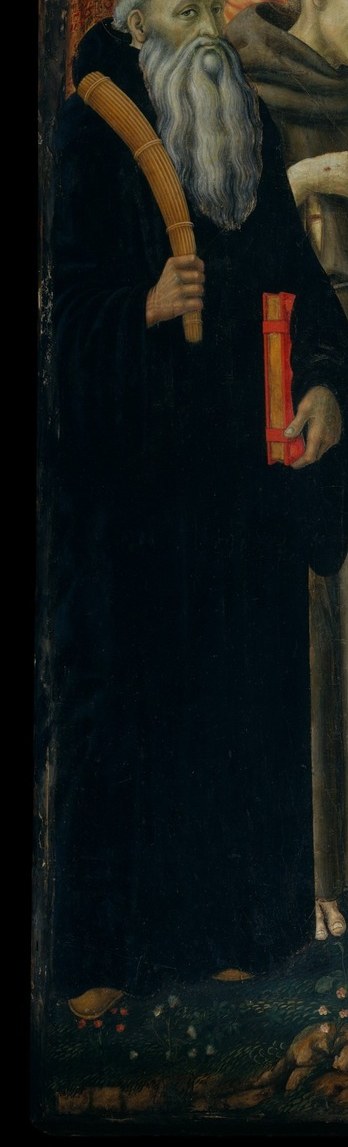
Look at the folds of the blue mantle: the pigment's depth is still staggering five centuries later. Then look at the Christ Child's raised hand, the index and middle fingers extended in the traditional sign of blessing. Beneath them sit four saints, their identities encoded in the objects they hold: a book, a staff, a lily. Every figure was a theological argument, and every inch of blue was a bet.
The commission's patrons were supposed to cover the cost of the costly pigments. They left Botticini to pay for the lapis himself. He bought it anyway, gambling that this altarpiece would elevate his reputation and bring in more work. Documentary evidence for his career is sparse, only a handful of works are firmly documented, but this panel survives as a testament to a painter who staked his own money on the belief that devotion should look beautiful.
What would you have done? Paid for the blue, or found a cheaper substitute?
Details
Transcript
This blue is made from crushed lapis lazuli. In 1491, it cost more than gold. The contract said the patrons would pay for it. They didn't. Botticini bought the pigment himself. One painting would decide if the gamble paid off. He never became rich. But the blue held.