The Roman Theater at Taormina by Sarazin de Belmont, Louise-Joséphine
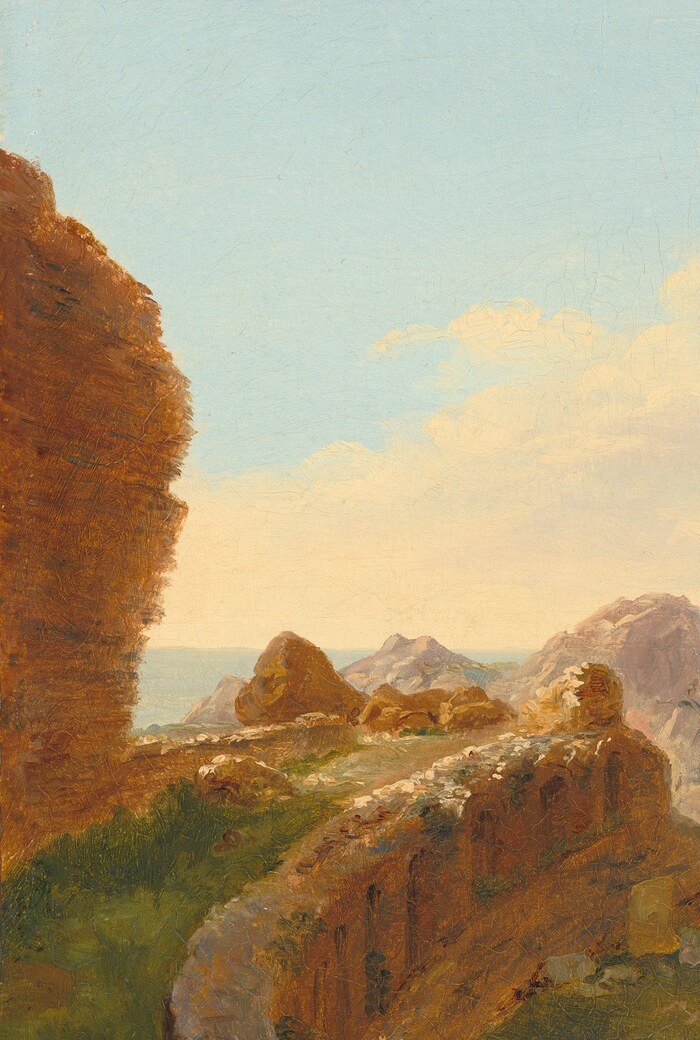
In "The Roman Theater at Taormina," painted in 1828 by Louise-Joséphine Sarazin de Belmont, the artist left a subtle signature, carved into the very landscape she depicted. This oil on paper on canvas, held in a private collection, invites a closer look.
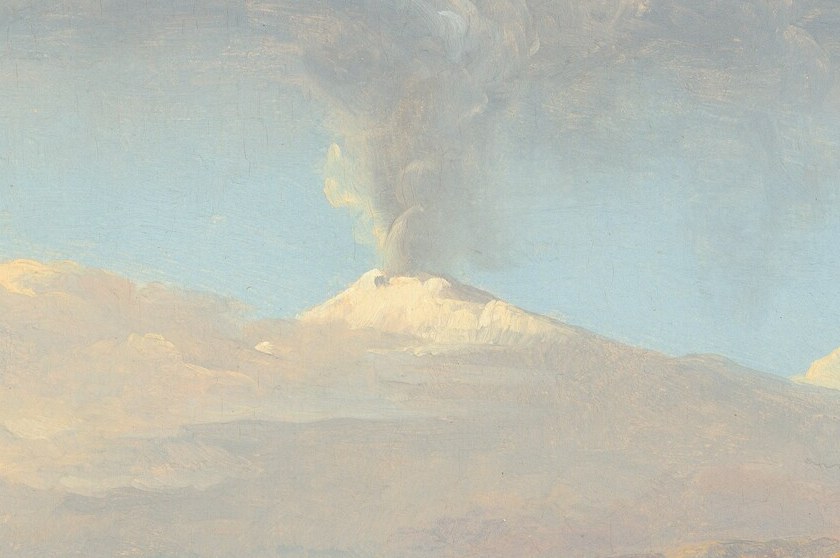
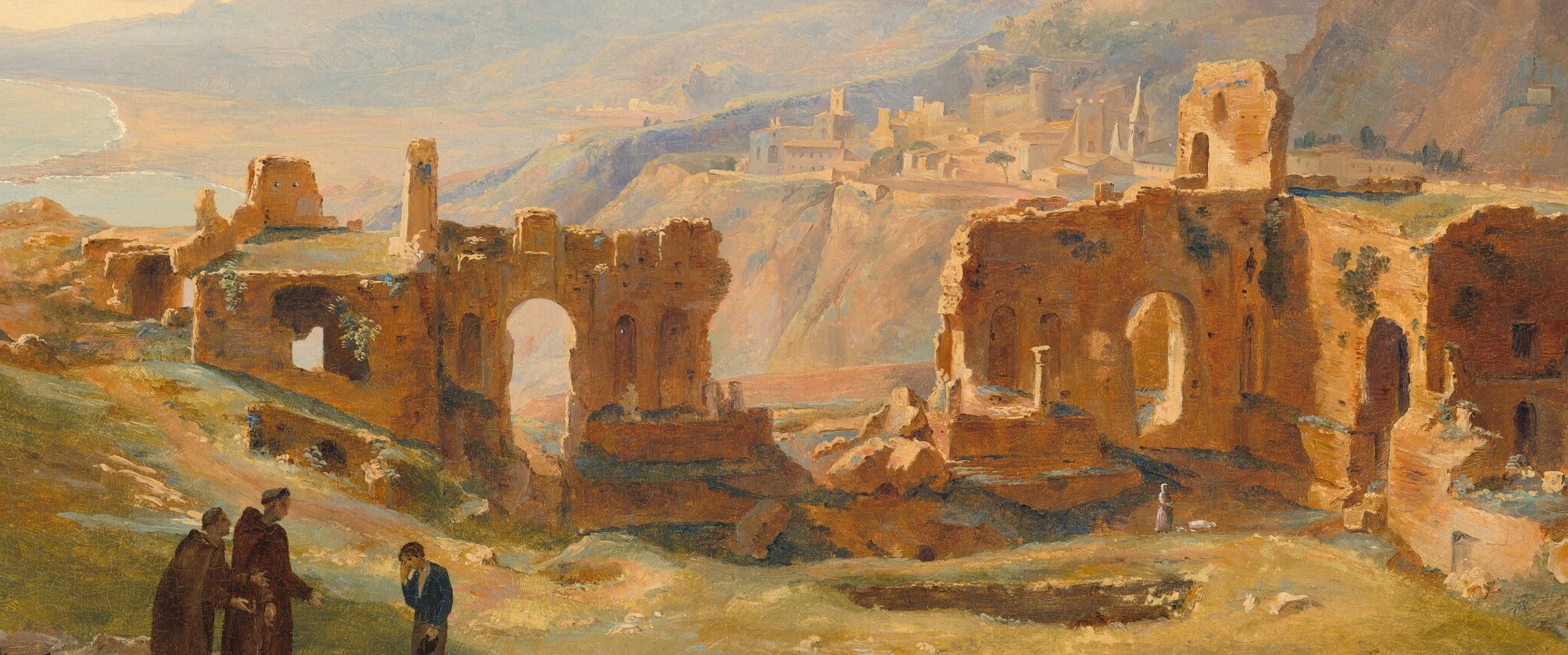
The painting transports us to ancient Roman ruins set against a dramatic mountain backdrop, complete with a smoking volcano and distant sea. Yet, it's the personal touch, her initial 'S' and the date '1828' inscribed on a rocky outcropping, that makes this piece unique. It's a quiet claim of authorship, blending seamlessly into the scene.
Sarazin de Belmont was part of a tradition of European artists fascinated by Italian ruins, especially sites like Taormina that combined historical significance with striking natural beauty. Her use of oil glazing on a paper support allowed for depth and luminosity, capturing the atmospheric light of the early 19th century.
This small detail reveals the artist's presence within her own work, a personal signature amidst the grandeur of history and nature. What other hidden marks might artists leave for us to discover?
Details
Transcript
This painting captures a Roman theater, frozen in time. Beyond the ancient arches, a volcano still smokes. The artist, Louise-Joséphine Sarazin de Belmont, painted this in 1828. But she left her mark in an unusual place. Look closely at the rock face, bottom left. Her initial and the year, carved into stone.