Holy Family by Jacopino del Conte
Jacopino del Conte's Holy Family, painted in 1566, holds its power in what it withholds. There is no landscape, no grand architecture, no brilliant sky. Just three figures pressed close in a dark interior, and a mother's face that carries the whole weight of a story she already knows.
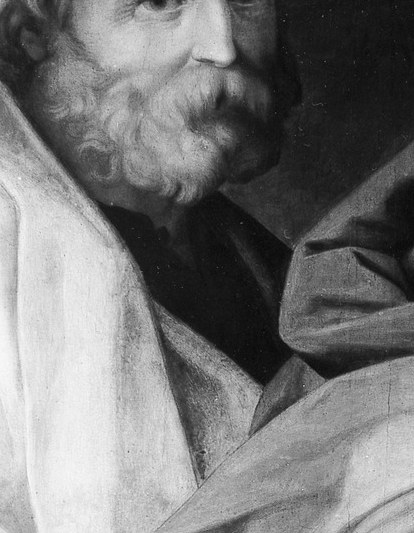
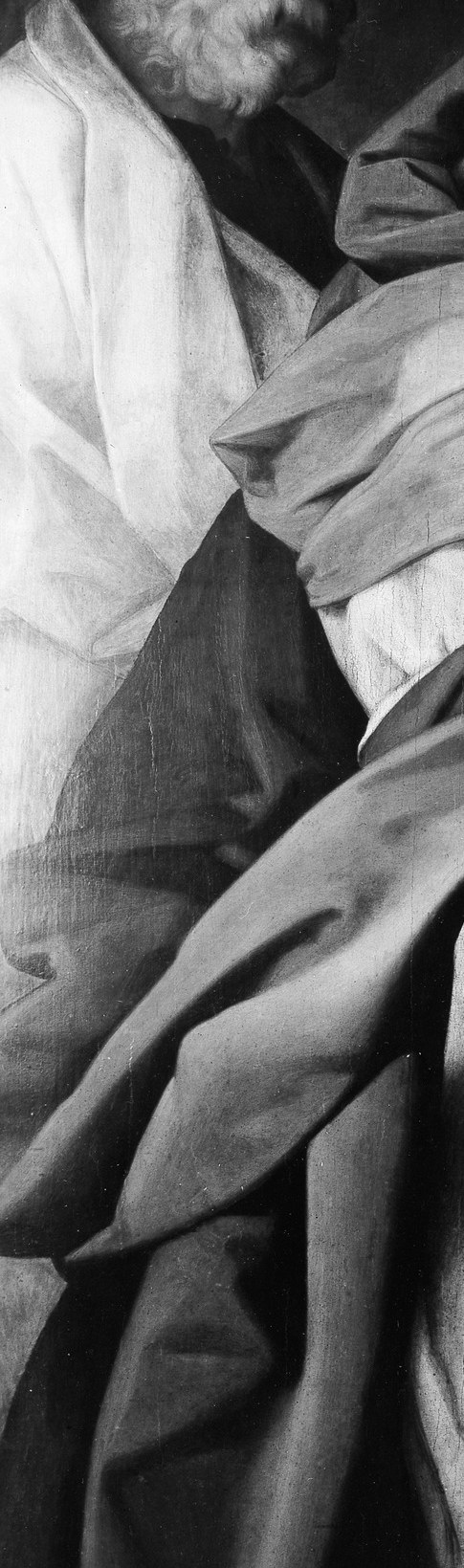
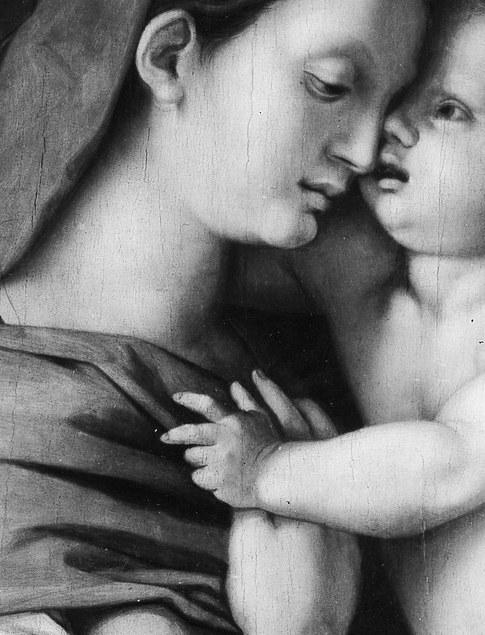
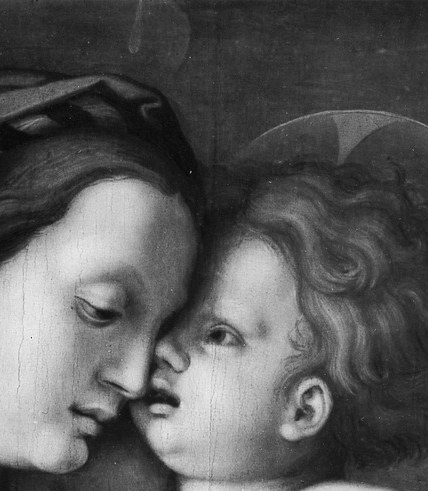
Look at the embrace: the Christ child leans into Mary, his small hand resting on her shoulder. It is a gesture that flips the expected hierarchy. The divine needs human arms. Mary's downturned eyes and tipped brow, the emotional fulcrum of the composition, are not triumphant but tender and heavy. On the left, Joseph stands apart, his white robe a beacon in the darkness, his weathered profile a silent witness to an intimacy he guards but does not enter.
Del Conte was a mid-16th century Mannerist working in Michelangelo's Roman circle, and that sculptural training shows in the dense, modeled flesh of the infant and the confident handling of Mary's cradling hands. But the most arresting detail is the color choice: Mary's sweeping mantle, nearly black, swallows the lower half of the painting. In Counter-Reformation visual language that was not neutral, it was prefigurative. The shadow of grief already falls on this family scene.
This painting lives at The Metropolitan Museum of Art, a quiet devotional work among giants. Spend a moment with the three faces, Joseph's stoic age, Mary's absorbed knowledge, the child's pressing closeness. What do you see in her expression?
Details

Transcript
An old man watches from the shadows. He is Joseph. The forgotten father. Always present, always slightly apart. The painter dresses him in stark white, a pillar of pure witness. Now look at the child's hand. The divine, reaching for his mother. Needing her to hold him up. Mary's eyes hold everything. No triumph here, only the quiet weight of knowing. Her dark robe already whispers of mourning.