Jinshan Island and West Lake by Kanō Sanraku

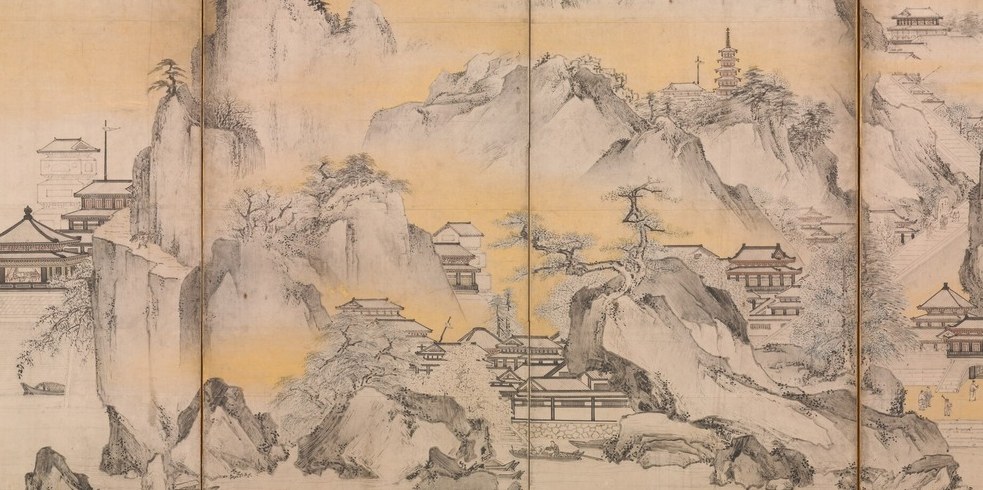
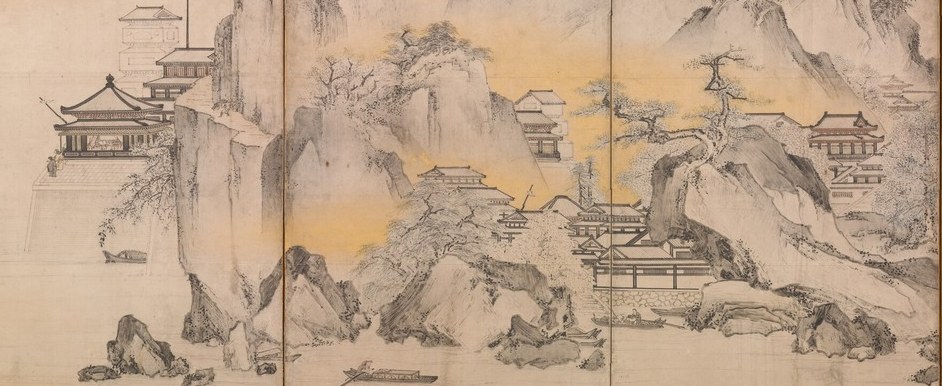
This is Jinshan Island and West Lake, a six-panel folding screen painted in 1630 by the Japanese master Kanō Sanraku. It lives at the Metropolitan Museum of Art in New York, and it is an object lesson in how gold can become space.

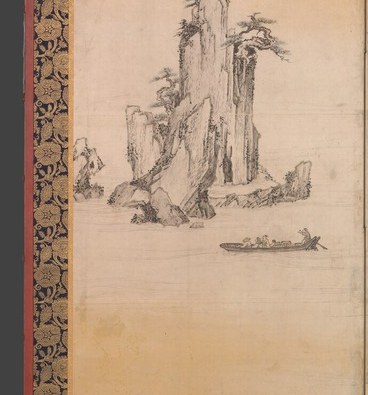
Run your eye across the full panorama and you will notice the gold cloud bands cutting horizontally through the entire composition. They are not only decorative. They compress depth: the world below the clouds exists in one plane, the world above in another. Between them, bare paper reads as open water, the unpainted gold ground becomes the lake itself, a trick of negative space the folding-screen format makes possible.

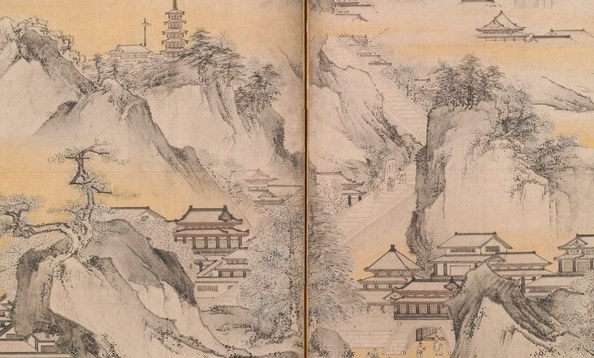
Sanraku was the sixth-generation head of the Kanō school, the lineage that served the Japanese shoguns. This late-career work uses kinpeki, gold powder, to fuse two celebrated Chinese sites, Jinshan Island and West Lake, into one unified panorama. The distant peaks are rendered in ink so diluted they nearly vanish, a Chinese recession technique that creates atmospheric miles behind the solid gold foreground.

The painting rewards slow looking. Six separate panels, but you will not find the joins. The clouds carry you across them.

#arthistory #kanosanraku #japanesepainting

Details
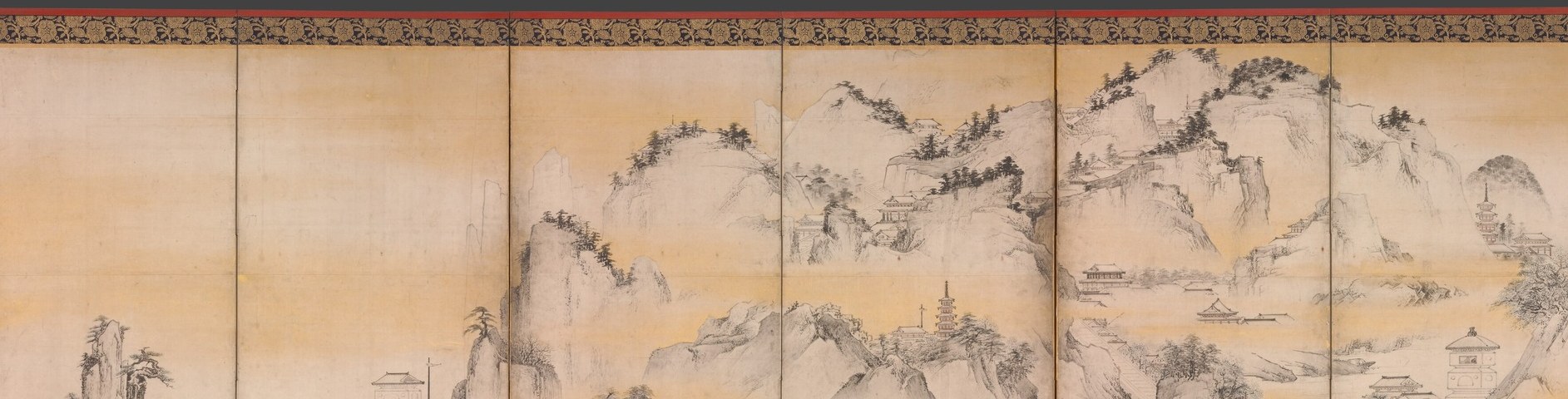
The signature Kano school kinpeki technique: gold powder clouds that simultaneously unify the six-panel composition and split foreground from background, creating compressed spatial depth across the full panorama.
The compositional anchor of the right screen , likely Jinshan Island in the Yangzi , rendered in angular ink strokes over mineral blue-green pigment, a Chinese literati rock idiom transplanted into a Japanese screen format.
Azurite and malachite-based pigments create the distinctive cool rock faces; their vivid colour against the gold clouds defines the Kano palette and signals these are idealized Chinese rather than observed Japanese landscapes.
Small figures in official robes near what reads as a pavilion landing or dock , the human scale against the landscape makes them simultaneously grand and tiny, a deliberate Confucian statement about the cultivated man in nature.
Kano school pines rendered with compressed, calligraphic brushwork , each needle cluster a distinct mark , demonstrating the school's fusion of Chinese landscape tradition with Japanese decorative linearity.
Transcript

Six folding panels, painted to read as one. A gold cloud band sweeps across all of them. The paper itself is bare where the water should be. Your eye fills in the lake. The gold does the work. Now look above the clouds. The far mountains are painted in ink so pale they barely register. Sanraku used diluted ink to push the peaks miles into the distance. Two Chinese landscapes, one Japanese screen, held together by gold.