Artwork
Jinshan Island and West Lake
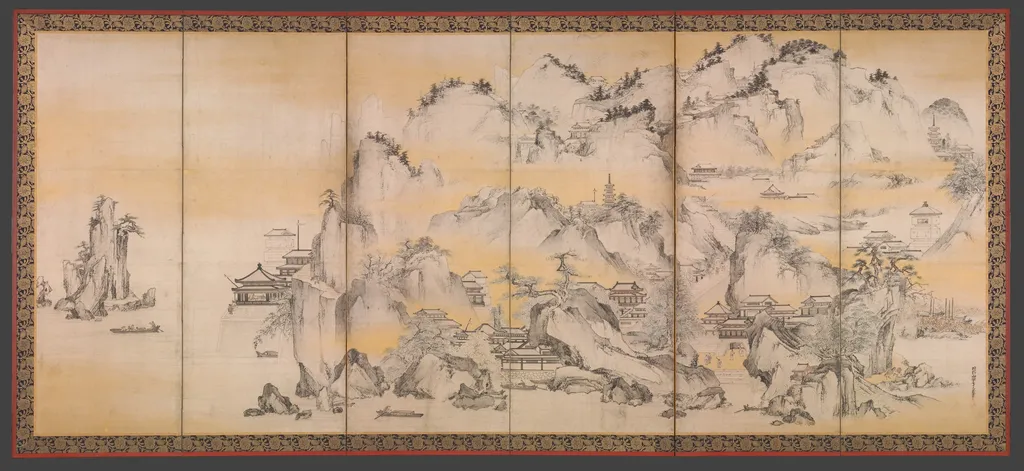
Jinshan Island and West Lake is an unspecified painting by the Kanō school artist Kanō Sanraku. It dates from 1630 and is held in the collection of the Metropolitan Museum of Art.
About this work
In 1630, the Japanese painter Kanō Sanraku filled a pair of six-panel folding screens with ink, color, and gold wash to join two distant Chinese sites.
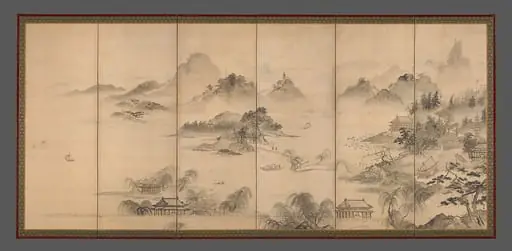
In 1630, the Japanese painter Kanō Sanraku filled a pair of six-panel folding screens with ink, color, and gold wash to join two distant Chinese sites. On the right, Jinshan Island rises from the Yangzi near Zhenjiang, its bridges crowded with figures; on the left, Hangzhou's walls frame West Lake and several of its ancient Ten Views. The crystalline rocks show the geometric shorthand of his late Kyoto years.
Subject & Meaning
The painting depicts two distant Chinese landmarks on a pair of six-panel folding screens: Mount Jinshan on the Yangtze River and West Lake near Hangzhou. On the right, Mount Jinshan is shown with bridges, roads, and paths where people of various social classes intermingle. The left side presents West Lake, featuring city walls, Buddhist monasteries, and the 'ten species of West Lake', an iconographic set derived from 12th- and 13th-century Chinese poetry and painting.
The composition unifies the two locations across time and space through golden mist and water, and a seasonal progression from spring to winter is subtly encoded from right to left. This work represents a Japanese master’s synthesis of Chinese landscape motifs, combining geographical specificity, cultural pilgrimage, and temporal flow.
Technique & Style
The work is a six-panel byōbu (folding screen) executed in ink, color, and gold on paper, with dimensions 152.5 by 358.2 cm. Gold powder is used extensively to depict mist, water, and background areas, softening the composition and unifying the two geographically distant scenes of Mount Jinshan and West Lake. The painting progresses from spring on the right to winter on the left, incorporating numerous figures, bridges, and architectural elements. The handling of gold creates a luminous, atmospheric effect characteristic of the Kanō school's decorative style. No condition issues are noted in available sources.
History & Provenance
Created by the Japanese artist Kanō Sanraku, the master of the Kanō painting school, Jinshan Island and West Lake is a pair of six-panel byōbu folding screens executed in ink, paint, and gold on paper. Seals on the work indicate it was produced around 1630. At the time, Sanraku was working on murals at the Myōshin-ji monastery in Kyoto alongside his adopted son Kanō Sansetsu.
The screen was made in Japan and is now in the collection of the Metropolitan Museum of Art in New York.
Context
As a work by Kanō Sanraku, the master of the Kanō painting school in the early Edo period, Jinshan Island and West Lake reflects the school's engagement with Chinese landscape motifs. The painting depicts two geographically distant Chinese sites, Mount Jinshan and West Lake, and incorporates the ten iconic species of West Lake derived from Chinese poetry and painting of the 12th–13th centuries. Art historically, the work follows a tradition among Japanese artists of rendering Chinese subjects; before Sanraku, the most notable Japanese depiction of West Lake was a vertical scroll by Sesshū (later attributed to his student Suugetsu).
Sanraku created the piece around 1630, contemporary with his work on murals at Myōshin-ji Monastery in Kyoto alongside his adopted son Kanō Sansetsu. The use of gold to unify the seasonal progression across the screens exemplifies Kanō-school decorative techniques while situating the painting within broader East Asian landscape painting history.
Overview
Jinshan Island and West Lake is a pair of six-panel folding screens (byobu) created in 1630 by the Japanese painter Kanō Sanraku. Executed with ink, color, and gold on paper, this work brings together two celebrated Chinese landscapes. The screens are held in the collection of the Metropolitan Museum of Art in New York City, representing a significant example of Sanraku's late career output.
Artist & collection
Artist
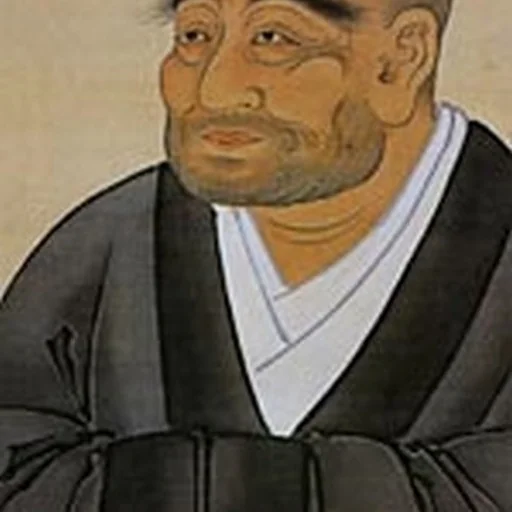
Kanō Sanraku (狩野 山楽; 1559 – September 30, 1635) was a Japanese painter also known as Kimura Heizō (his birth name), Shūri, Mitsuyori, and Sanraku.

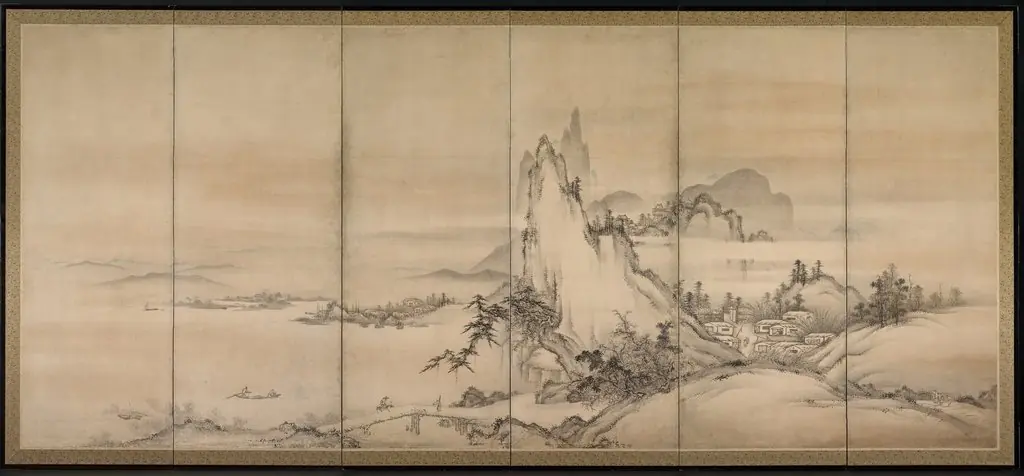 Chinese Landscape
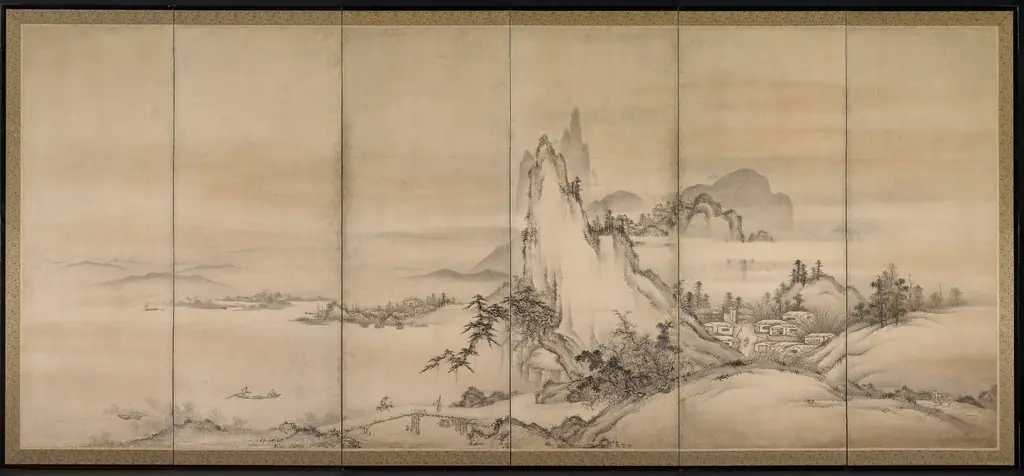 Chinese Landscape
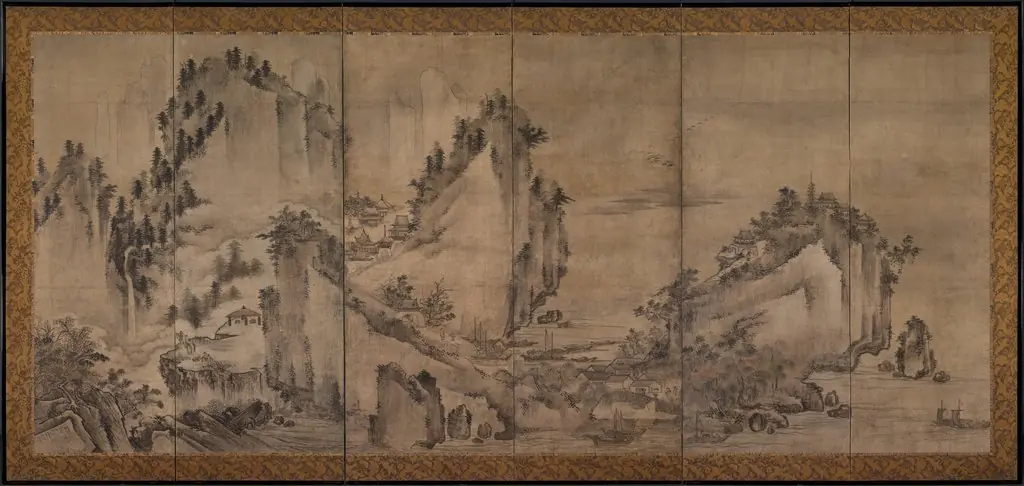 Landscape
 Orchid Pavilion Gathering; Autumn Harvest Festival
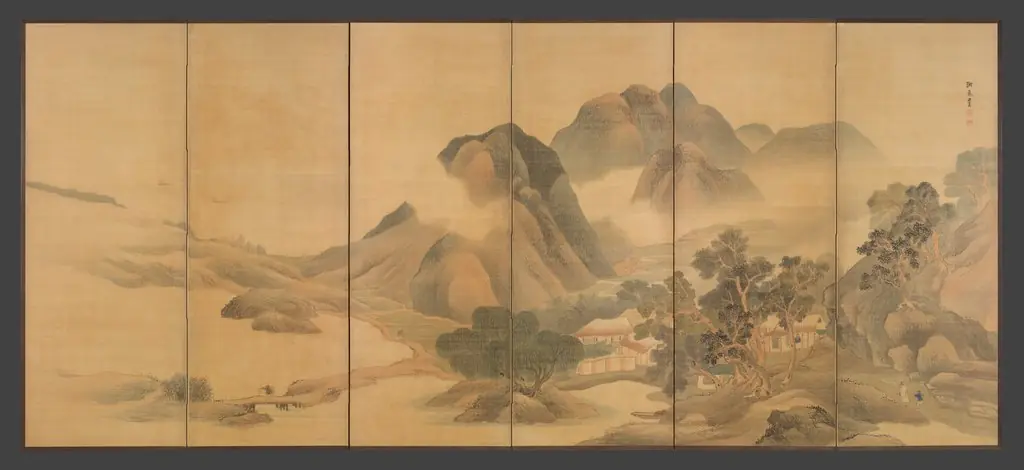 Travels through Mountains and Fields
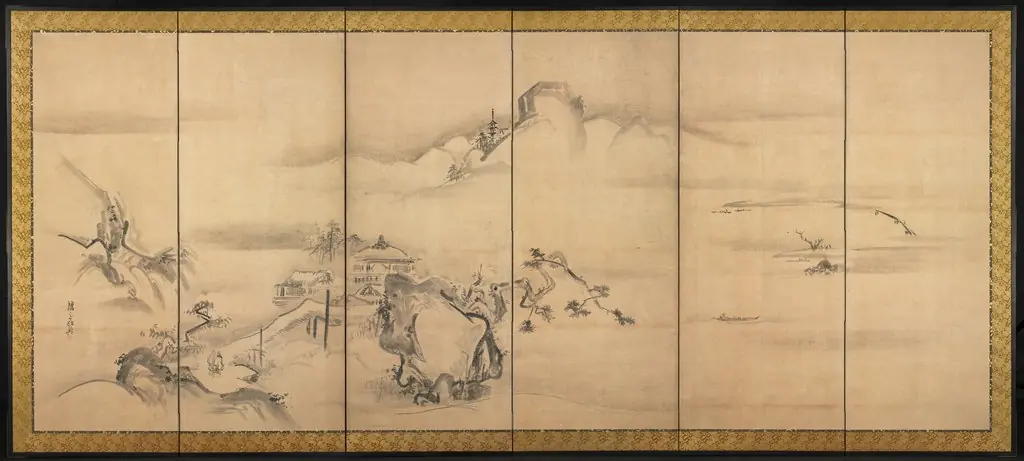 Eight Views of the Xiao and Xiang Rivers
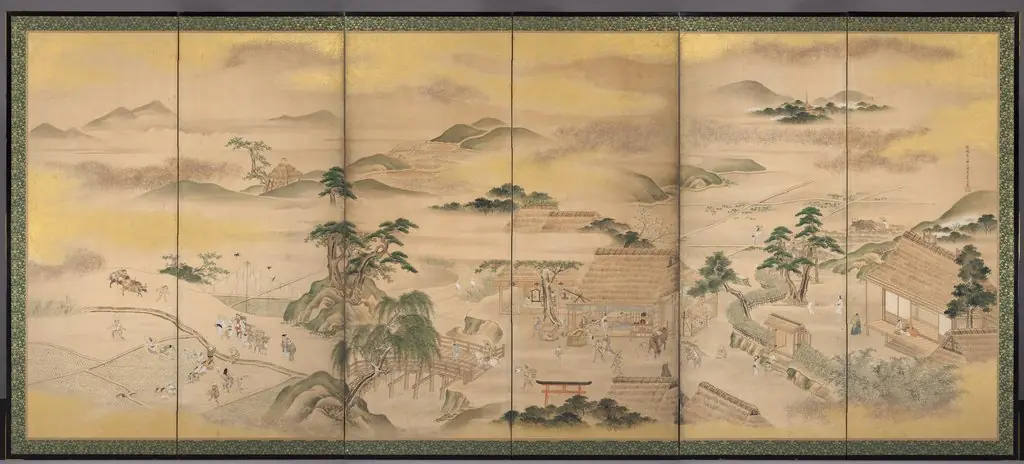 Spring and Autumn Farming (Spring)
 Spring and Autumn Farming (Spring)
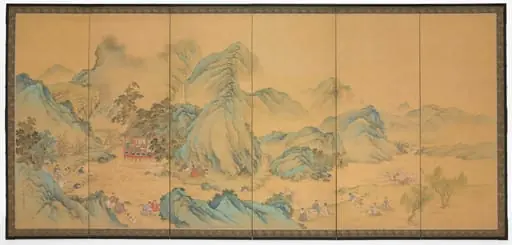 The Gathering at the Orchid Pavilion (front); Geese among Reeds (back)
- 久隅守景筆 西湖図屏風|View of West Lake