Marcotte d'Argenteuil by Ingres, Jean-Auguste-Dominique
Jean-Auguste-Dominique Ingres painted this portrait of Charles Marcotte in 1810, during his first stay in Rome, and it now lives at the National Gallery of Art in Washington. Marcotte was thirty-six, an inspector general for Waters and Forests in Napoleonic Rome, but far more importantly, he was about to become one of the most significant art patrons in 19th-century France and Ingres's single most steadfast supporter.
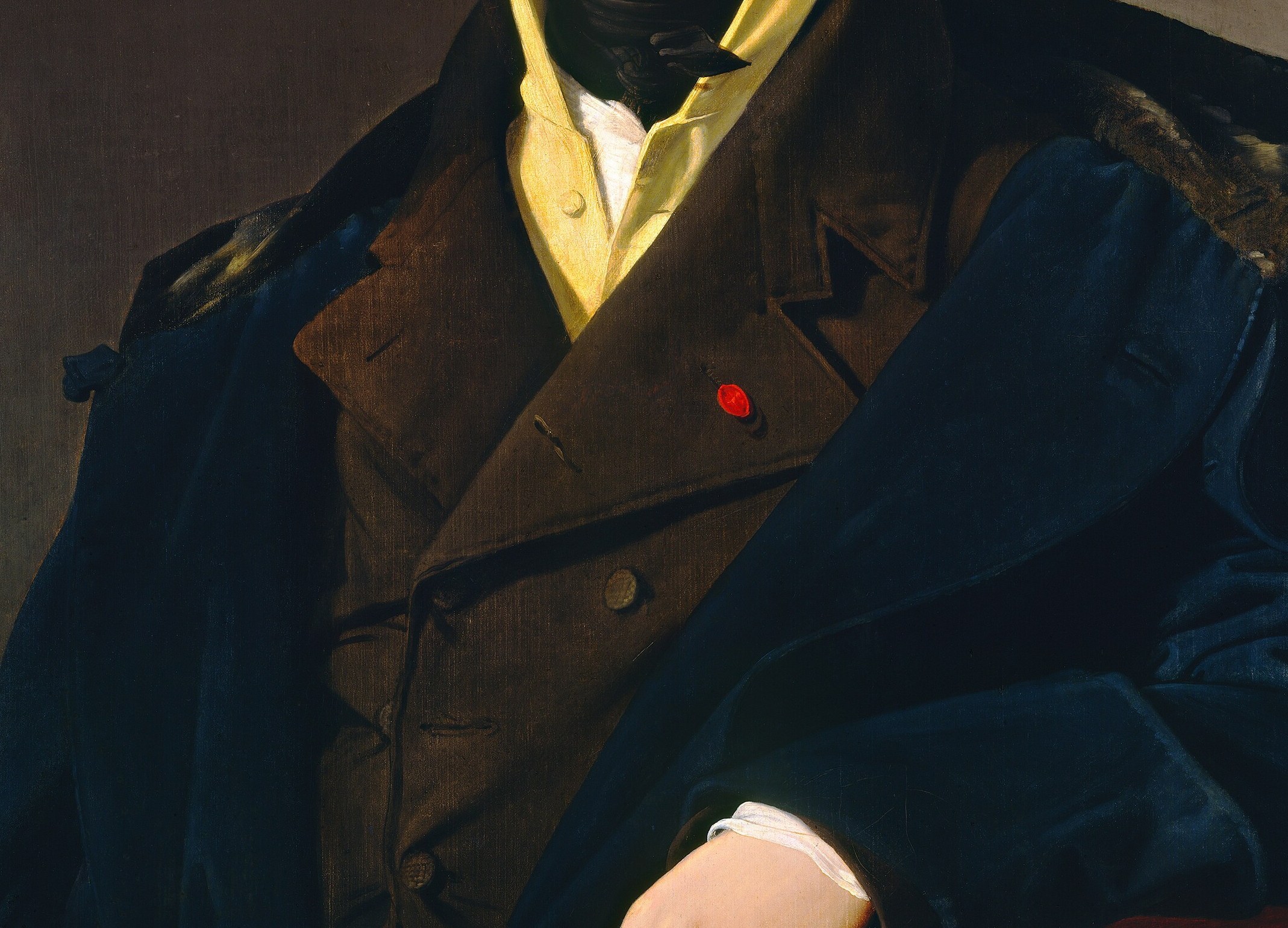
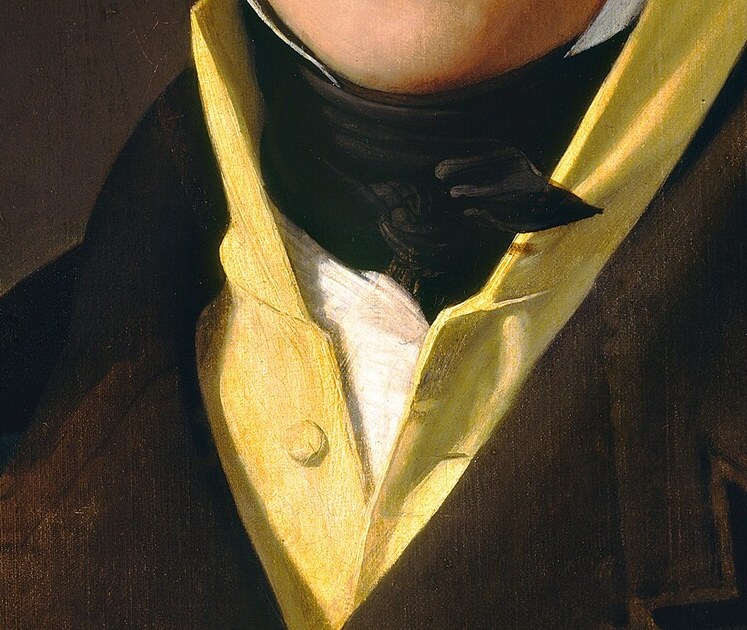
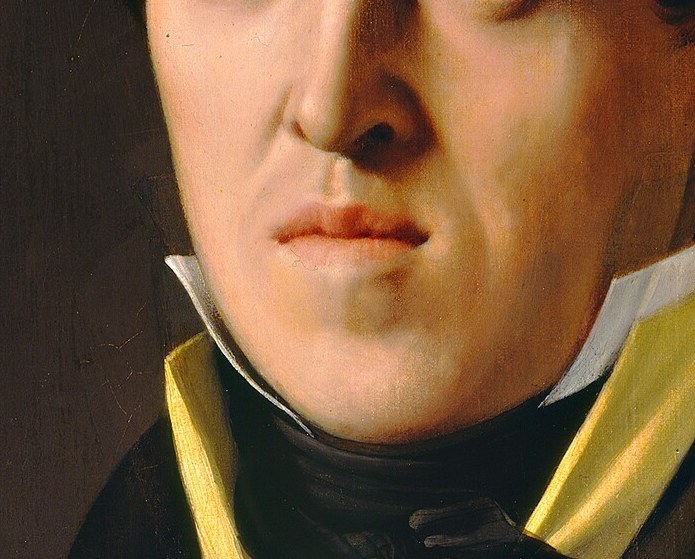
Look first at that lemon-bright cravat, the loudest note in an otherwise restrained composition. Then find the small red ribbon on his left lapel, almost certainly the Légion d'honneur, Napoleon's highest order, worn without fanfare. The compressed lips and the gaze that slides just past yours hold a whole personality: alert, appraising, self-possessed. This is a man who wielded genuine administrative power and wore it as lightly as the dark wool coat draped across his shoulders.
The backstory is remarkable. This portrait was painted the year a friendship began that would last half a century. Marcotte commissioned Ingres repeatedly, portraits of his family, his friends, even his mistress, and gave the artist something rarer than money: steady loyalty through decades when Ingres's work was often attacked by Paris critics. The signature Ingres inscribed over the red cloth in the corner is almost a handshake in paint, young ambition meeting enduring faith.
Some portraits record a face. This one records the exact moment a crucial relationship took root.
Details

Transcript
He ran Napoleon's forests and waterways in Rome. Bureaucratic power, worn lightly as a well-cut coat. That yellow cravat. In 1810, a defiantly modern choice. The red pin on his chest is almost certainly the Légion d'honneur. He carries his status quietly. Look at his mouth. This man was Ingres's most loyal friend and patron for fifty years. He sits for this the year their lifelong bond begins.