The Rathskeller by John Sloan
John Sloan’s *The Rathskeller* (1901) is an oil painting that captures a quiet urban scene, now at the Museum of Fine Arts, Boston. Sloan, an American painter and etcher, was a key figure in the Ashcan School, known for depicting everyday urban life in New York City.
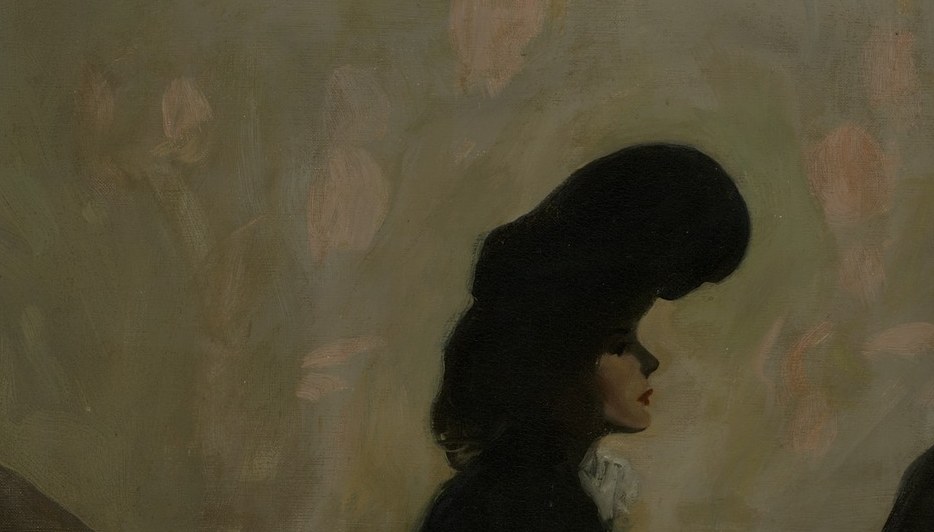
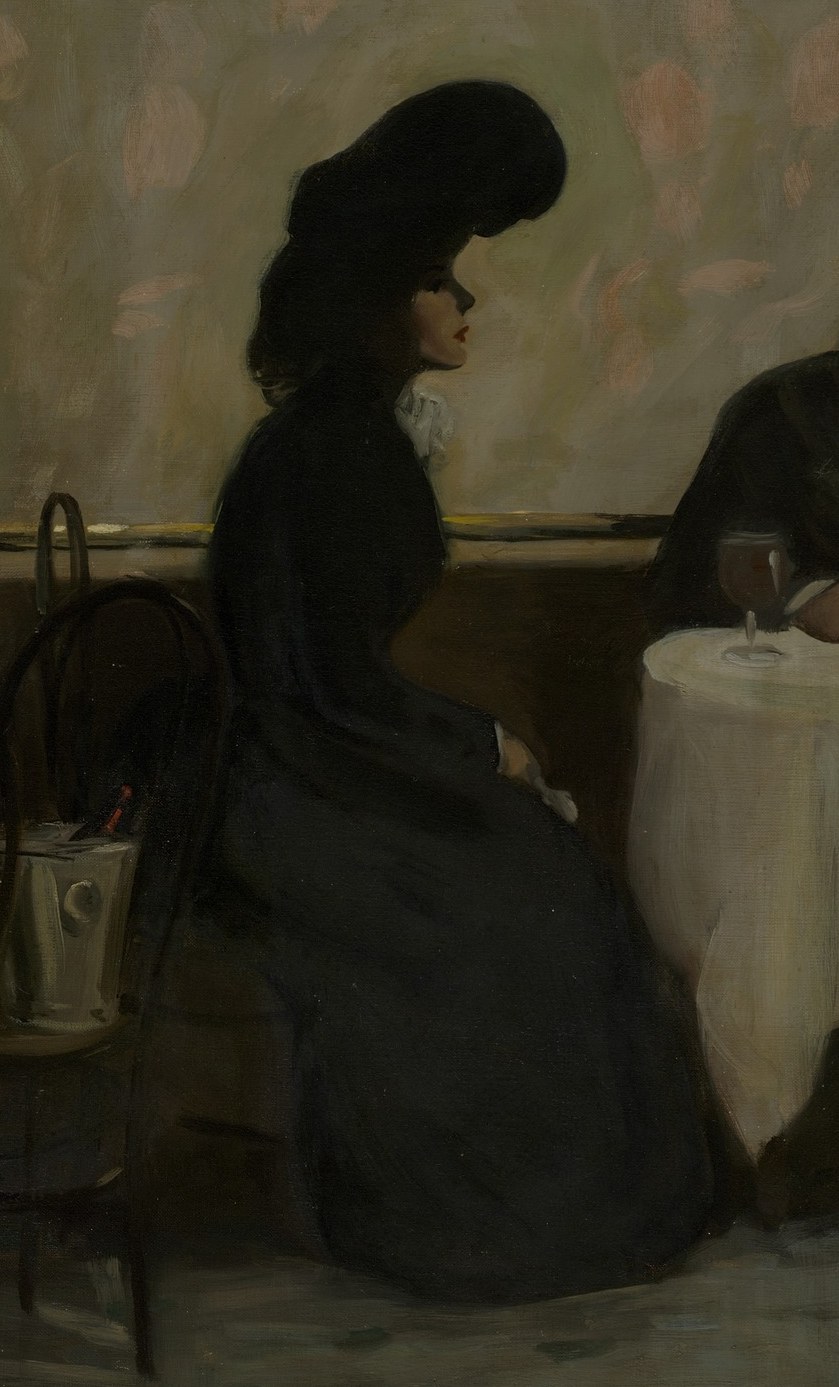
At first glance, the painting shows three figures gathered around a table in a dimly lit tavern. The muted palette and restrained lighting convey an introspective mood, typical of early twentieth-century urban genre works. The figures seem to be in a moment of private conversation or contemplation.
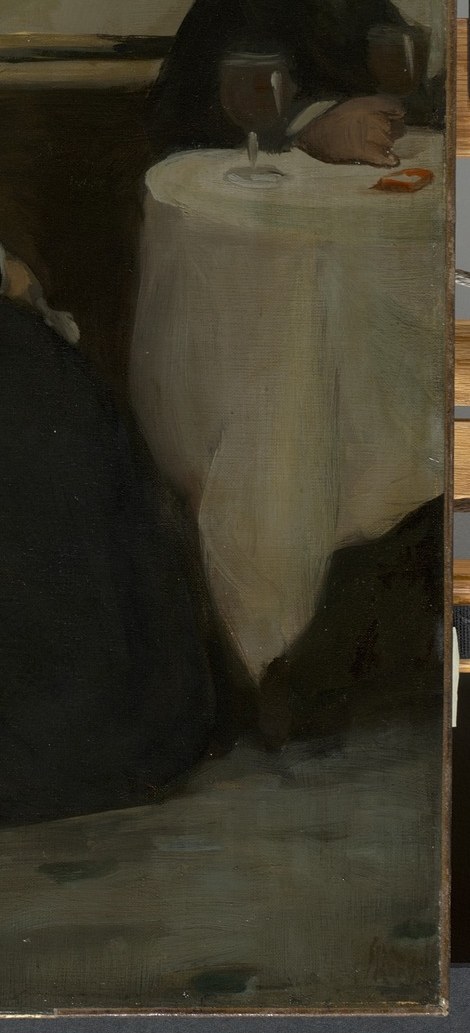
However, a subtle detail on the table’s edge, near the ice bucket, reveals more about the scene: a single playing card, discarded face down. This small detail hints at a game that just ended, or perhaps a moment of risk and chance, adding a layer of intrigue to what initially appears as a mundane gathering.
Sloan's realist approach aligns with the Ashcan School’s focus on direct observation and the unembellished portrayal of city life. What other small, hidden details do you think could change the meaning of a painting?
Details
Transcript
This painting, The Rathskeller, dates to 1901. It shows three figures in a dimly lit urban tavern. The artist, John Sloan, loved depicting everyday city life. A single wine glass sits on the white tablecloth. But look closely at the table’s edge, by the ice bucket. A single playing card has been discarded, face down.