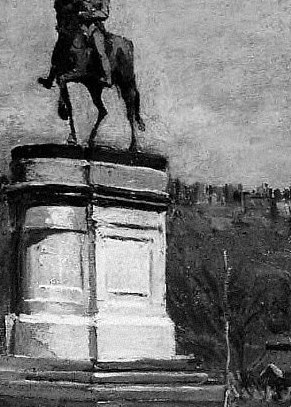
The Public Garden, Boston by George Loring Brown
George Loring Brown's 1869 oil painting, The Public Garden, Boston, offers a glimpse into the city's cherished urban oasis. The most surprising thing about this painting is the artist's diverse career path beyond landscape art.
Observe the prominent equestrian statue of George Washington, anchoring the composition on its substantial pedestal. Notice the winding pathway inviting the eye through the trees, suggesting a tranquil escape within the bustling city.
Brown, born in Boston in 1814, began his artistic journey apprenticed to a wood engraver and illustrating children's books. A European voyage funded by an early landscape sale led him to study in Paris and later spend two decades in Rome, cultivating a technique called macchiorelli. He painted Italian landscapes for tourists and earned the nickname "Claude" Brown for his imitation of the master.
Upon returning to America, Brown continued painting landscapes and even taught younger artists like Willard Leroy Metcalf, leaving a legacy far richer than this single view might suggest.
Details
Transcript
Boston's Public Garden in 1869. Look at the equestrian statue. George Washington surveys his city. The artist started as an engraver. He was nicknamed "Claude" Brown. He lived in Rome for twenty years. He also taught Willard Leroy Metcalf. George Loring Brown signed this work.