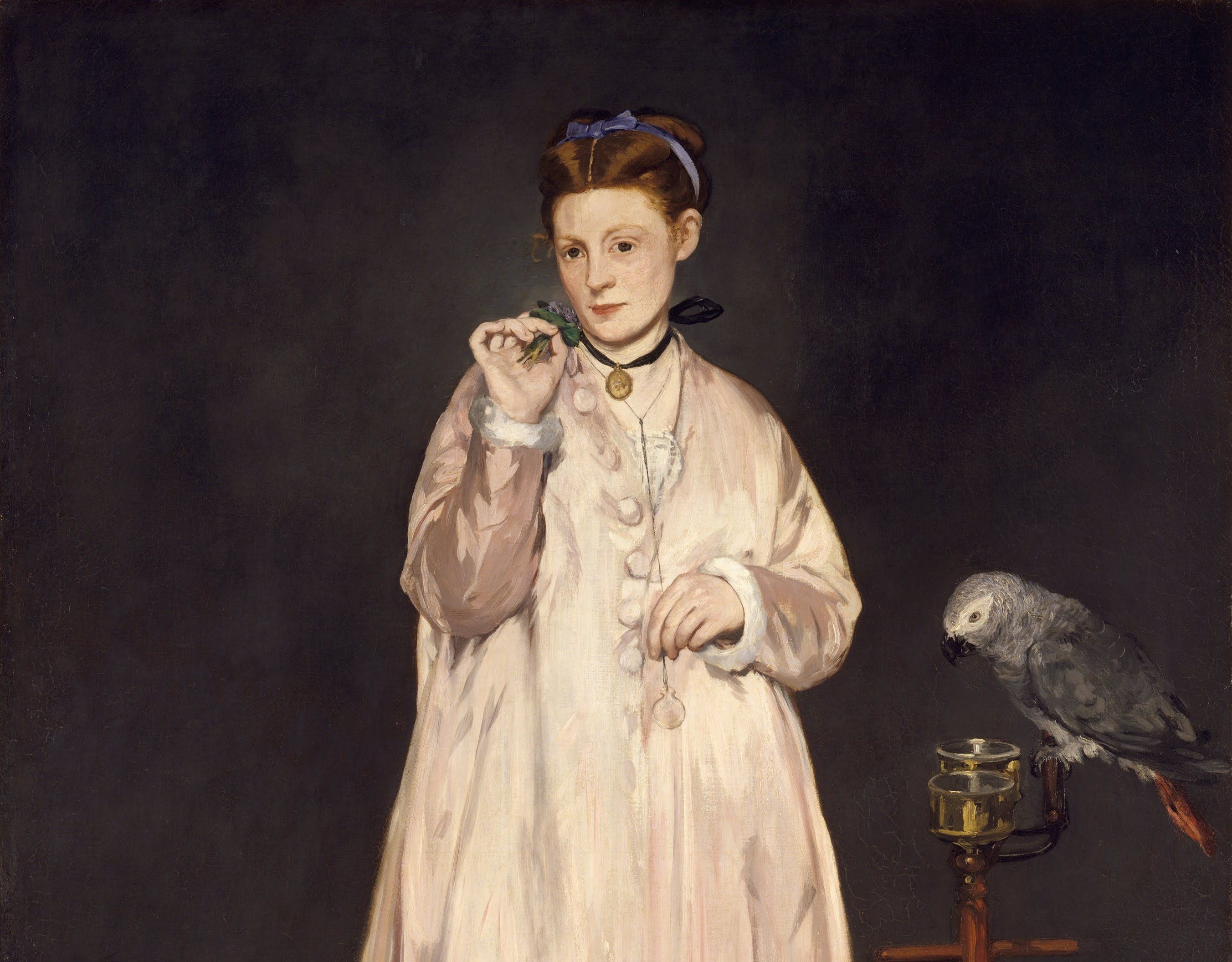
Young Lady in 1866 by Édouard Manet

This isn't just a portrait, it might be a record of fading vision. Édouard Manet's "Young Lady in 1866" (Metropolitan Museum of Art) shows his favorite model, Victorine Meurent, in a rose-colored peignoir. But the story in the paint is darker than the silk suggests.

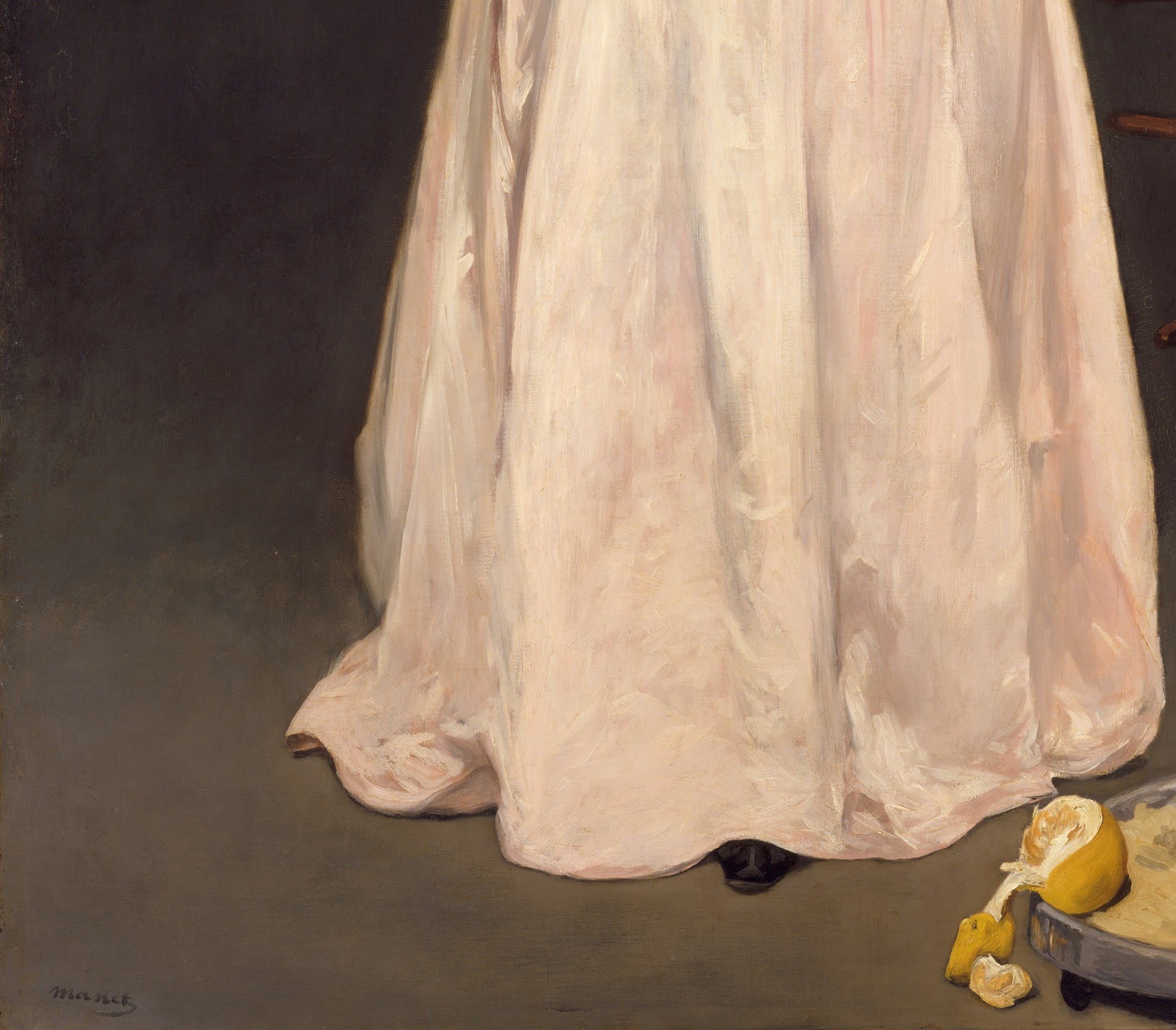
Look at the floor. The most vivid object in the whole painting is a single, partly peeled orange. It sits there, glowing, while the rest of the scene recedes into a dark, muted background. The parrot, supposedly the lively centerpiece, is rendered in quiet greys.

Manet was in the early stages of syphilis, which would eventually rob him of his mobility and his sight. Here, he paints a world beginning to dim: a woman, a grey bird, and one last flash of color at her feet. The model herself, a practicing painter, went deep into debt for the peignoir, Manet refused to pay for it.

What do you make of that orange, alone on the floor? An accident of vision, or the whole point of the painting?

#arthistory #Manet #Impressionism

Details
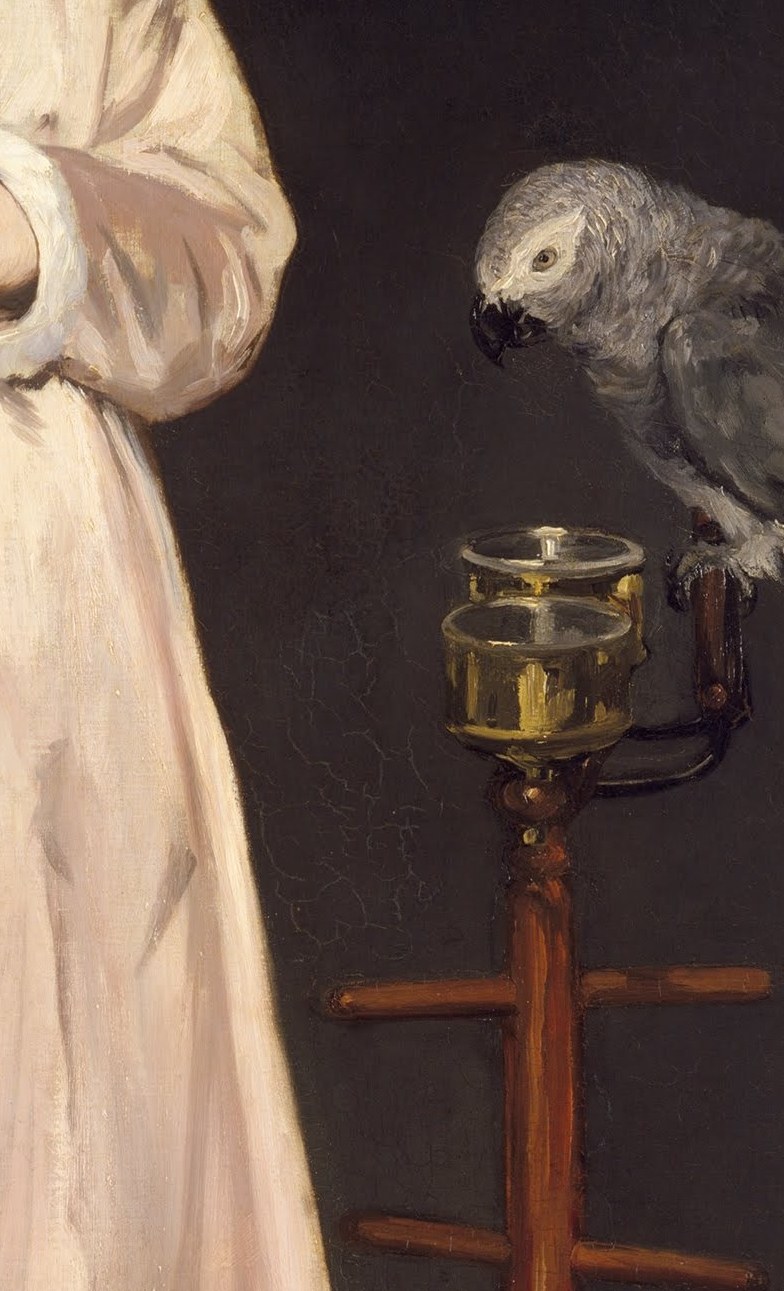
The painting's primary symbolic weapon: it directly cites Courbet's scandalous 1866 'Woman with a Parrot', inviting viewers to compare a nude with this fully clothed, equally confrontational figure.
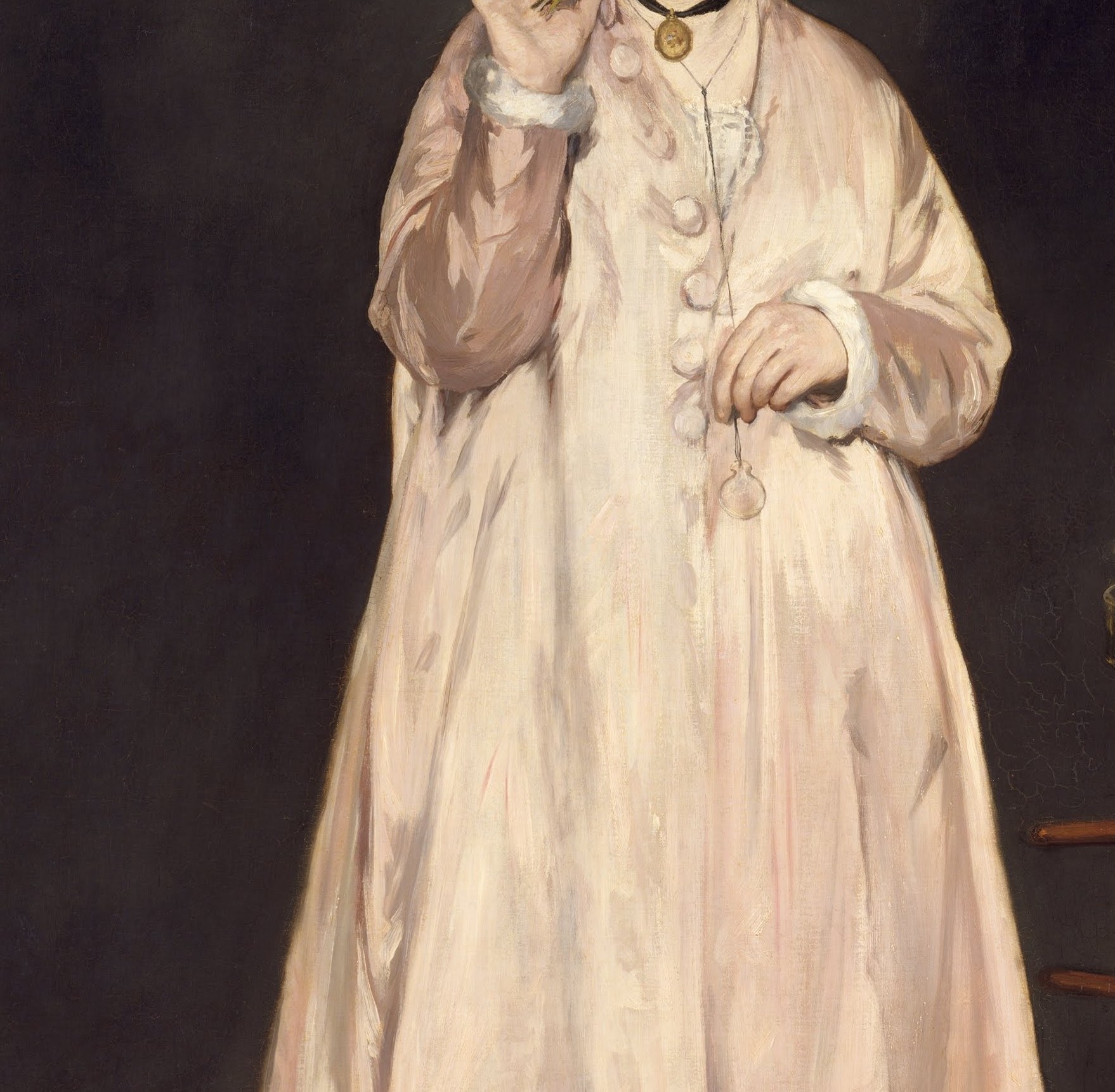
A technical bravura passage: Manet renders silk with loose, confident strokes that collapse academic finish into a distinctly modern touch , each mark does more work than convention demanded.
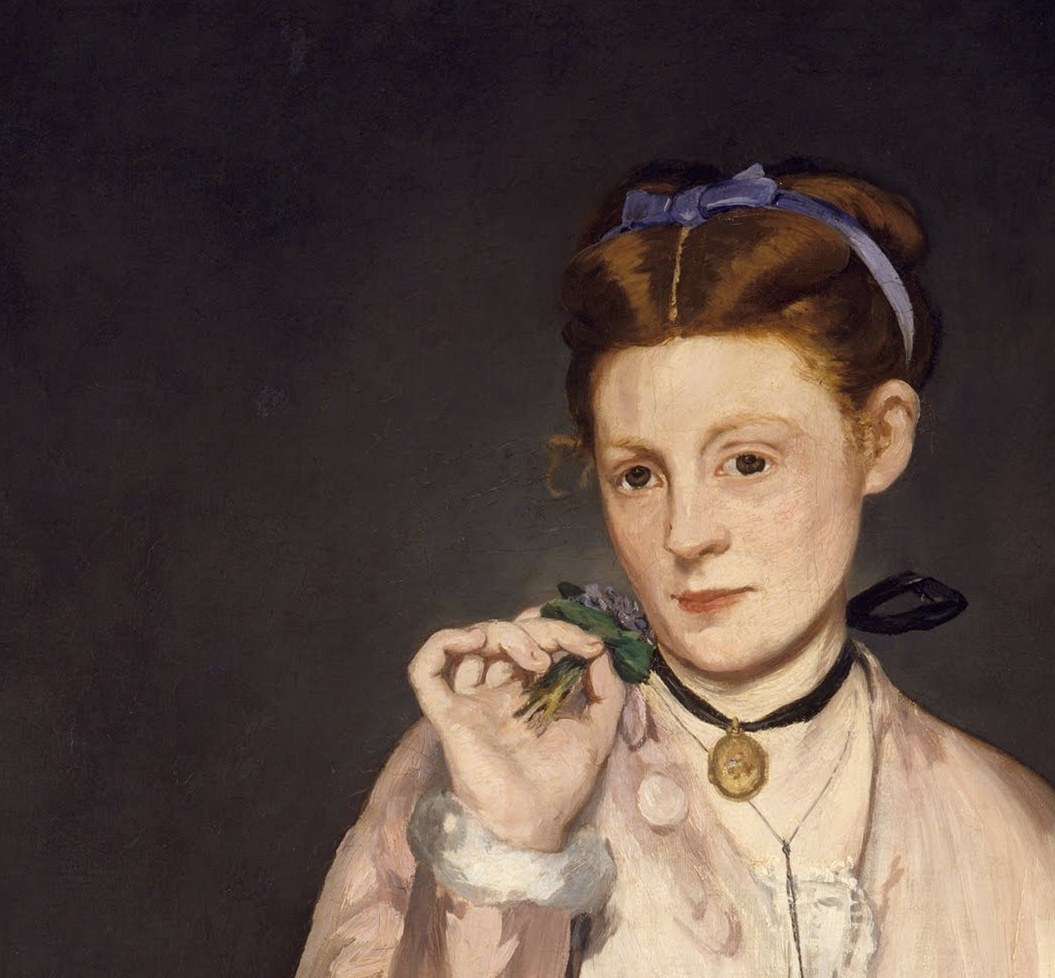
Her expression is composed and slightly averted , she neither invites nor rejects the viewer, a calculated ambiguity Manet gave her repeatedly across his models.
The pooling volume of fabric flattens the lower composition in a quasi-Japanese way, anticipating modernism; the dress becomes almost architectural.
Manet refuses illusionistic depth; the gray reads as resolutely 2D, making the figure appear almost appliqued , the move that most outraged academic viewers and most influenced later modernism.
Transcript

1866. A young woman in pink, a grey parrot, a violet bouquet. The painting nearly bankrupted its model. Victorine Meurent bought the peignoir herself. Manet wouldn't pay for it. Now look down. By her feet, a partly peeled orange. Critics mocked it, calling the parrot the only thing with any life. Around this time, Manet began losing his sight to syphilis. He painted what he could see: a woman, a grey bird, a single bright object.