Artwork
Young Lady in 1866
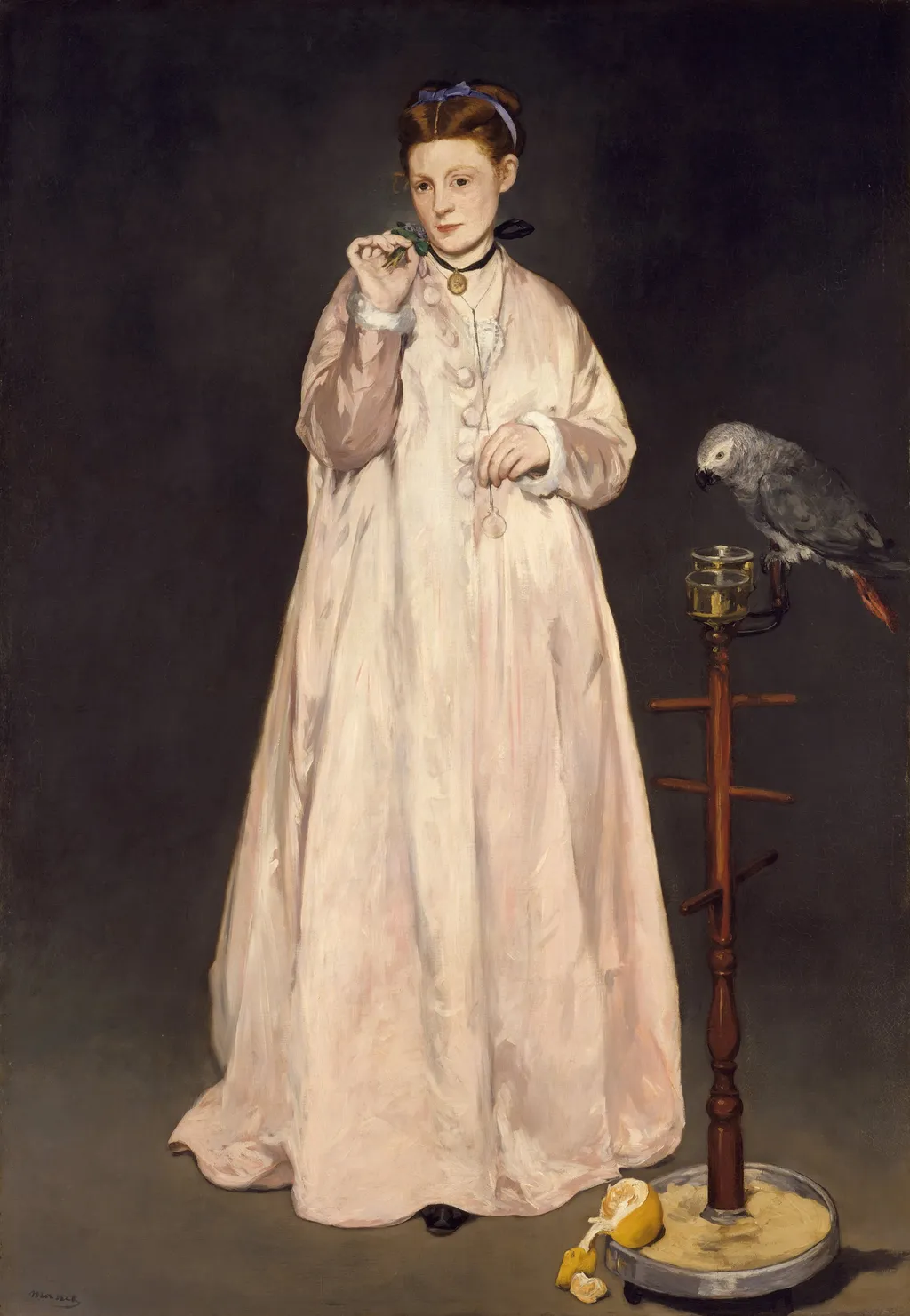
Young Lady in 1866 is an oil painting by the Academic Art artist Édouard Manet. It dates from 1866 and is held in the collection of the Metropolitan Museum of Art.
About this work
Victorine Meurent stands in a rose silk peignoir, lifting a nosegay of Parma violets in one hand and toying with a man's monocle in the other. A grey parrot perches nearby, a half-peeled orange at her feet. Édouard Manet showed this life-size canvas in 1867 and again at the 1868 Paris Salon, where critics mocked it as 'Lady with a Parakeet.'
Subject & Meaning
The painting depicts Manet’s favorite model, Victorine Meurent, standing in a long pink peignoir and holding a small bouquet of violets, accompanied by an African grey parrot on a perch. The work’s realist style and inclusion of the parrot drew comparisons to Gustave Courbet’s scandalous 1866 nude Woman with a Parrot at the 1868 Salon, leading the public to nickname it “Lady with a Parrot.” The peignoir and violets suggest an intimate, private moment, while the parrot, traditionally a symbol of vanity or exoticism, reinforces themes of contemporary femininity.
Manet eliminates narrative detail against a flat background, focusing instead on a delicate color harmony of pearl pink, grey, black, and white, marking the painting as a modernist break from academic conventions.
Technique & Style
The parrot’s gray plumage echoes the background with slight variations, while yellow accents in the perch and the sliced lemon add a third chromatic note.
The painting is executed in oil on canvas, measuring 185.1 × 128.6 cm (approximately 72.9 × 50.6 in). Manet employs a boldly simplified composition, eliminating superfluous detail to focus on the standing figure of Victorine Meurent, who is set against a flat, subtly graduated background that shifts from darker tones at the top to lighter hues below. The brushwork creates a delicate color symphony: the pearly pink of the robe is enlivened by gray streaks and juxtaposed with the black of the shoe, the lilac hair ribbon, and the white of the wrists.
The parrot’s gray plumage echoes the background with slight variations, while yellow accents in the perch and the sliced lemon add a third chromatic note. This treatment reflects Manet’s realist approach, which drew criticism for its departure from academic conventions.
History & Provenance
Created in 1866, the painting was first exhibited in May 1867 at Manet's solo exhibition on the Avenue de l'Alma as catalogue number 15 titled Jeune dame en 1866, and later at the 1868 Paris Salon under the titles Lady in Pink or Young Lady. Manet sold it to the art dealer Durand-Ruel in January 1872 for 1,500 francs. Durand-Ruel sold it in 1877 to textile magnate and collector Ernest Hoschedé for 2,000 or 2,500 francs.
Hoschedé's sale at the Hôtel Drouot on 6 June 1878 brought 700 francs to Henri Hecht. The work then returned to Durand-Ruel, who sold it in 1881 to J. Alden Weir on behalf of Erwin Davis. Davis offered it at auction in New York in March 1889, repurchased it for $1,350, and donated it to the Metropolitan Museum of Art on 21 March 1889, together with Manet's Boy Carrying a Sword and Jules Bastien-Lepage's Joan of Arc.
Young Lady in 1866 is held at the Metropolitan Museum of Art in New York. It was first exhibited in May 1867 at Manet's solo exhibition on the Avenue de l'Alma in Paris as catalogue number 15 under the title 'Jeune dame en 1866'. The following year it was shown at the Paris Salon of 1868, where it attracted criticism.
The painting, along with Manet's 'Boy Carrying a Sword', became one of the first of the artist's works to enter a museum collection when it was donated to the Metropolitan Museum of Art by Erwin Davis in 1889.
Context
First shown in Manet's 1867 solo exhibition, Young Lady in 1866 faced harsh criticism when it debuted at the Paris Salon the following year. Critics derided the painting for its realist style and the inclusion of a parrot, which recalled Gustave Courbet's scandalous 1866 Woman with a Parrot. Théophile Gautier condemned its lack of academic convention, calling the head 'flat and ugly' and rejecting the color harmony.
The public mockingly nicknamed it 'Lady with a Parrot.' Despite the negative reception, the work holds a crucial place in art history: along with Boy Carrying a Sword, it became the first painting by Manet to enter a museum collection when Erwin Davis donated it to the Metropolitan Museum of Art in 1889.
Legacy
Young Lady in 1866 holds a landmark position in Manet's legacy as one of his first works to enter a museum collection, alongside Boy Carrying a Sword, when donated to the Metropolitan Museum of Art in 1889. Its debut at the 1868 Paris Salon was met with strong criticism; critics such as Théophile Gautier derided its departure from academic conventions. The painting's realism and parrot motif prompted comparisons to Gustave Courbet's scandalous nude, and the public mockingly dubbed it 'Lady with a Parrot'.
Despite this rocky start, the painting remains a key example of Manet's portrait work and is held at the Metropolitan Museum of Art.
Overview
Édouard Manet's 1866 oil painting, Young Lady in 1866, presents a full-length portrait of his frequent model, Victorine Meurent. Executed on canvas, this work is now housed at the Metropolitan Museum of Art in New York. It holds historical importance as one of the initial pieces by Manet to enter a public gallery collection, alongside Boy Carrying a Sword. The painting's original title was Jeune dame en 1866.
Own this work as a print
Artist & collection
Artist
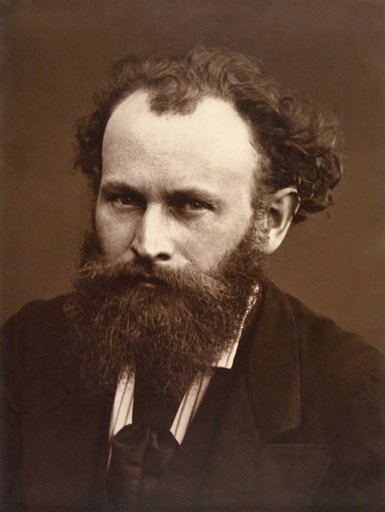
Édouard Manet was a French modernist painter. He was one of the first 19th-century artists to paint modern life, as well as a pivotal figure in the transition from Realism to Impressionism.

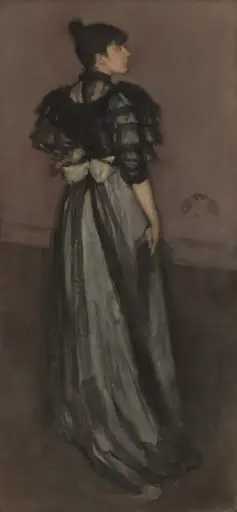 Mother of Pearl and Silver: The Andalusian
 Lydia Field Emmet
 Portrait of Mademoiselle Claus
 Portrait of the Marquise de Miramon, née, Thérèse Feuillant
 Girl with Cherries
 Portrait of a Woman in Gray
 From a Walk
 Portrait of Jenny Kamerlingh Onnes
 Portrait of Madame Brunet
 Woman in a Riding Habit (L'Amazone)
 Girl in Red
- A young Woman