Bouquet of Flowers in a Glass Vase by Bosschaert, Ambrosius
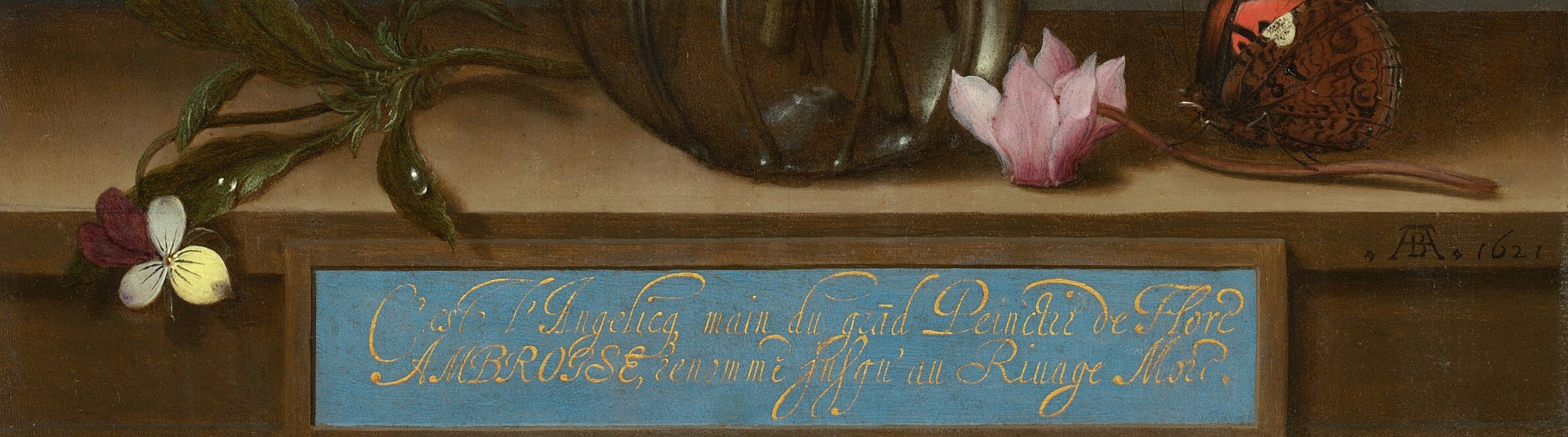
A glass vase holding a crowded bouquet, painted on copper in 1621 by Ambrosius Bosschaert the Elder. It hangs today in the National Gallery of Art, Washington.
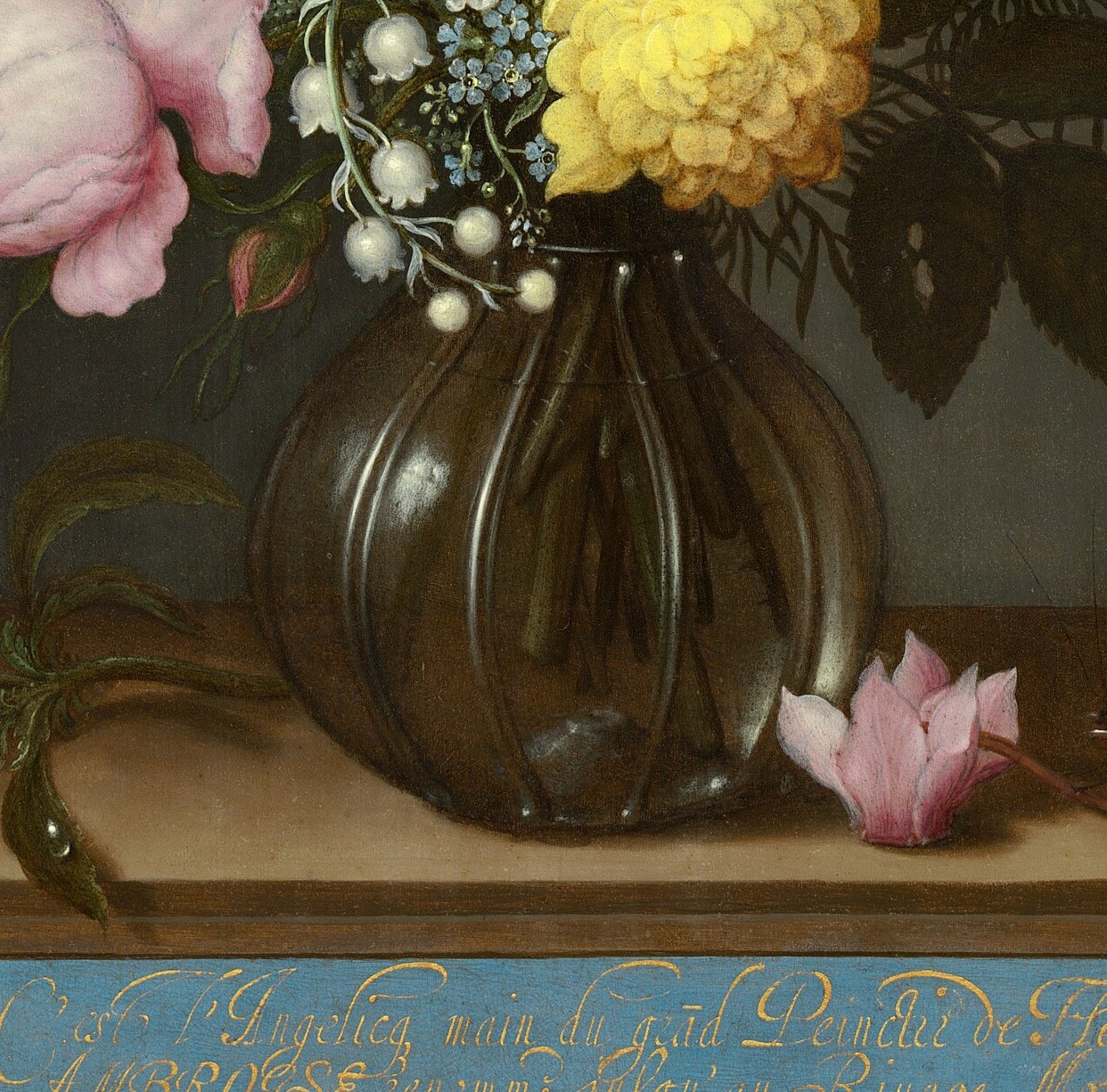
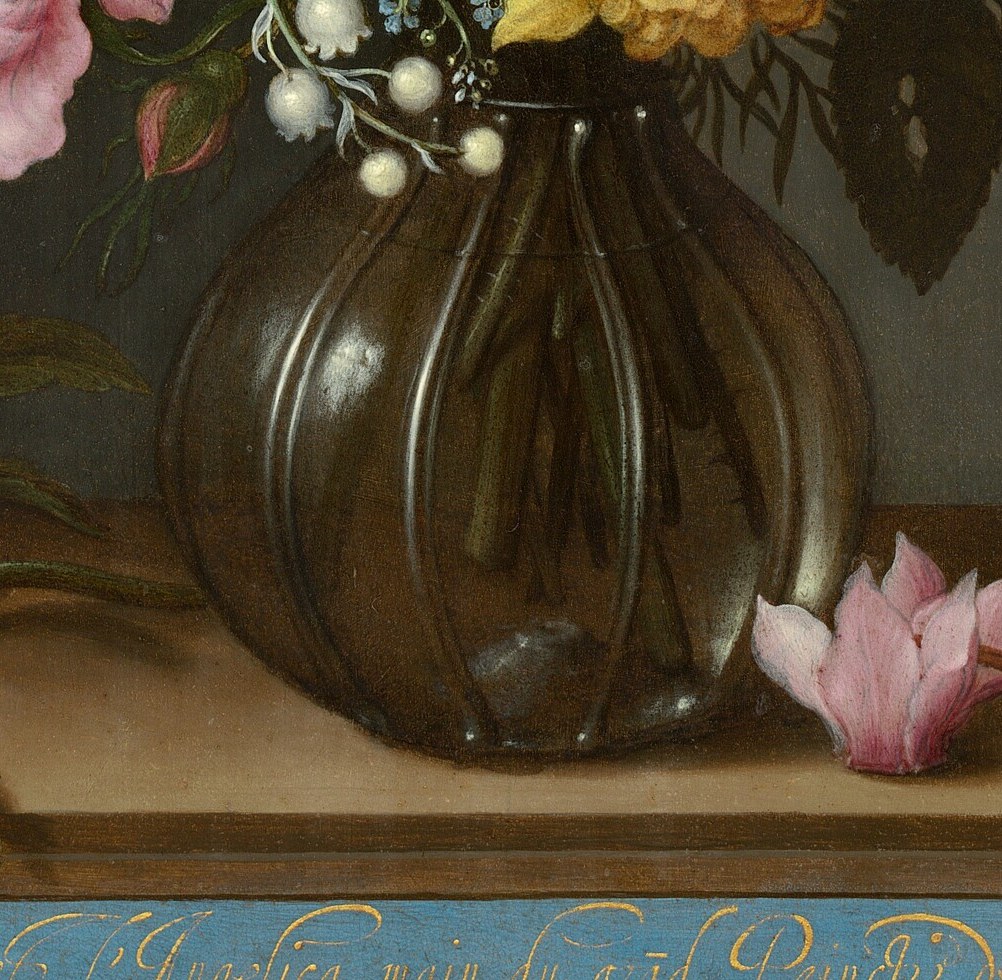
Look first at the stems inside the vase. Each one visibly bends where it enters the water. That kink is not accidental; it is the painting's centerpiece. Bosschaert painted every stem individually and gave each its own refraction, a feat that still reads as optically true four centuries later.
He could do it because he worked on copper, not canvas. Copper has no weave, no tooth. On that mirror-smooth ground, a single white highlight on glass reads as a hard reflection, not a brushstroke. Bosschaert was one of the first painters to build a career almost entirely on flower still lifes, and he turned Middelburg into the Dutch Republic's center for the genre. This picture was made the year he died.
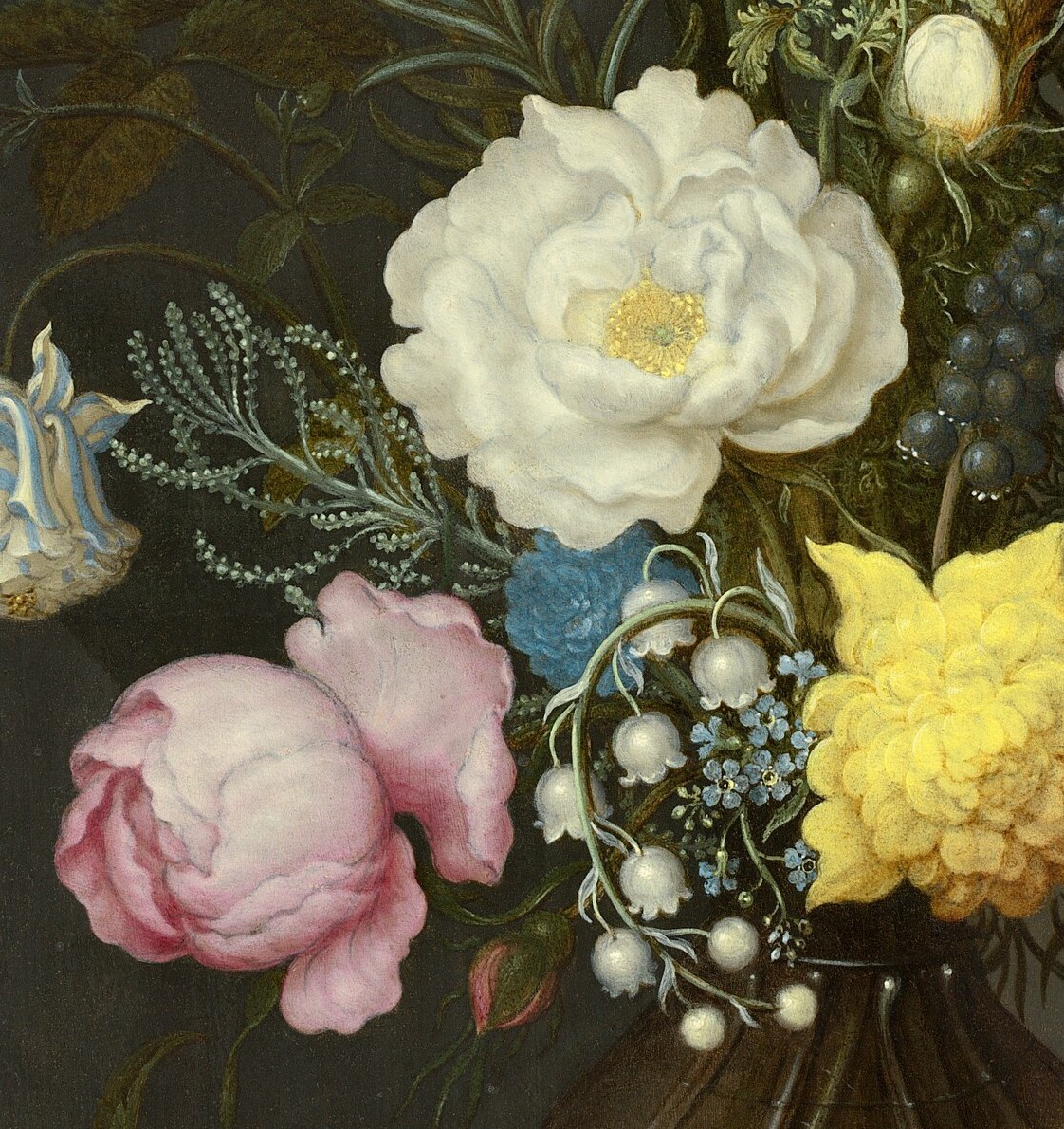
The white rose at the bouquet's heart is wide open, at peak bloom. In Dutch iconography, a fully open white rose meant purity, and also the nearness of death. The painter knew exactly where he was in the season.
Details
Transcript
The vase is just paint on copper. Copper has no grain. A brush can leave no trace. So he paints the glass itself. Watch each stem bend as it enters the water. That single bend is the whole trick. Ambrosius Bosschaert died the year he painted this.