Joshua Commanding the Sun to Stand Still upon Gibeon by Martin, John
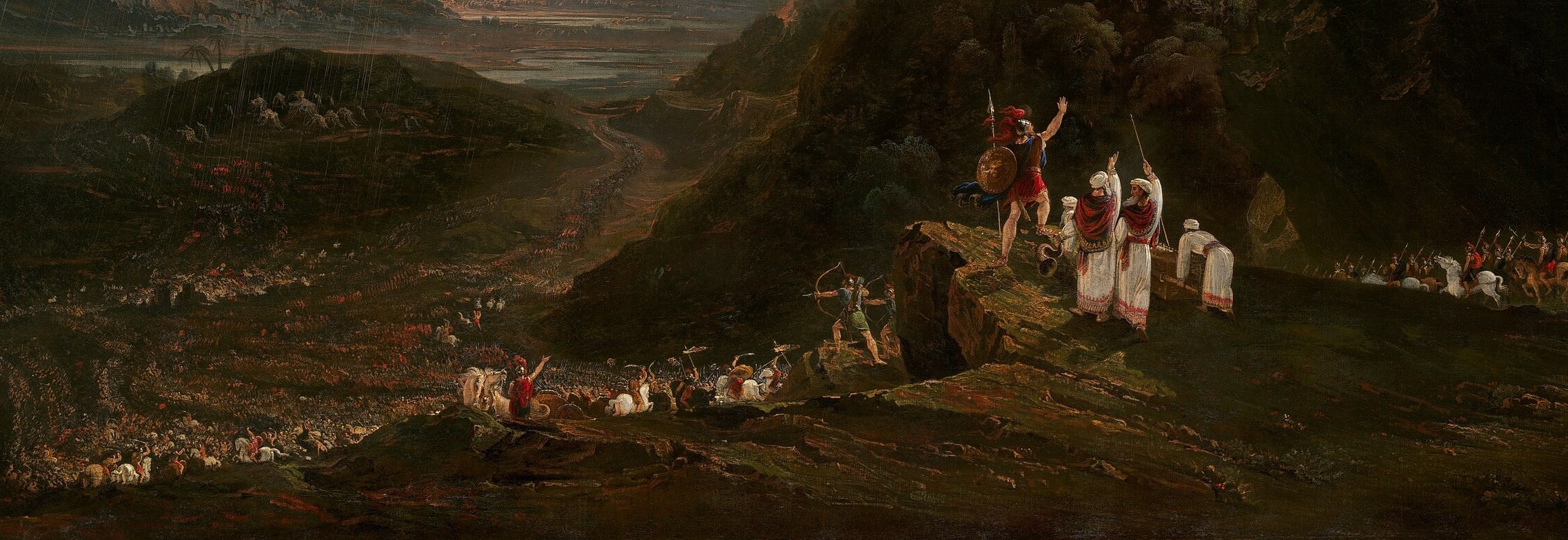
Joshua Commanding the Sun to Stand Still upon Gibeon, painted by John Martin in 1816, was the artist's breakthrough work. It made him famous at nineteen. On its first day at the Royal Academy, an unknown attacker sliced through the canvas with a concealed knife.
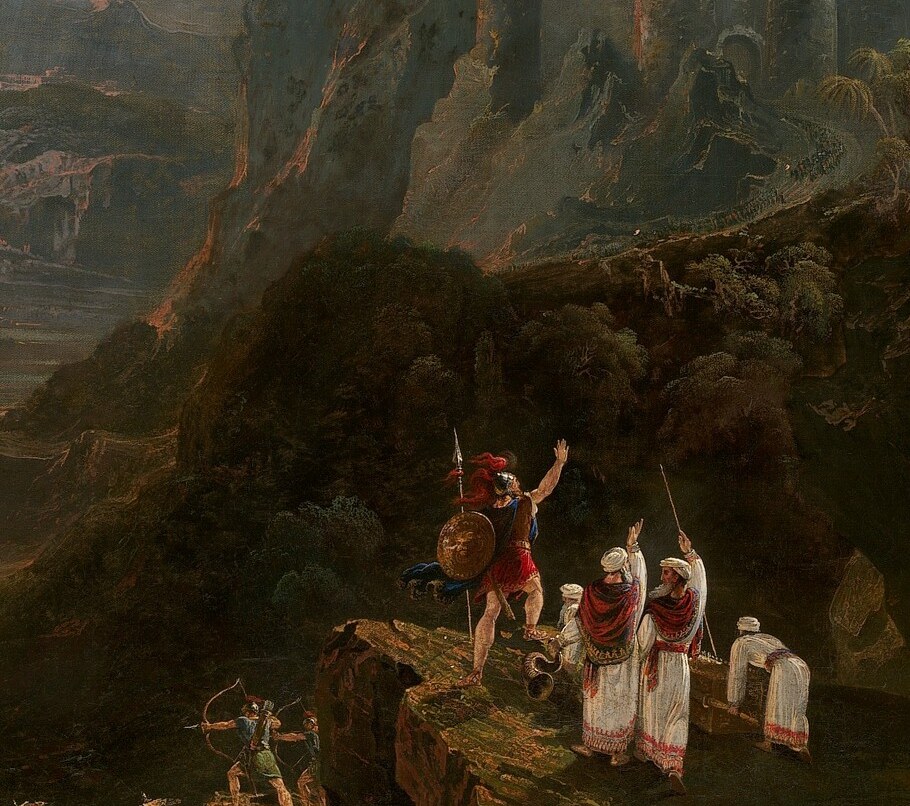
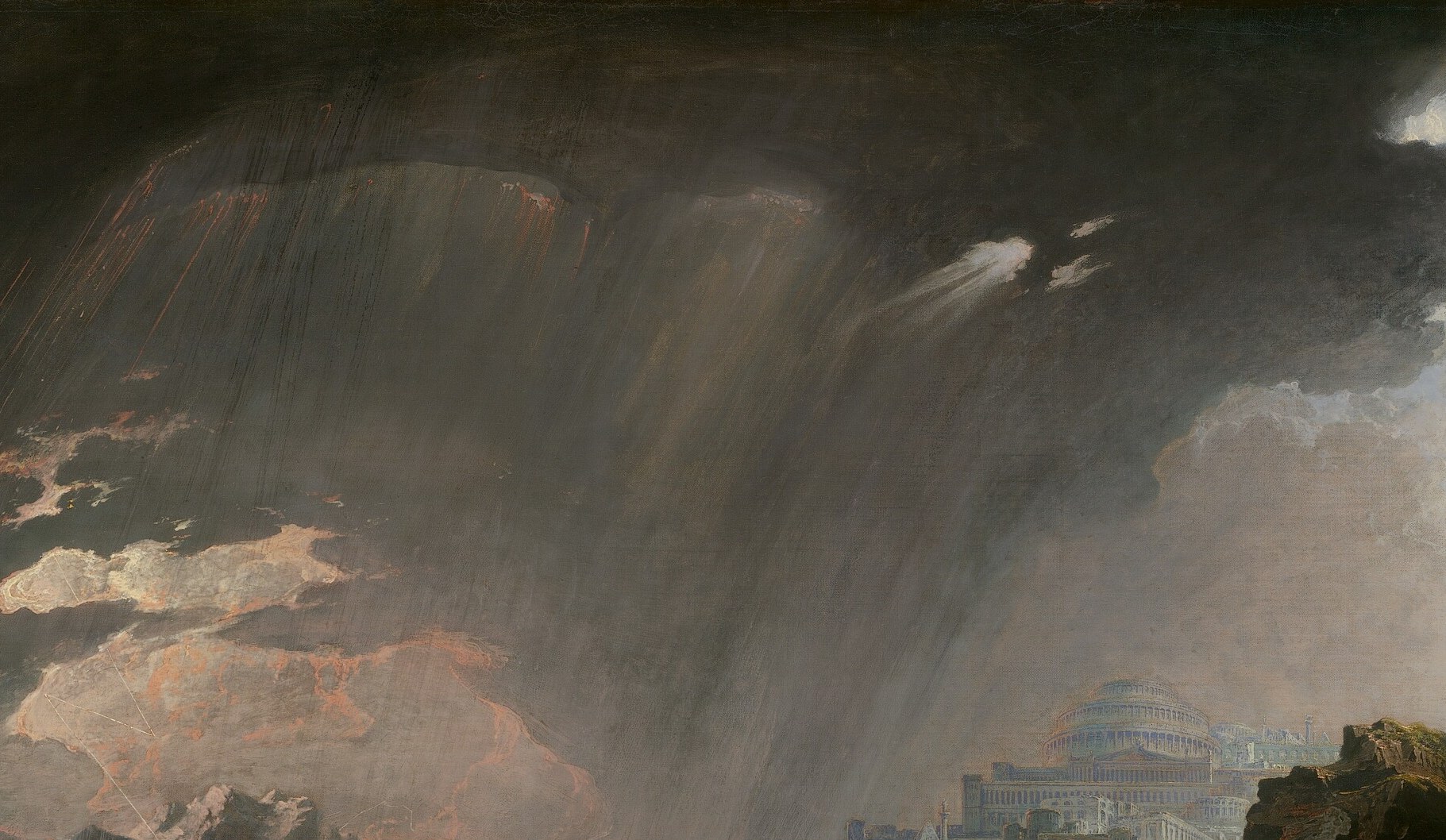
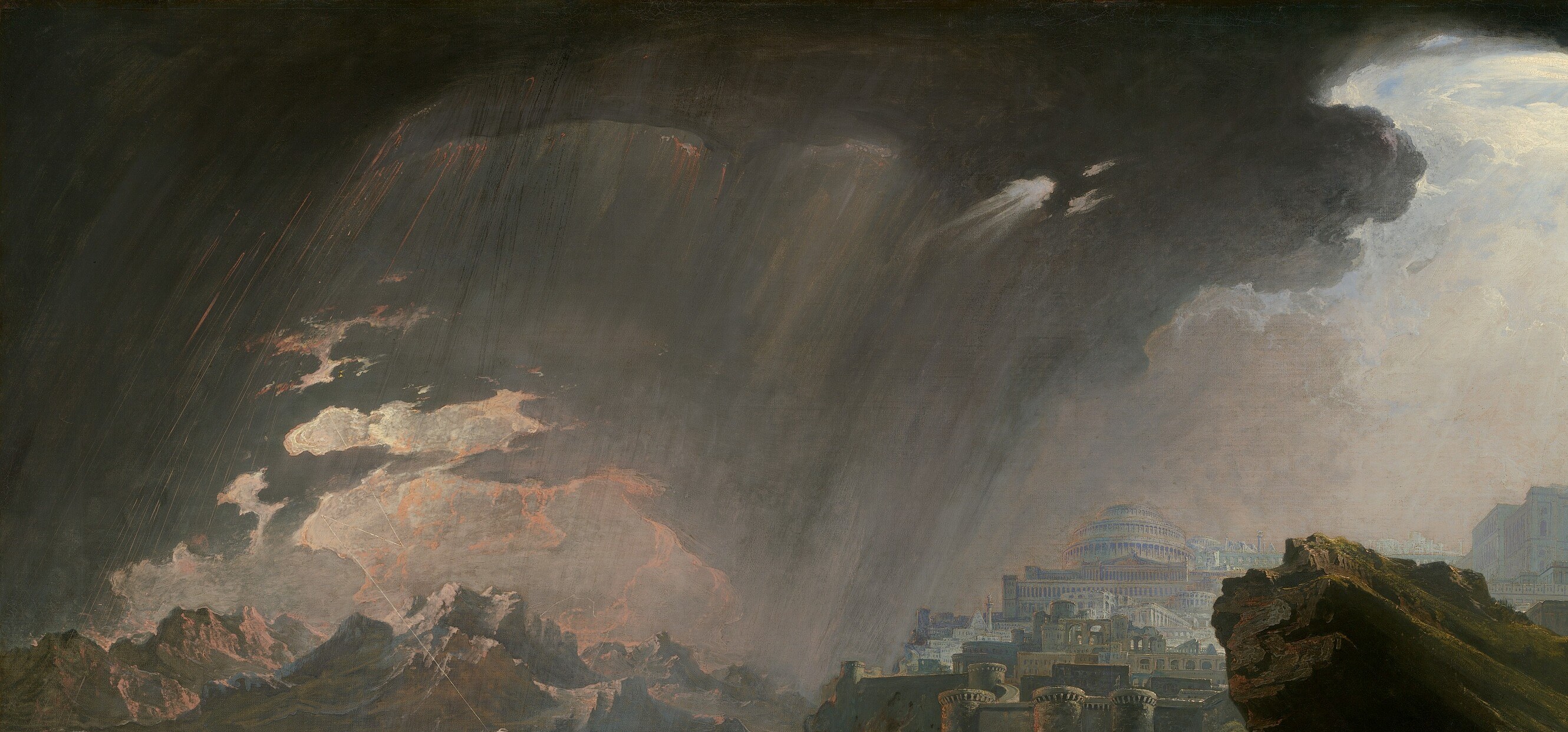
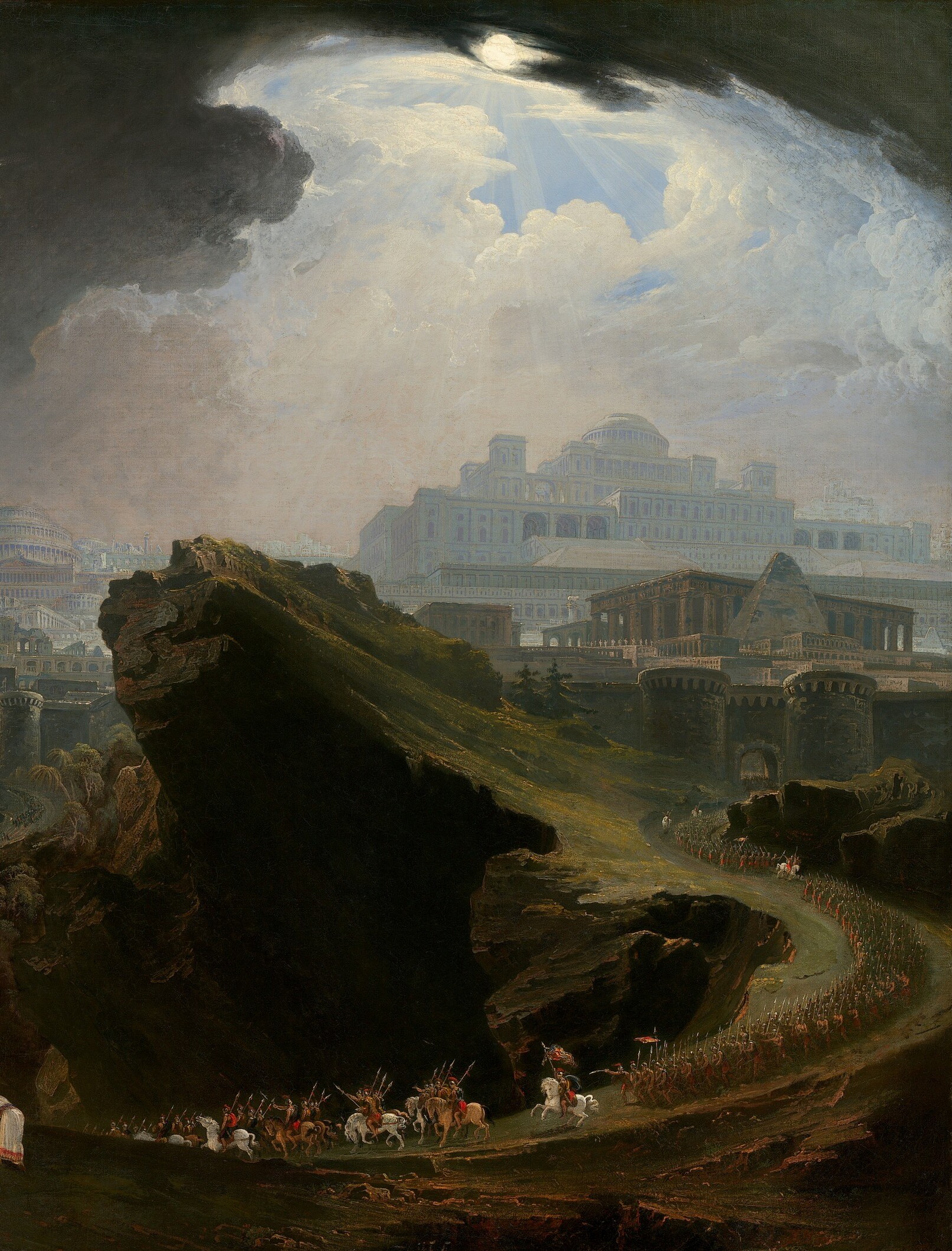
The painting depicts a biblical miracle: the Israelite leader Joshua, visible in the center with his arm raised toward the sky, commands the sun to halt so his army can finish the battle in daylight. Martin stages the scene on a colossal geological scale. The massed troops in the foreground are dwarfed by the cliff face on the right and the churning storm clouds above. Divine light breaks through the clouds, the physical evidence of the miracle.
The slashing incident was likely driven by envy or the harsh critical backlash Martin already faced. Establishment figures, most famously John Ruskin, condemned his dramatic, crowd-pleasing style as vulgar spectacle. Despite this, Martin became the most popular painter in England. Reproductions of his works hung in parlors across the country. The public loved him; the academy never forgave him.
This is a painting about stopping time, and a painting that survived an attack meant to end a career before it began. Martin kept working. The slash was repaired. The only thing that was truly halted that year was the sun.
Details
Transcript
This painting made a 19-year-old famous overnight. His name was John Martin. Here, he had arrived. But on opening day, someone smuggled in a blade. They slashed the canvas. Right across the sky. The attack was personal. The critics despised him. They called his work vulgar. John Ruskin led the charge. But the public ignored them and made him the most popular painter alive.