The Baptism of Christ by Master of the Saint Bartholomew Altar
This is "The Baptism of Christ" by the Master of the Saint Bartholomew Altar, painted around 1485 to 1500. Before World War II, it belonged to a Jewish family in Vienna.
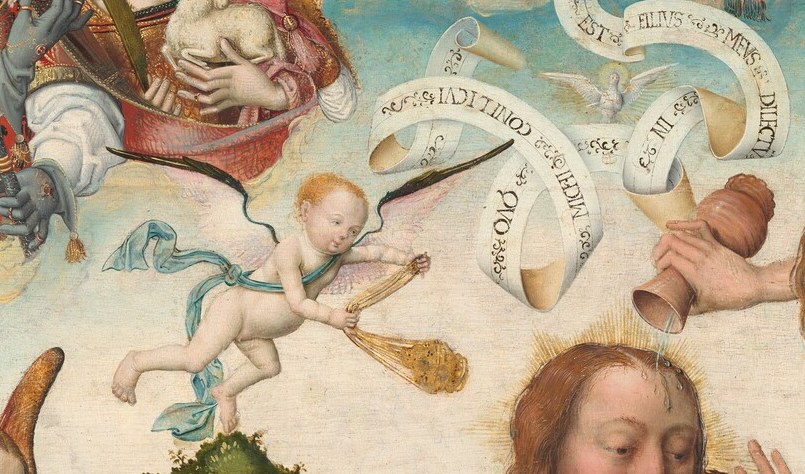
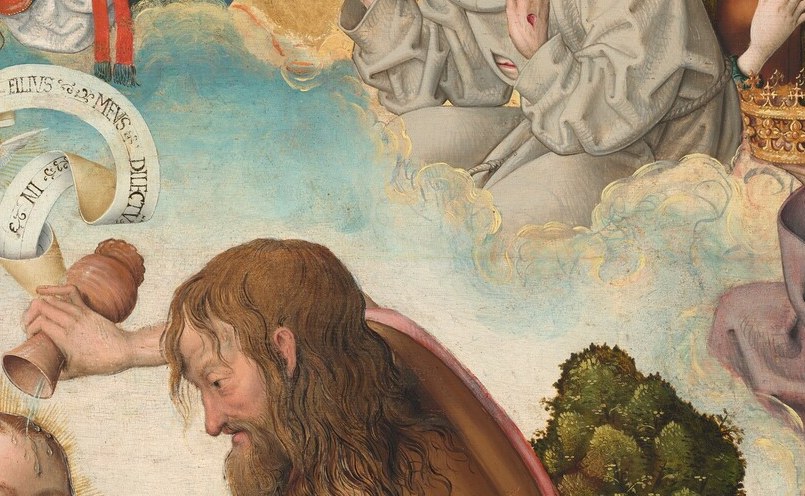
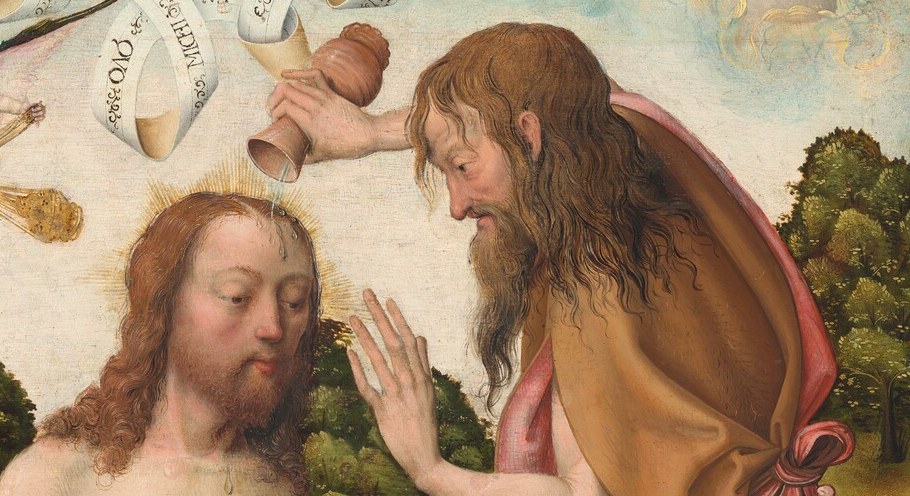
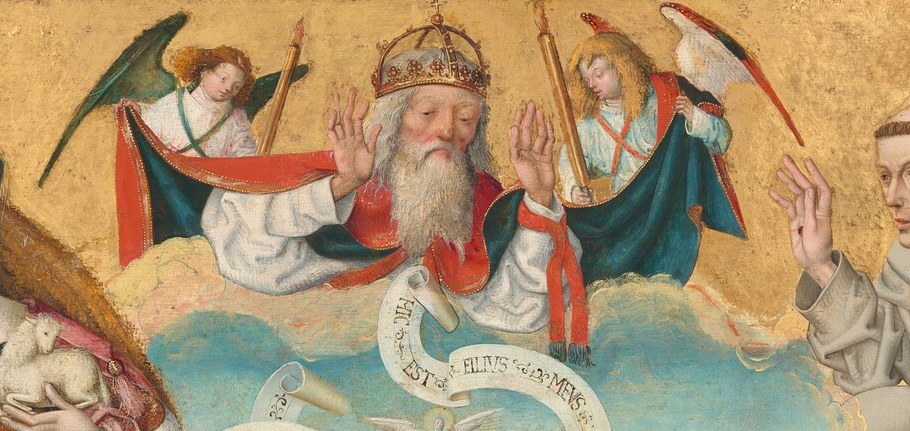
It is a scene of profound humility. Christ lowers his head in submission to John the Baptist, his pale exposed torso set against a crowd of fully robed witnesses. A white dove descends through rays of gold, marking divine approval. The painter devoted a virtuoso still-life passage to the shell in John's hands, catching the water mid-pour in oil on a panel.
The painting was confiscated by the Nazis in 1938 and moved to Schloss Immendorf, a castle in Lower Austria used to warehouse looted art. Hundreds of works from seized collections were packed inside. In the chaos of the war's end, the castle caught fire in 1945, destroying a cache of paintings by Klimt and Schiele.
This panel survived. It was recovered by allied forces and returned to the family who had lost it. The dense crowd of witnesses behind John the Baptist includes tier after tier of individualized faces, many barely visible, that turn a sacred icon into a documented historical moment. It lives now as both a devotional masterpiece and a record of restitution.
Details

Transcript
This Renaissance baptism once hung in a Jewish home in Vienna. The Nazis confiscated it in 1938. They stored it in a castle called Immendorf with thousands of other stolen works. Look at John's hand tipping the shell. Catching water mid-pour, in oil paint, is a virtuoso act. After the war, allied forces discovered the castle's cache. The painting was restituted to its rightful owners.