View, Dismal Swamp, North Carolina by Régis François Gignoux
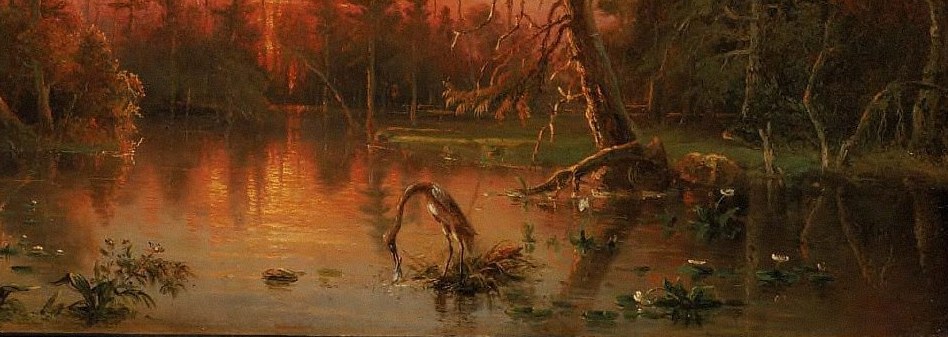
Régis François Gignoux's View, Dismal Swamp, North Carolina, painted around 1850, captures a seemingly tranquil scene that belies the swamp's formidable reality. This oil painting, part of the Hudson River School movement, shows the Great Dismal Swamp in North Carolina.
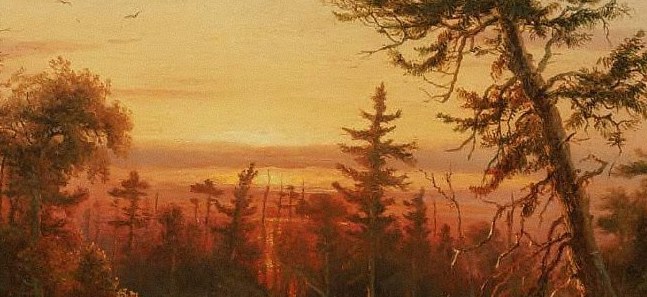
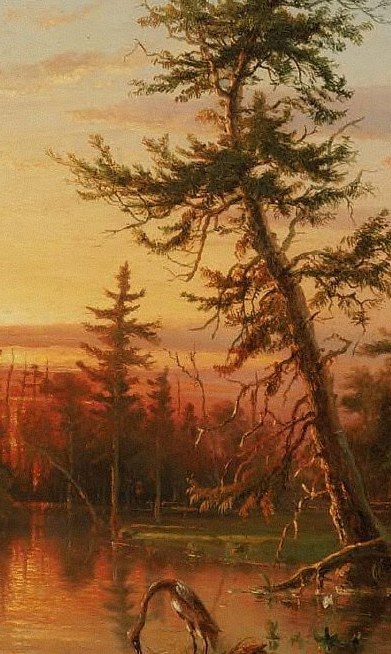
Observe the warm glow of the setting sun casting reflections on the still water, highlighting lush foreground plants and a heron fishing. The gnarled cypress trunk speaks of the ecosystem's age, while distant trees hint at its vastness.
Gignoux, a French painter active in the US, depicted American wilderness during a period of great interest in its grandeur. The painting, now at the Museum of Fine Arts Boston, contrasts the visual serenity with the historical challenge of the Dismal Swamp.
What does this tranquil scene suggest about our perception of wilderness?
Details
Transcript
This painter captured the Dismal Swamp at sunset. Warm light reflects on the still water. A heron fishes, a symbol of survival. But this wilderness was known to be formidable. Gnarled trees suggest the swamp's age and resilience. Gignoux painted this around 1850.