The Dance by Valeriano Bécquer
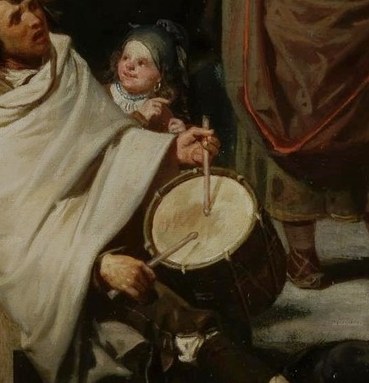
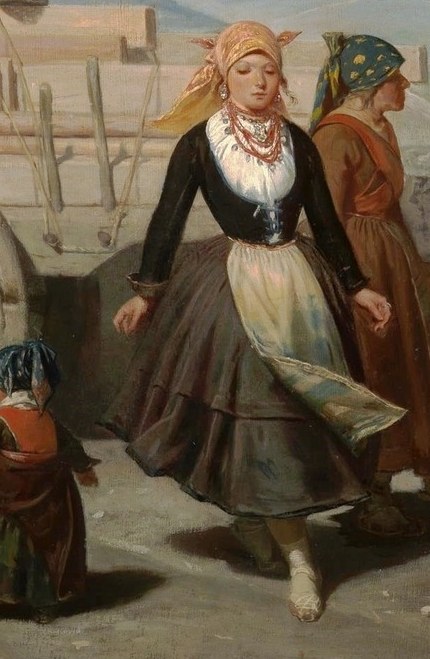
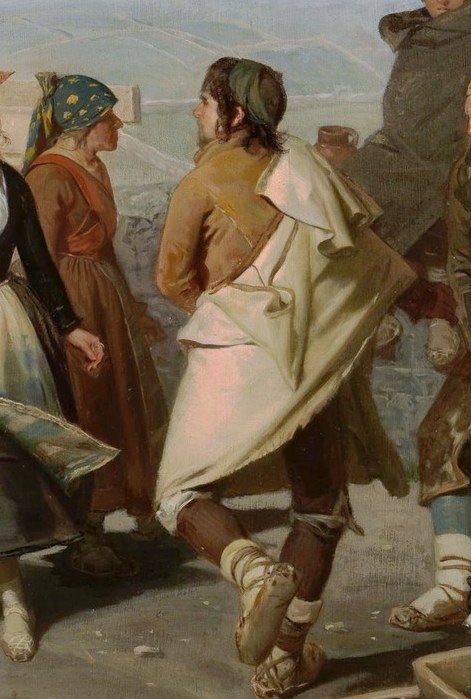
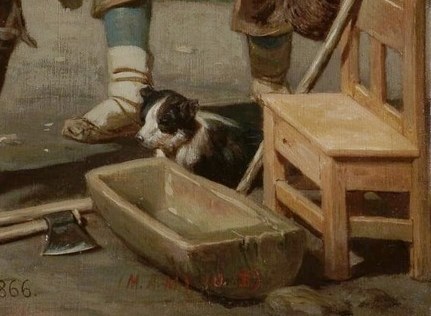
Valeriano Bécquer's *The Dance*, painted in 1866 and held at the Museo del Prado in Madrid, captures a vibrant scene of Spanish daily life. This work exemplifies the costumbrismo movement, celebrating local customs and folk traditions. Look closely at the dynamic figures: a seated drummer sets the rhythm, a woman dances with swirling skirts, and a man with a scarf leads the movement. The composition is grounded by everyday elements like a dog by a chair, a cart wheel, and even a pig in the foreground. Subtle details, such as the basket on a woman's head and a child observing from the cart, add depth to this lively portrayal of communal celebration and the essence of Spanish folk culture.
Details
Transcript
This is Valeriano Bécquer's vision of Spanish life. The rhythm starts with this seated drummer. A woman dances, skirts whirling. Notice the man with the white scarf. A dog watches by an old wooden chair. The artist adds a quiet observer. A basket rests on a woman's head. These small details anchor the rural scene.