Portrait of a Woman in Gray by Edgar Degas
Edgar Degas's "Portrait of a Woman in Gray," painted in 1865, offers a quiet look into early portraiture by the French master, held at The Metropolitan Museum of Art.
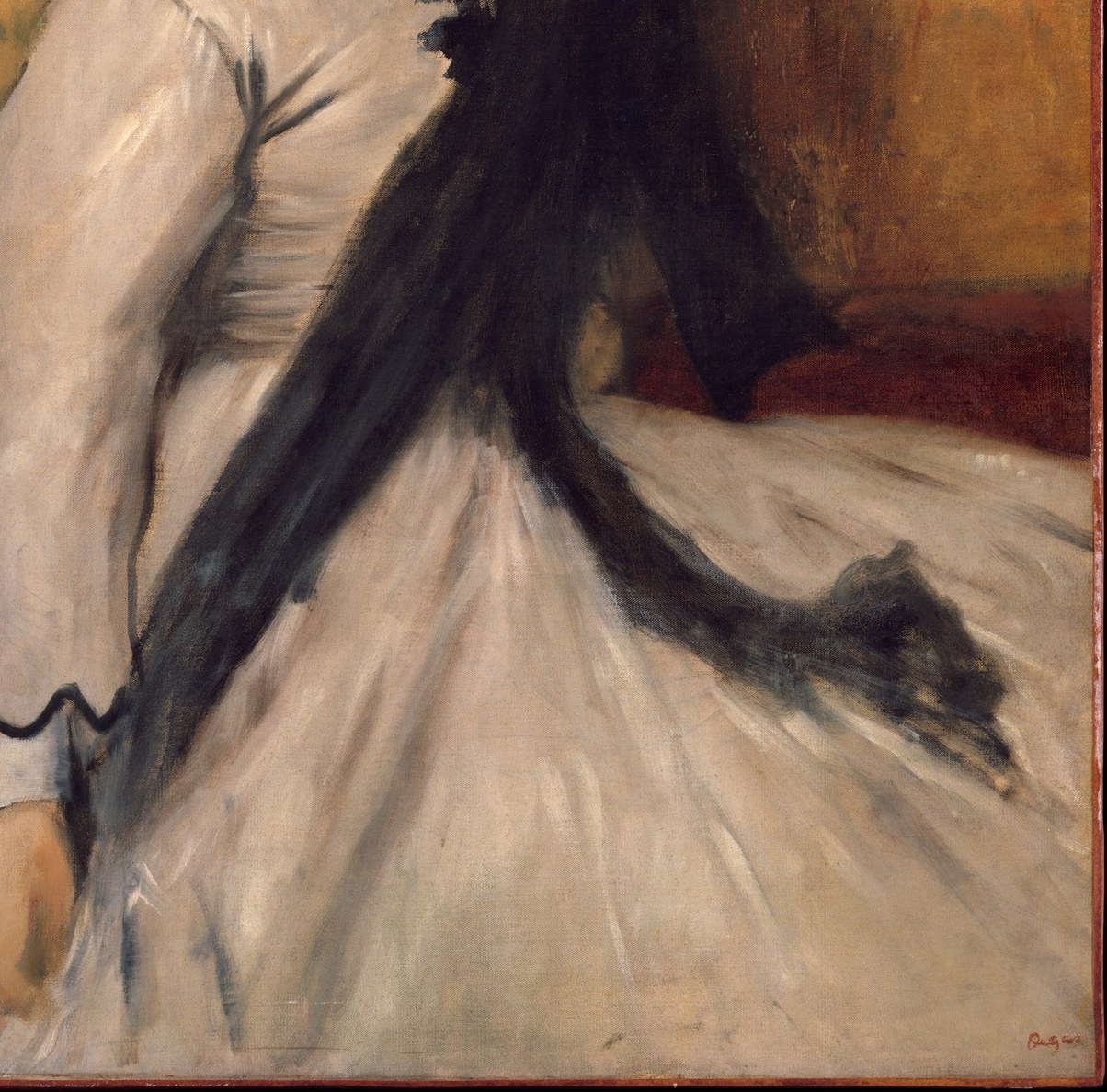
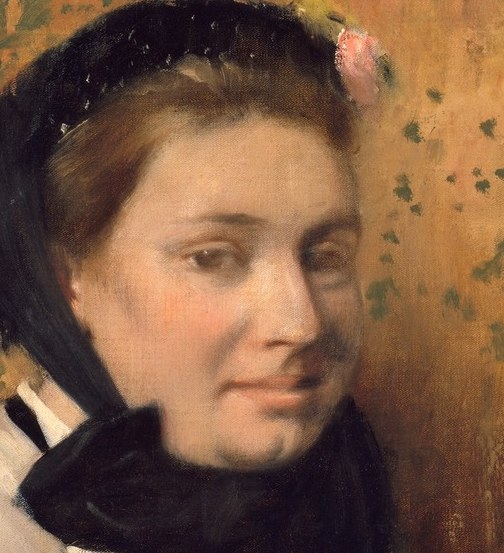
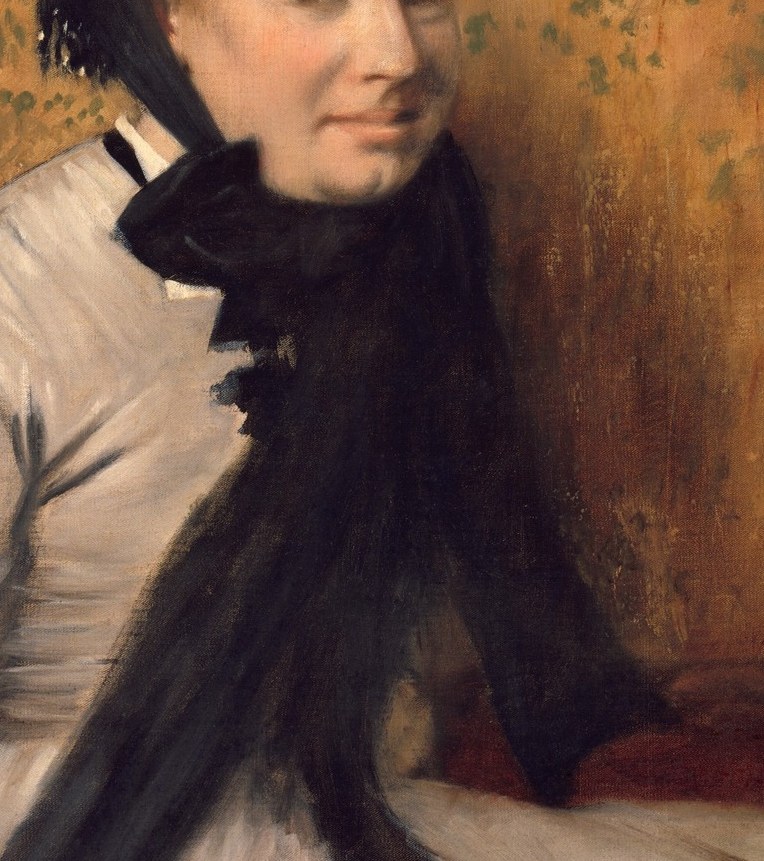
The woman, whose identity remains a mystery, is rendered with Degas's characteristic loose brushstrokes, particularly visible in her elegant gray dress. Her averted gaze invites a sense of introspection, making her a compelling figure to observe.
Notice the subtle details that enrich the composition: the abstract hints of green foliage suggesting a world beyond the interior, and the delicate pink flower nestled in her hair. These small discoveries add depth to an otherwise somber yet elegant portrait, showcasing Degas's keen eye for subtle beauty.
What do these hidden elements reveal about her world or her feelings?
Details

Transcript
This woman sat for Degas in 1865. Her light gray dress shows the artist's loose brushstrokes. She looks away, creating a sense of quiet introspection. Behind her, beyond the interior, are hints of green foliage. And in her hair, a tiny pink flower.