Madonna and Child with Saints by Giovanni Bellini
View the artwork: Madonna and Child with Saints →
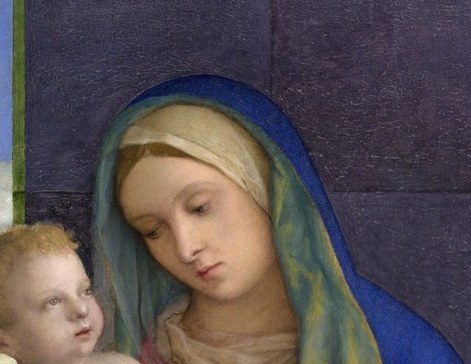
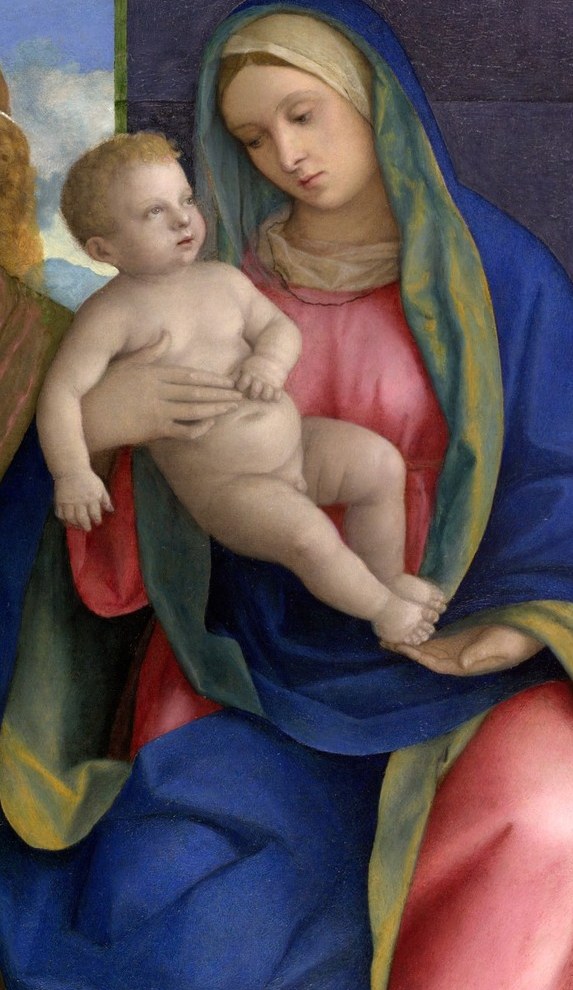
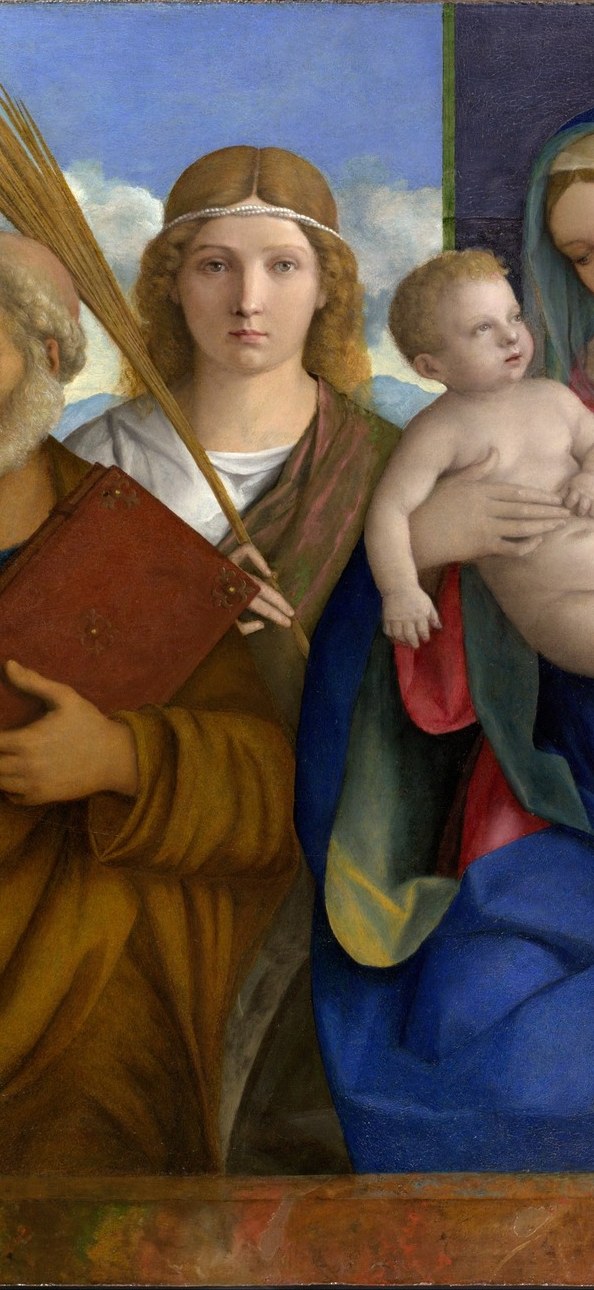
Giovanni Bellini's Madonna and Child with Saints, painted around 1487, is a silent assembly of five figures against a luminous blue sky. But the painting's most expensive statement isn't the gold halos or the fine brushwork. It's the Virgin's robe.
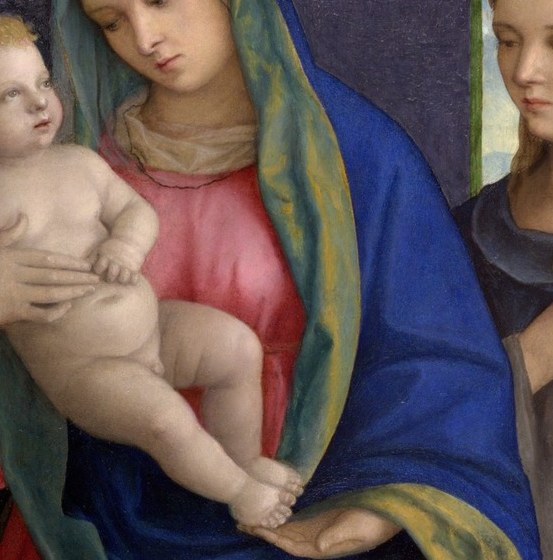
The deep blue mantle is ultramarine, made from ground lapis lazuli. In 15th-century Venice, this pigment was imported from a single remote mine in what is now Afghanistan. It cost more than gold leaf, so patrons who commissioned it often specified exactly how much ultramarine the artist could use, and where. A full sweep of it across the Virgin's robe was an unmistakable act of piety and wealth.
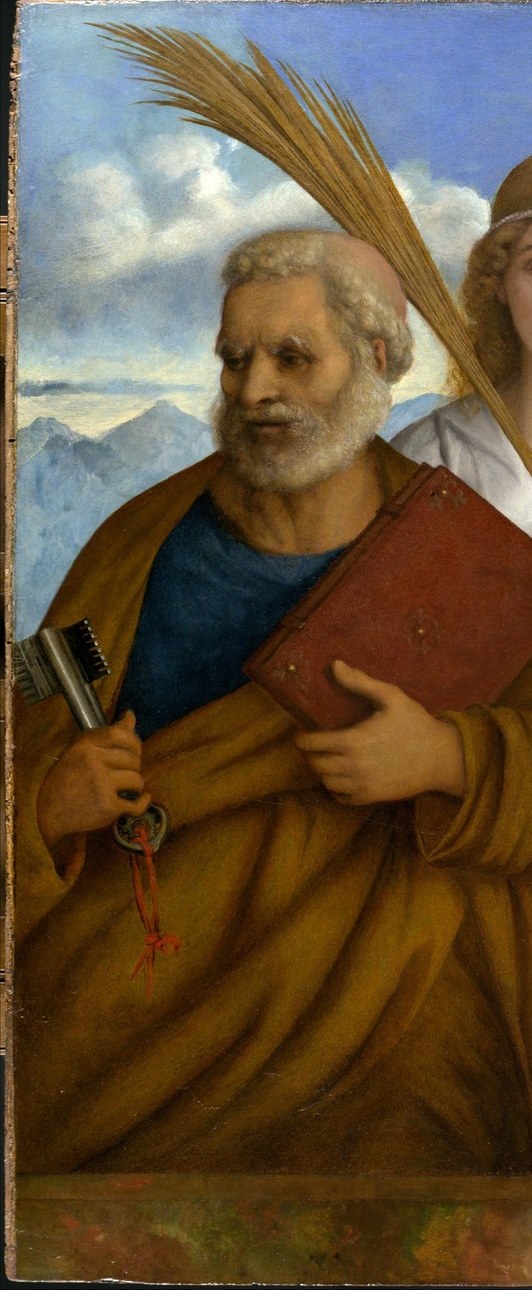
Look beyond the color and you find Bellini's real genius: the Christ Child's tiny hand resting on his mother's arm. The theology is precise, the infant divine touching human flesh, rendered not as doctrine but as ordinary parental contact. Around them stand two pairs of saints and prophets, each holding identifying attributes: a scroll, a palm frond, a cross-topped staff. Bellini gives you just enough to decode them.
This work belongs to the long Venetian tradition of the sacra conversazione, a sacred conversation of figures sharing a single space. Bellini would go on to teach Giorgione and Titian, but here he is still building his revolution, one ultramarine brushstroke, one small hand at a time.
#arthistory #GiovanniBellini #VenetianRenaissance
Details
Transcript
Five figures against a flat blue sky. A silent assembly. The Virgin's robe is not just blue. It is ultramarine. Lapis lazuli. In 15th-century Venice, lapis cost more than gold leaf. The patron paid for the stone to be ground into pigment. It was a devotional offering in itself. Pure pigment, pure prayer. Now look at the child's tiny hand touching his mother's arm. Bellini distilled theology into a single, precise gesture.