Artwork
Madonna and Child with Saints
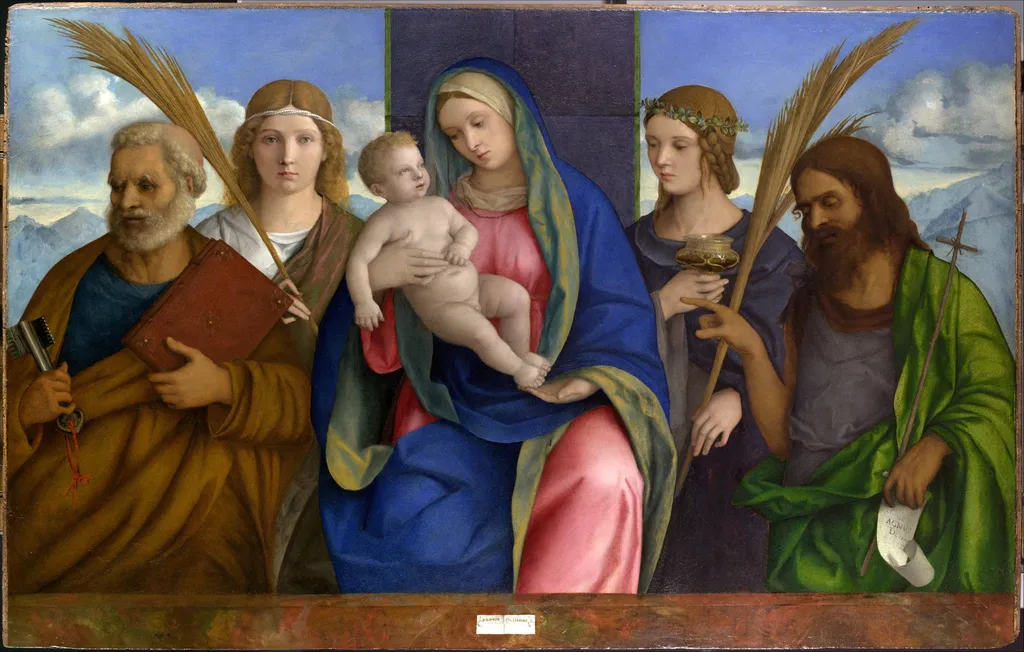
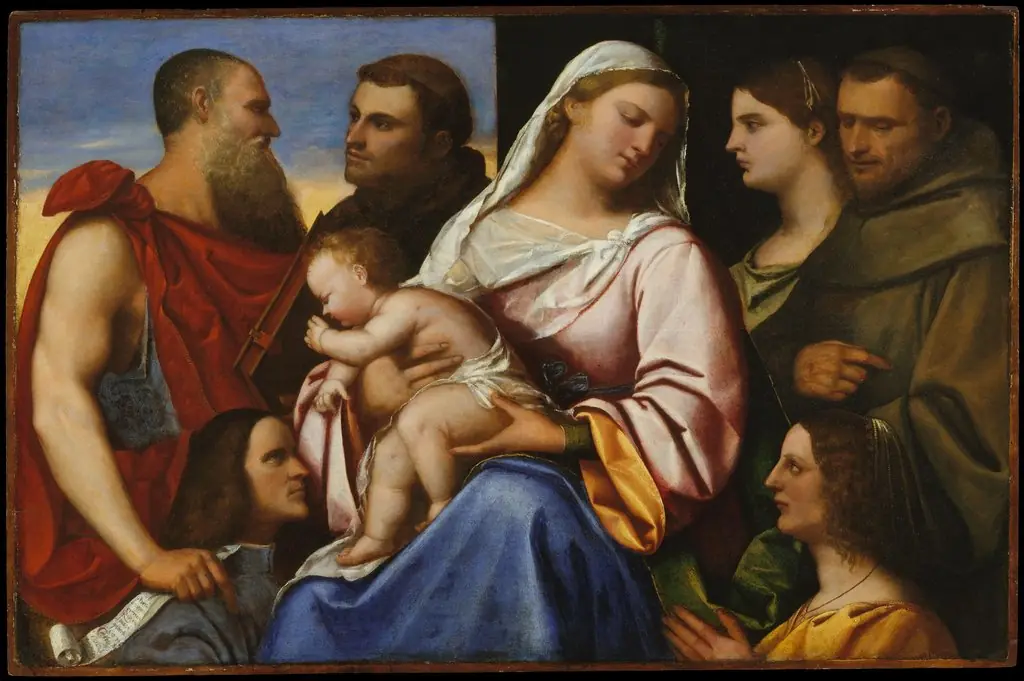
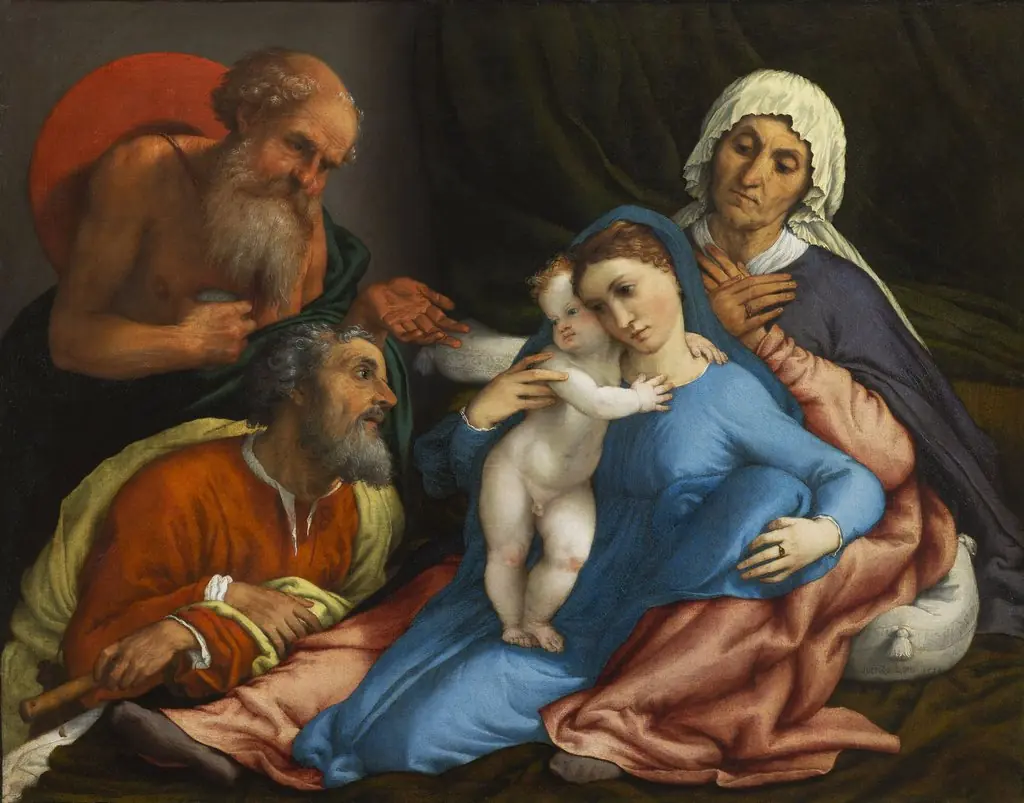
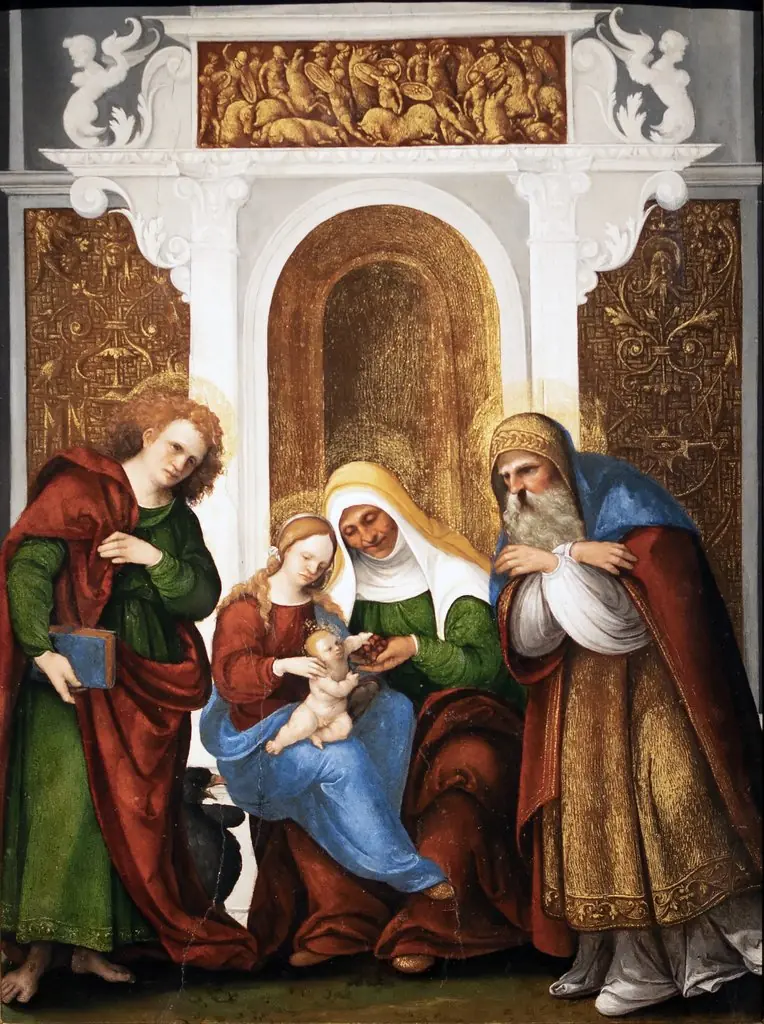
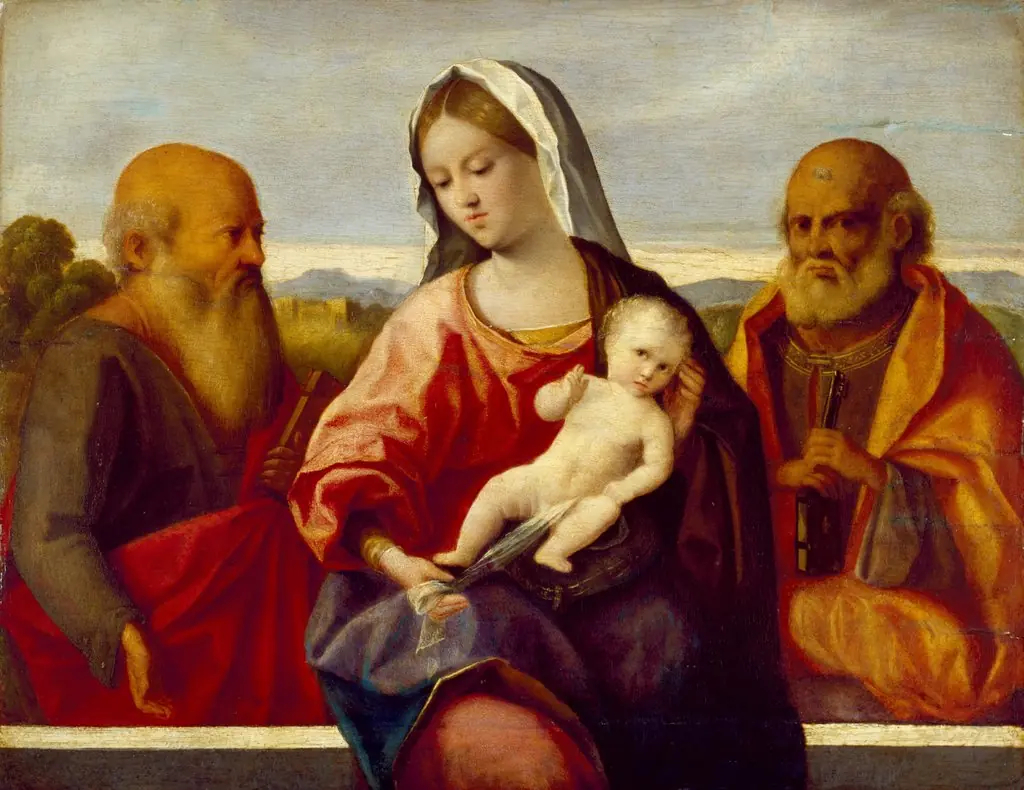
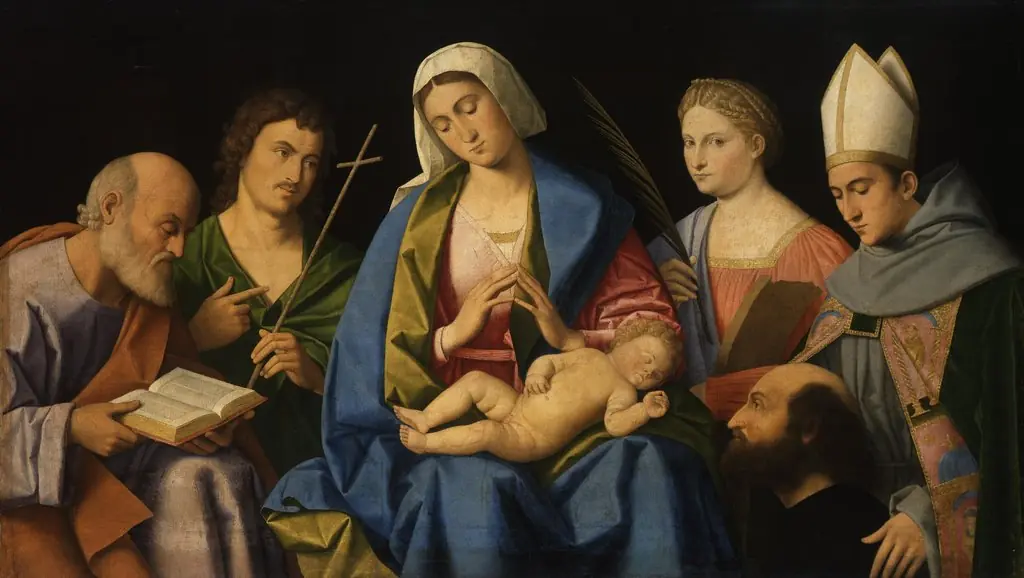
Madonna and Child with Saints is an unspecified painting by the Venetian Renaissance artist Giovanni Bellini. It dates from 1494 and is held in the collection of the Metropolitan Museum of Art. This painting depicts a central religious theme, presenting the Madonna and Child surrounded by four saintly figures.
About this work
Subject & Meaning
As a religious painting, the composition centers on the Madonna and Child, a traditional iconographic theme representing divine motherhood and salvation.
The work depicts the Virgin Mary holding the Christ Child, identified as the main subject, surrounded by four standing saints. As a religious painting, the composition centers on the Madonna and Child, a traditional iconographic theme representing divine motherhood and salvation. The inclusion of specific male and female saints alongside the holy figures establishes a sacred gathering, often interpreted as a heavenly assembly or a devotional focus for the patron.
Created in 1494, the piece exemplifies the genre of religious art where these figures are presented to evoke spiritual contemplation. The arrangement places the central dyad in prominence while integrating the surrounding saints to emphasize the communal nature of the faith and the intercession of holy figures.
History & Provenance
Giovanni Bellini created the religious painting Madonna and Child with Saints in 1494. The work measures 97.2 by 153.7 centimetres and depicts the Virgin Mary, the Christ Child, and various saints. Historically, the work was owned by Jules Bache before entering the collection of the Metropolitan Museum of Art, where it remains housed.
The piece is classified as a religious genre work focusing on the Madonna and Child as its primary subject.
Legacy
The 1494 work by Giovanni Bellini, originally owned by collector Jules Bache, entered the Metropolitan Museum of Art and has since been studied as an example of Venetian Renaissance devotional painting. Its composition of the Madonna and Child flanked by saints relates to later interpretations of the sacred family in 16th-century Venetian altarpieces. Art historians cite the work when discussing Bellini's role in shaping religious imagery, and its inclusion in the Met's collection underscores its reputation for balance, color, and sacred narrative in early Renaissance art.
Overview
This painting depicts a central religious theme, presenting the Madonna and Child surrounded by four saintly figures. The composition features five individuals rendered in distinct, clear hues against a serene blue background. It exemplifies a common devotional subject in art history, inviting contemplation of its sacred narrative.
Technique & Style
The artwork employs a palette of bright, unmodulated colors, setting the figures against a simple blue sky. This approach emphasizes clarity and form rather than deep spatial illusion. Details such as the pink lining visible in the Virgin's blue robe and the Christ Child's unadorned form contribute to the painting's direct visual impact. The overall style prioritizes legibility and devotional focus.
Context
This painting belongs to the long-standing art historical tradition of depicting the Madonna and Child, a subject central to Christian art for centuries. Such works often served as objects of veneration, illustrating key theological concepts and offering a visual focus for prayer. The inclusion of saints further enriches the narrative, connecting the holy family to other revered figures.
Own this work as a print
Artist & collection

Artist
Giovanni Bellini (Italian: ; Venetian: Zuane Belin; c. 1430 – 29 December 1516) was an Italian Renaissance painter, probably the best known of the Bellini family of Venetian painters. He was raised in the household of…