Madonna of the Cherries by Titian
Titian's "Madonna of the Cherries," painted around 1515 and now housed in the Kunsthistorisches Museum in Vienna, offers a glimpse into how deeply religious devotion permeated daily life in 16th-century Venice. This early work by the renowned master shows a tender, almost domestic scene of the Virgin Mary, the Christ Child, and accompanying saints.
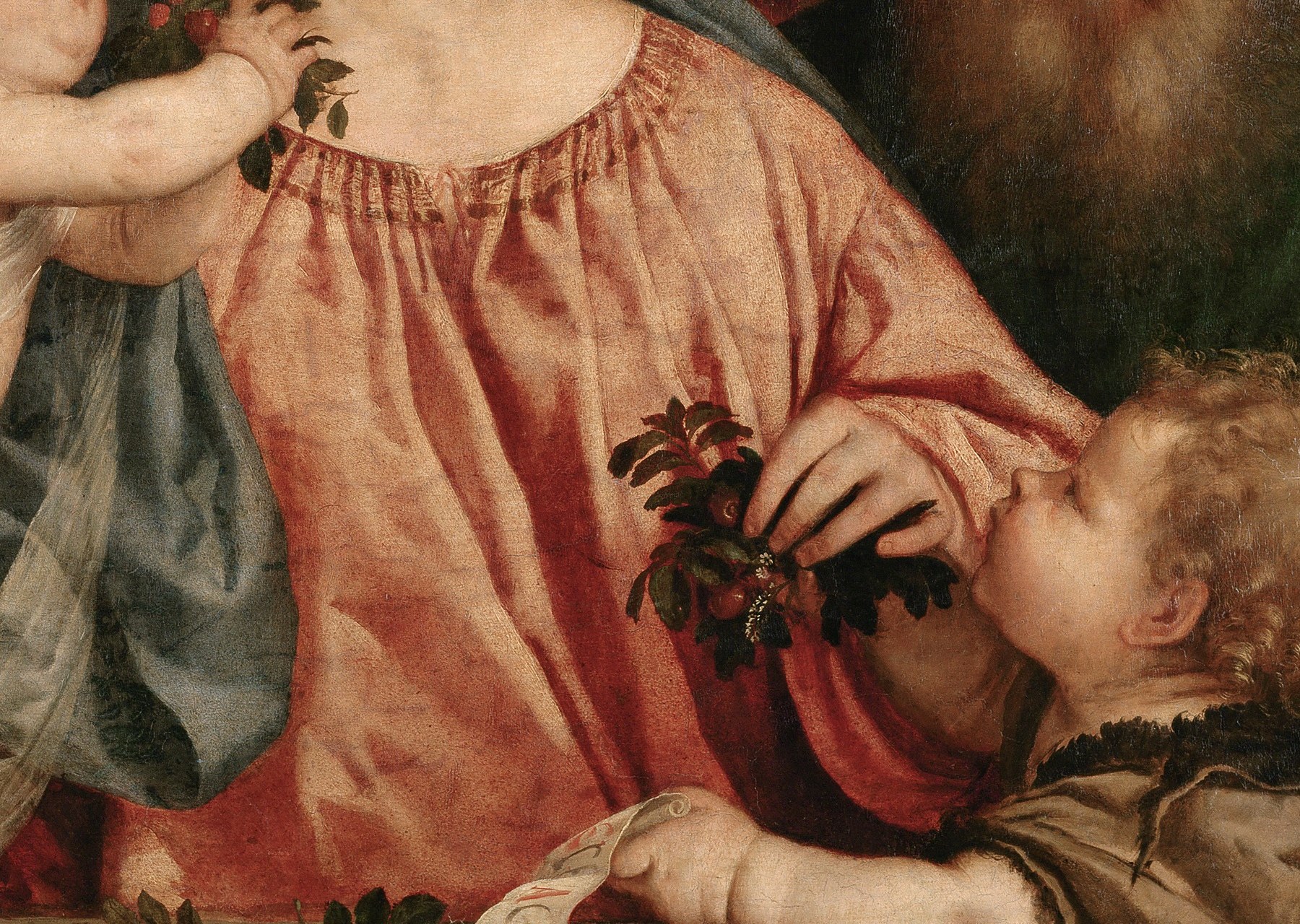
Notice the bunch of cherries in Mary's hand and those the Christ Child reaches for. These weren't just decorative; cherries often served as a poignant symbol of Christ's future Passion and the fruit of salvation, inviting contemplation on the sacred narrative within a seemingly gentle moment.
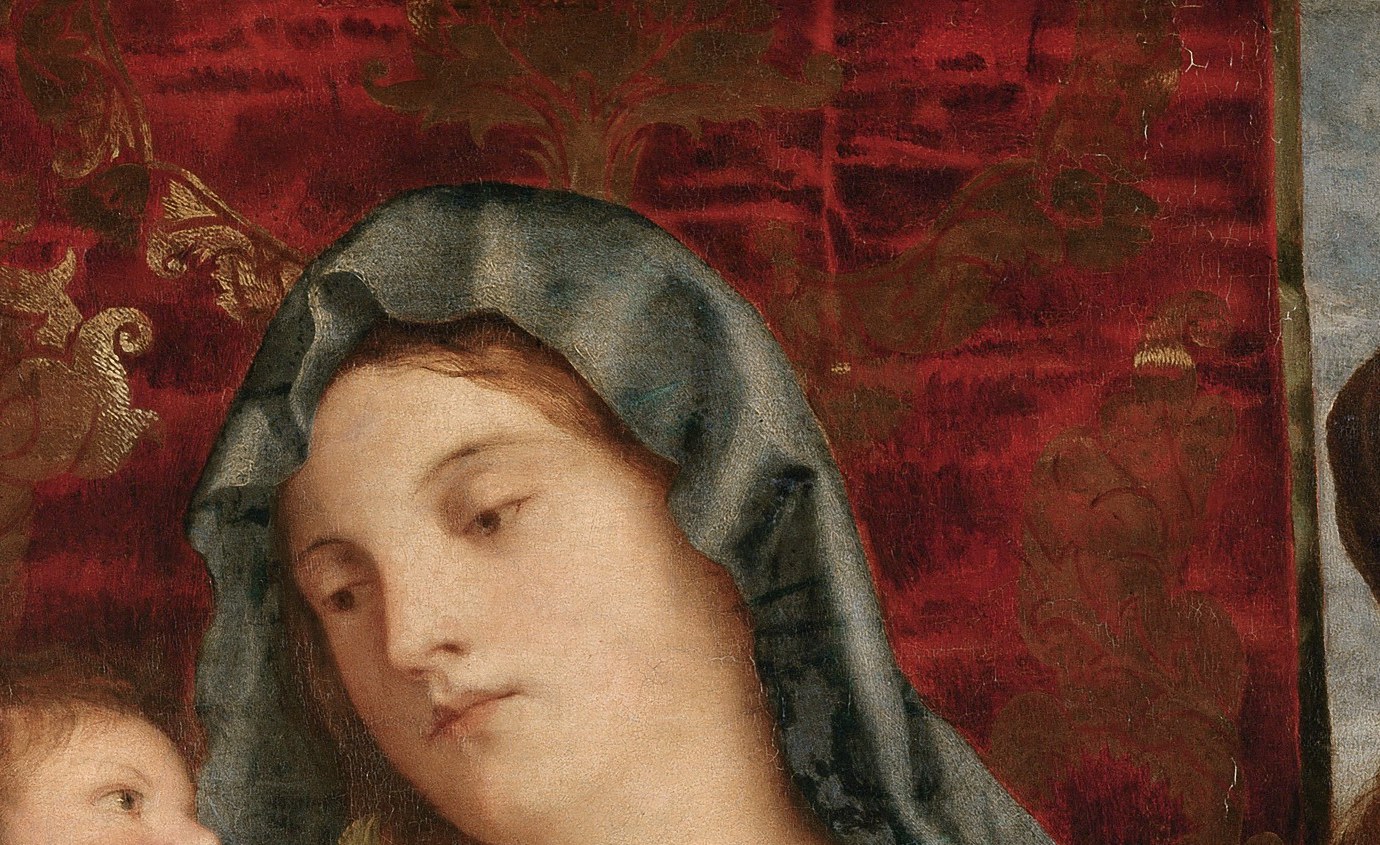
The painting's rich red tapestry background creates a luxurious yet intimate setting, blurring the lines between the divine and the everyday. Its historical significance is underscored by its presence in Archduke Leopold Wilhelm's collection in the 17th century, where it was copied by the Flemish artist David Teniers the Younger, attesting to its enduring appeal and influence.
Titian, a founder of the Venetian school, would go on to have a profound impact on Western art. How do you think this blend of the sacred and the everyday resonated with viewers then?
Details

Transcript
This early painting by Titian shows a private, tender moment. The Virgin Mary cradles the Christ Child, reaching for cherries. Cherries often symbolized Christ's Passion, or suffering, to come. Two male saints and a younger boy join the intimate scene. A rich tapestry suggests a sacred yet domestic setting. The painting itself was highly valued, copied by another artist.