Joseph Coolidge by Stuart, Gilbert
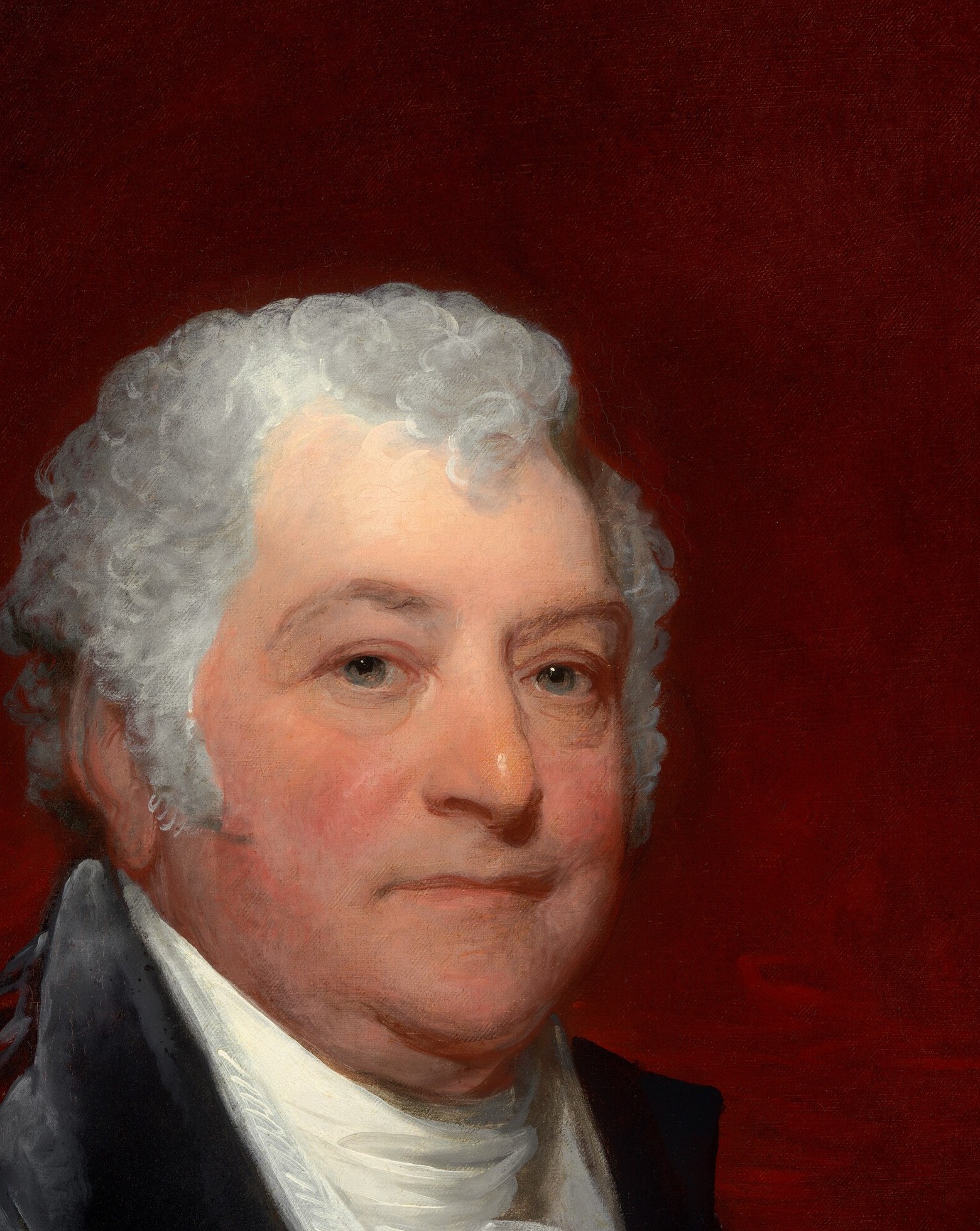
This is Gilbert Stuart's portrait of Joseph Coolidge, painted in 1820. It lives in a private collection, but the technique it preserves belongs to everyone who looks closely. Stuart had painted George Washington from life and became the most sought-after portraitist in early America. By the time he captured Coolidge, his method was so practiced it was almost invisible.
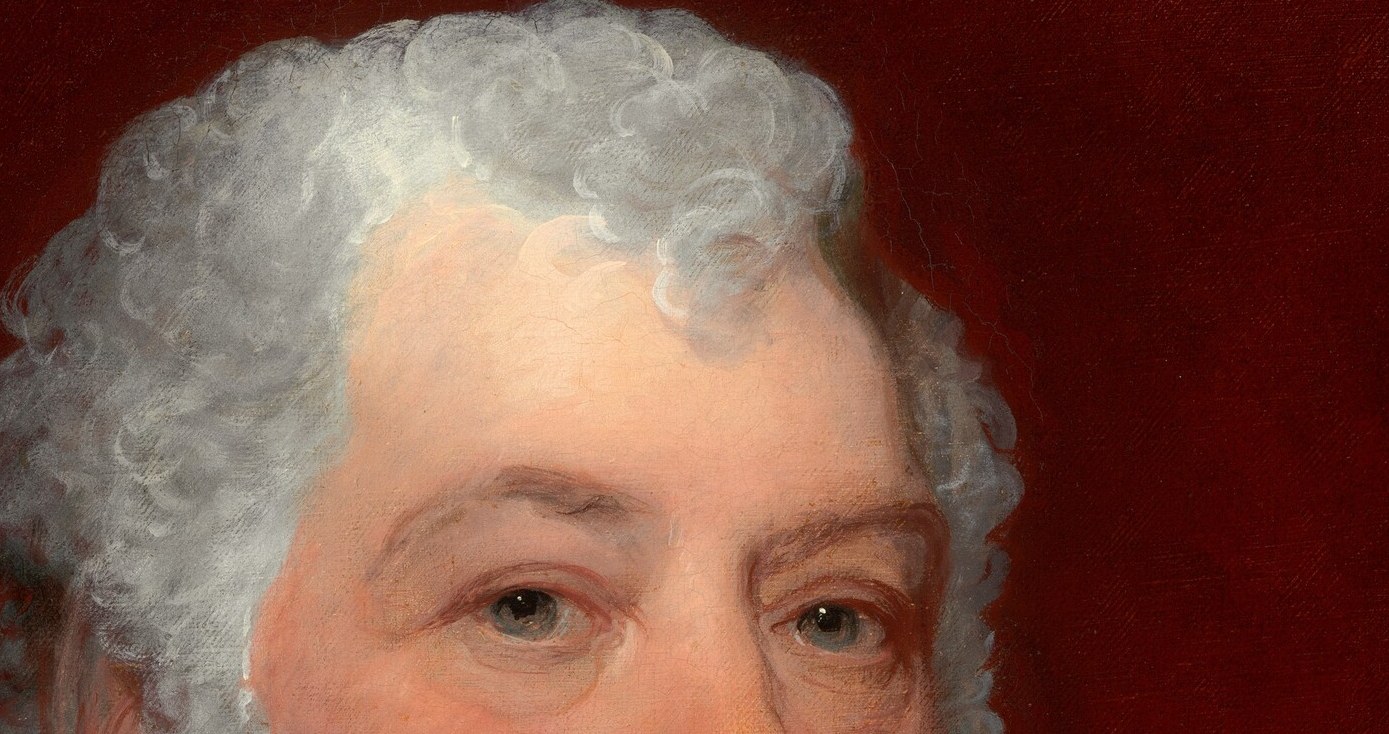
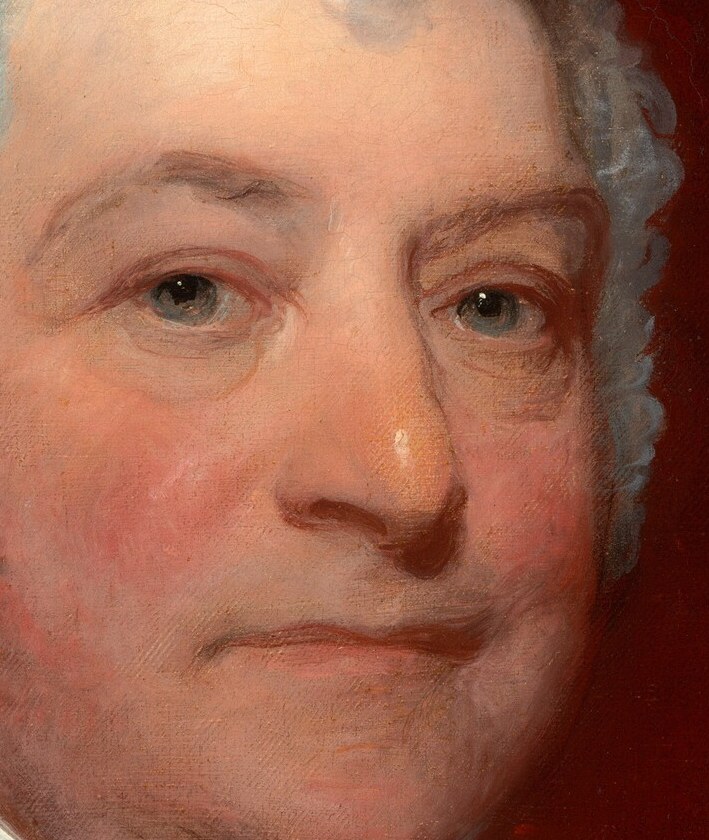
Look at the skin. It glows not from white pigment laid on top, but from a warm, flesh-toned ground underneath. Stuart painted thin translucent glazes over that ground, so light travels through the color, hits the white panel beneath, and reflects back. The result is a face that seems to have blood moving inside it. The highlight on the nose is the brightest passage on the canvas, and it anchors the whole illusion of three-dimensional form.
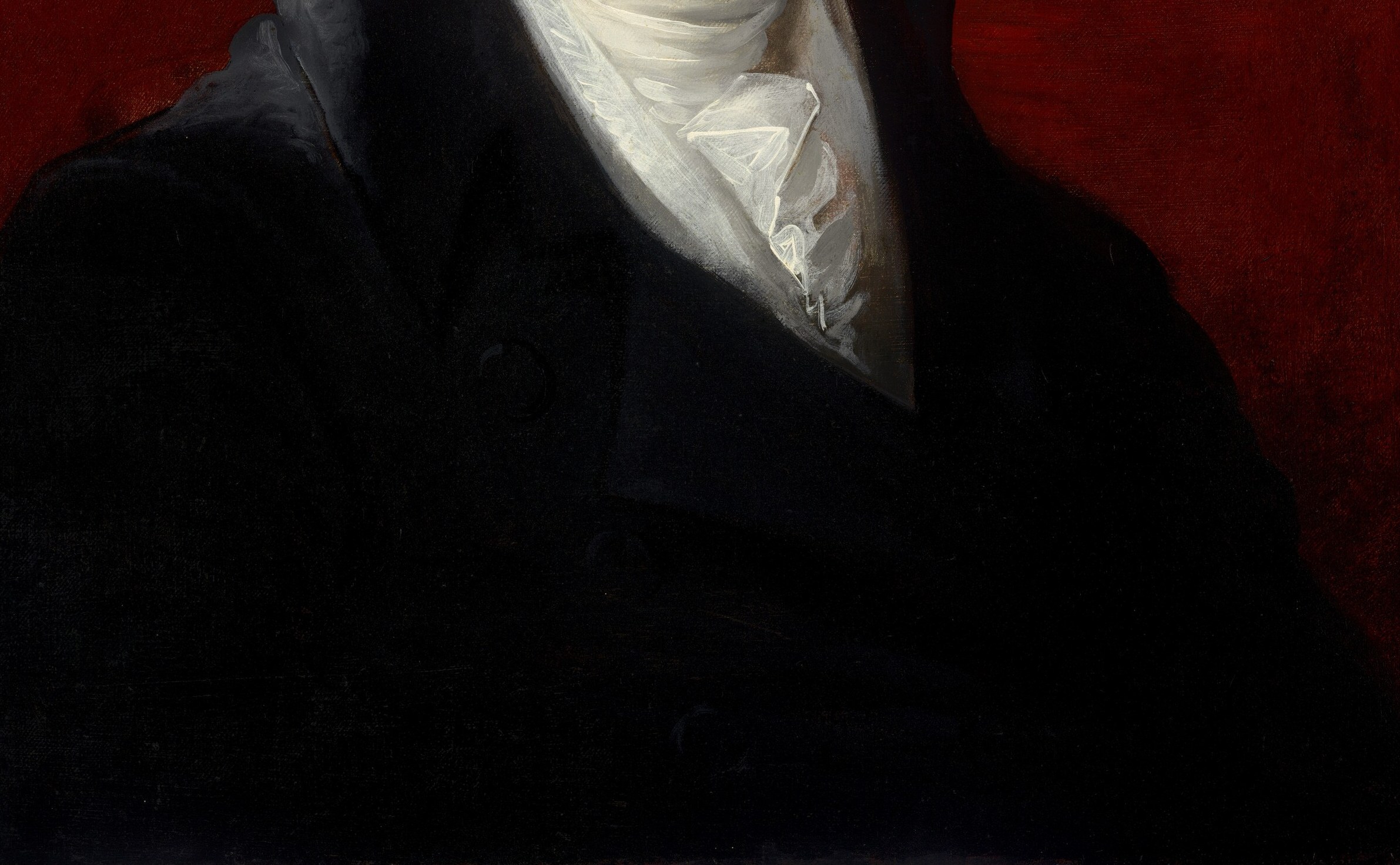
Then look at the coat. The brushwork is broad, loose, and dark. Stuart knew that a fully finished coat would compete with the face, so he let it recede into near-abstraction. Even the ear, which any academic painter would labor over, is only a few warm strokes suggesting cartilage and shadow. This was a painter who understood attention: he gave you one perfect thing to look at and let everything else fall away.
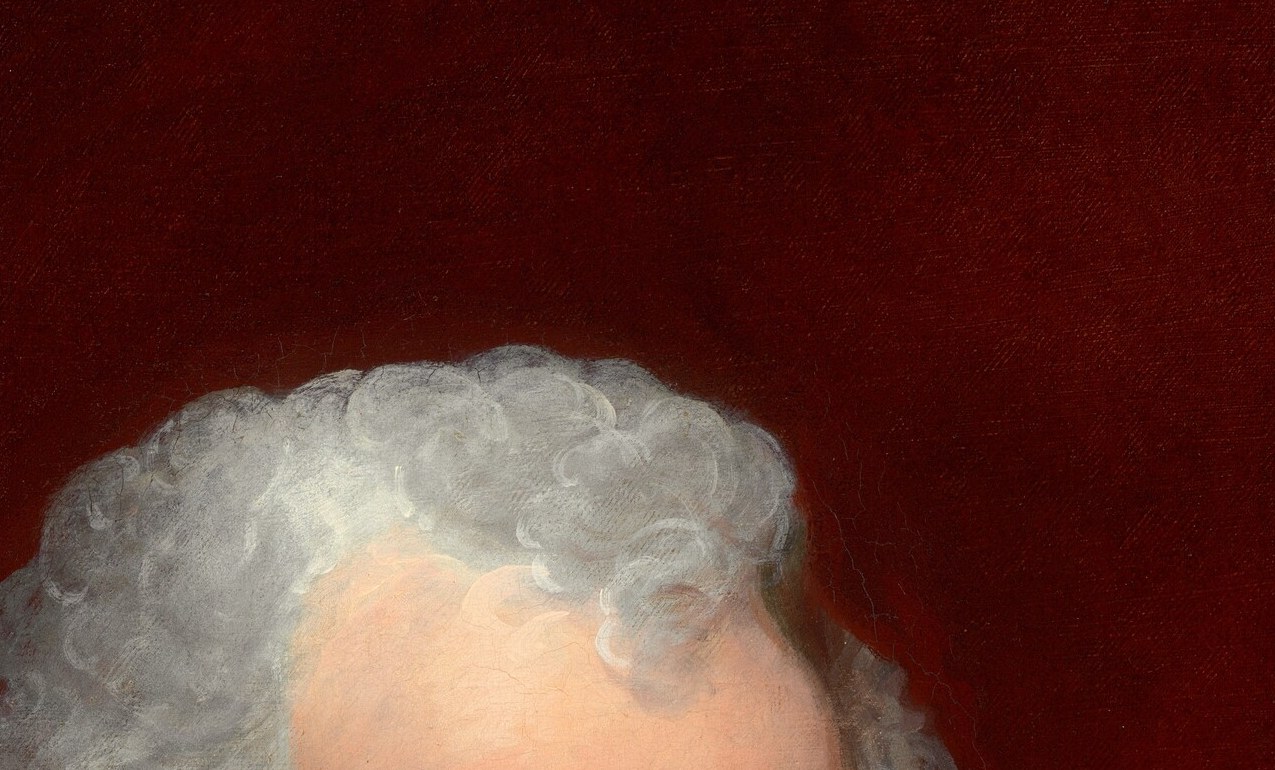
The powdered wig tells its own story. By 1820, wigs like this were decades out of fashion; Coolidge chose to be painted as a figure of the previous century. Every choice in this portrait, from the wig to the tight mouth to the direct gaze, was a collaboration between sitter and painter. But the life in the eyes, that asymmetrical, living glance, is pure Stuart.
Details
Transcript
He looks straight at you, still, after two centuries. The secret is underneath. Stuart painted a warm, flesh-colored ground first. Then he laid transparent glazes over it. Light passes through and bounces back. That translucent glow? It is the white panel, seen through layers of oil. Now look at the coat. The brushwork is loose, almost careless. Stuart saved all his precision for the face. The rest is quick, dark shorthand. Even the ear gets only a few strokes. He knew exactly where your eye would go.