The Adoration of the Shepherds by Isenbrant, Adriaen
Adriaen Isenbrant's "The Adoration of the Shepherds," painted around 1530 and now housed in a museum (check specific museum for accuracy), offers a fascinating glimpse into how artists of the Flemish Renaissance reimagined biblical narratives for their contemporary audience.
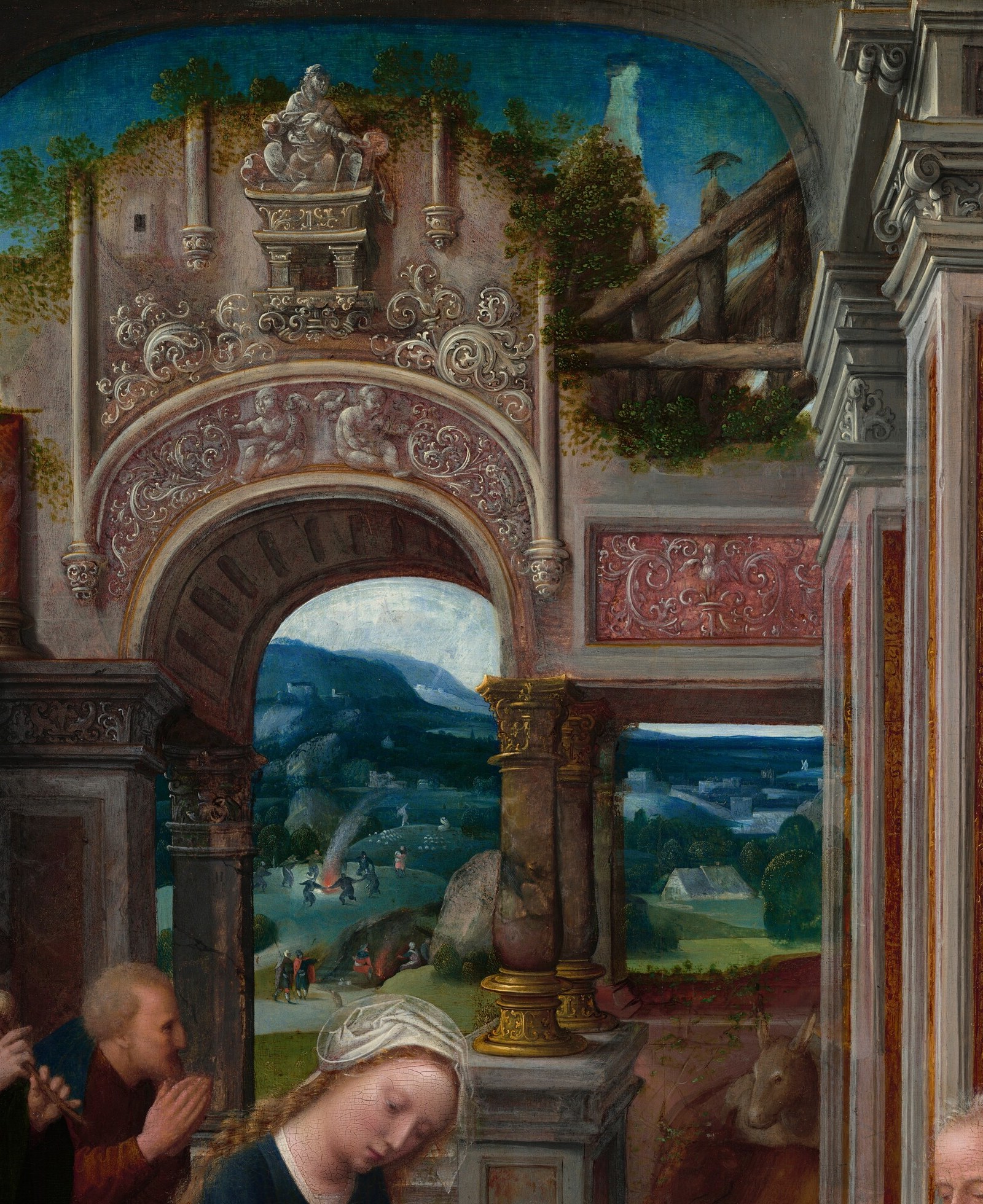
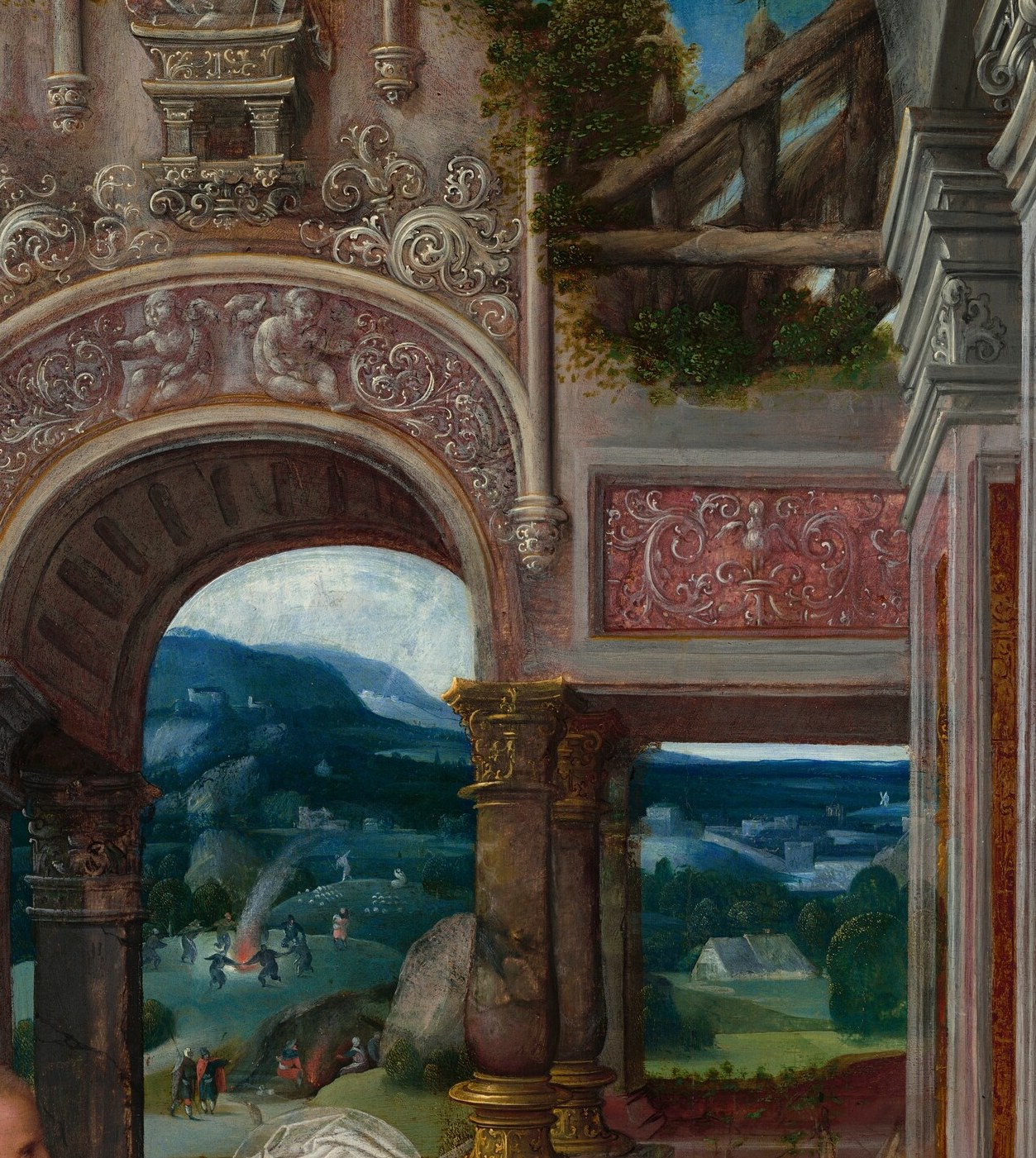
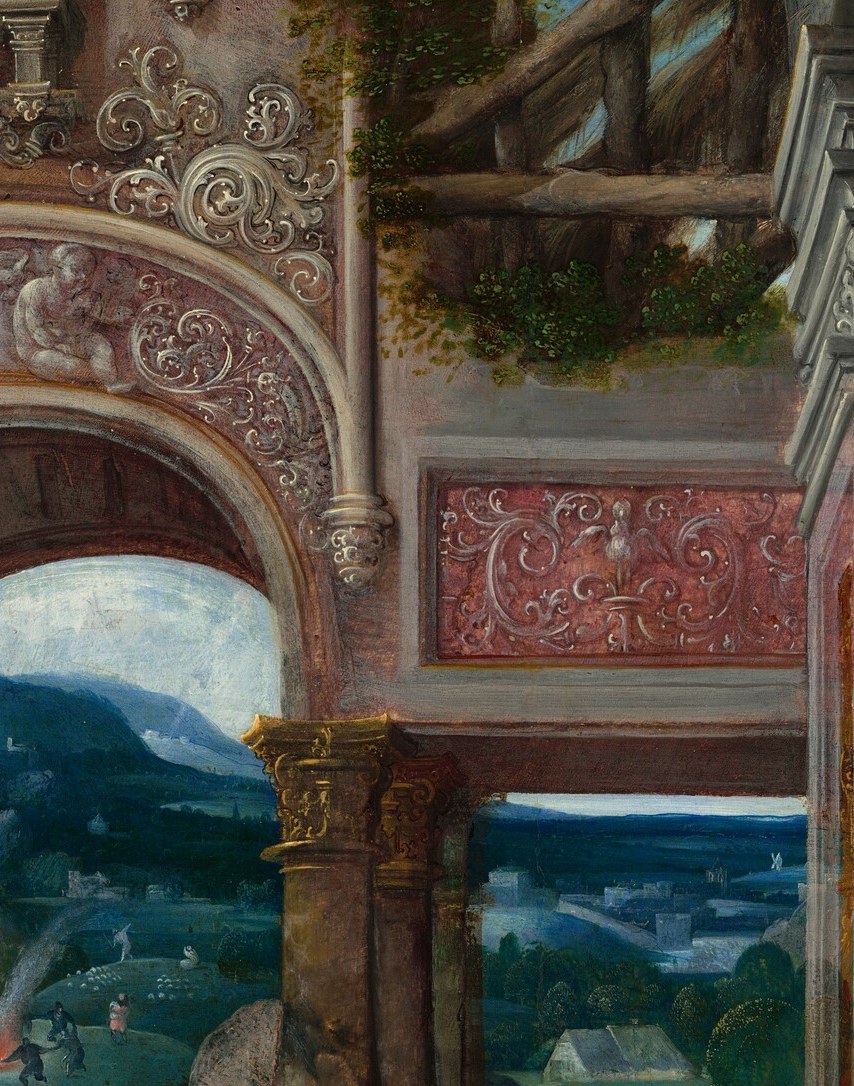
Notice the shepherd's brilliant red robe, a common detail in 16th-century Flemish fashion, and the meticulously rendered background landscape. Through the stone arch, a world of aerial perspective, characteristic of the era, draws the eye to distant travelers and a ruined classical building, reflecting the period's burgeoning interest in antiquity.
Isenbrant, an artist active in Bruges, often blended the sacred with the secular, grounding timeless stories in the familiar visual language of his time and place. This approach made the miraculous feel more immediate and relatable to the viewer, creating a devotional painting that also served as a window into 1520s Flanders.
What other details do you notice that speak to the painting's historical context?
Details


Transcript
This painting imagines a Biblical story in 1520s Flanders. The shepherds wear contemporary Flemish clothing. Through this Roman arch, a detailed landscape unfolds. Tiny travelers move through this classic Flemish aerial perspective. Even the ruined building suggests the artist's classical interest. These details ground the sacred in the everyday, 500 years ago.