The Monastery of San Pedro (Our Lady of the Snows) by Frederic Edwin Church
Frederic Edwin Church, a leading figure of the Hudson River School, was renowned for his dramatic and meticulously detailed landscapes. In "The Monastery of San Pedro (Our Lady of the Snows)," created in 1890 and held at The Cleveland Museum of Art, Church turns his attention to a remote architectural subject set within a powerful natural environment.
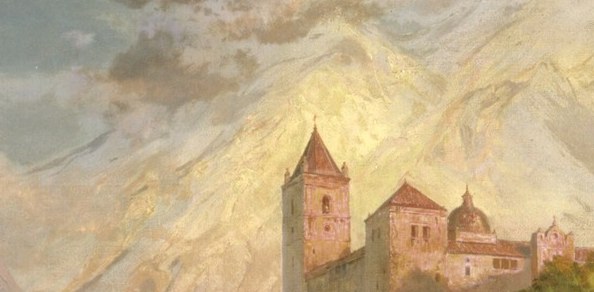
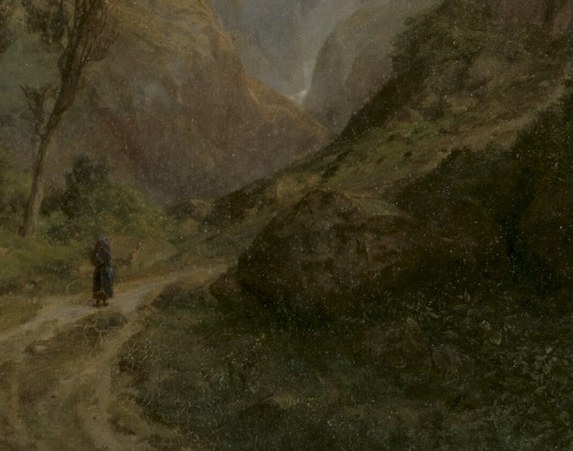
Observe the monastery, perched precariously and bathed in a distinct light, drawing the eye amidst the rugged cliffs and dense forests. A lone traveler on the winding path underscores the sense of isolation and personal spiritual journey.
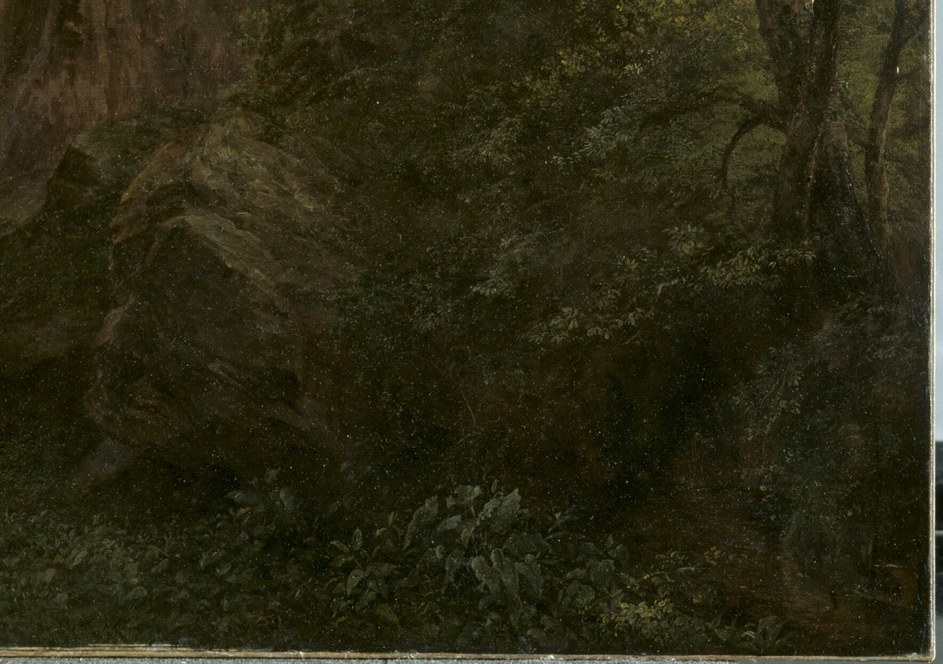
This painting reflects Church's later career, where his sublime landscapes often explored the contemplative interaction between human endeavor and the overwhelming forces of nature. His precise oil technique renders every rock and tree with incredible realism, creating an immersive experience for the viewer.
What aspects of this dramatic landscape resonate most with you?
Details
Transcript
Frederic Edwin Church, America's most famous painter, loved wild places. He found spiritual drama in grand, untouched landscapes. Later in his career, he painted specific, remote architectural subjects. This monastery, 'Our Lady of the Snows,' is bathed in light. A lone traveler emphasizes the isolation of this journey. Church used precise detail to create this sense of sublime grandeur.