The Stroller (Suzanne Hoschedé, later Mrs. Theodore Earl Butler, 1868–1899) by Claude Monet
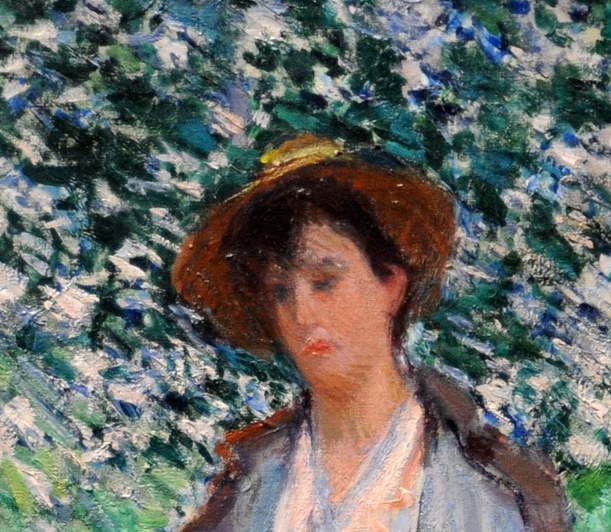
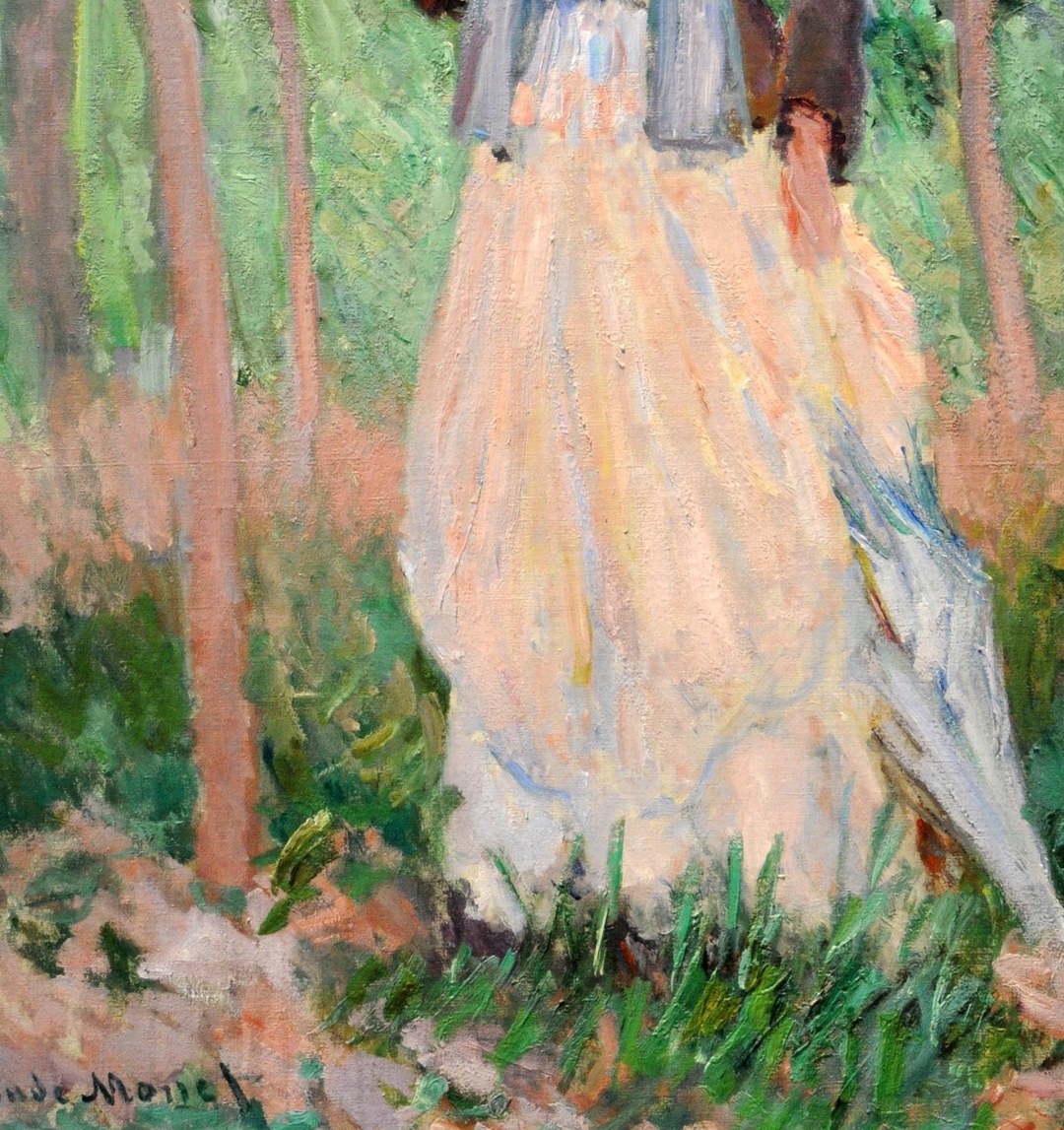
Claude Monet painted his step-daughter Suzanne Hoschedé in 1894, calling the work The Stroller. It lives at The Metropolitan Museum of Art. She wears the uniform of a bourgeois afternoon: a tilted straw hat, a blue-grey jacket, and a parasol held idle at her side. But look closer and the painting tells you exactly how to read it.
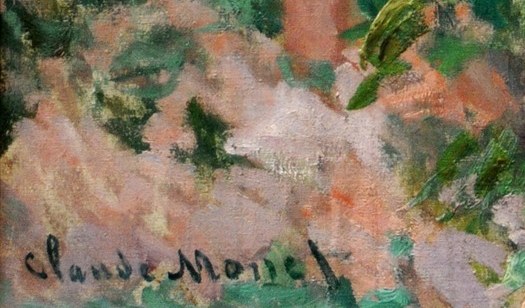
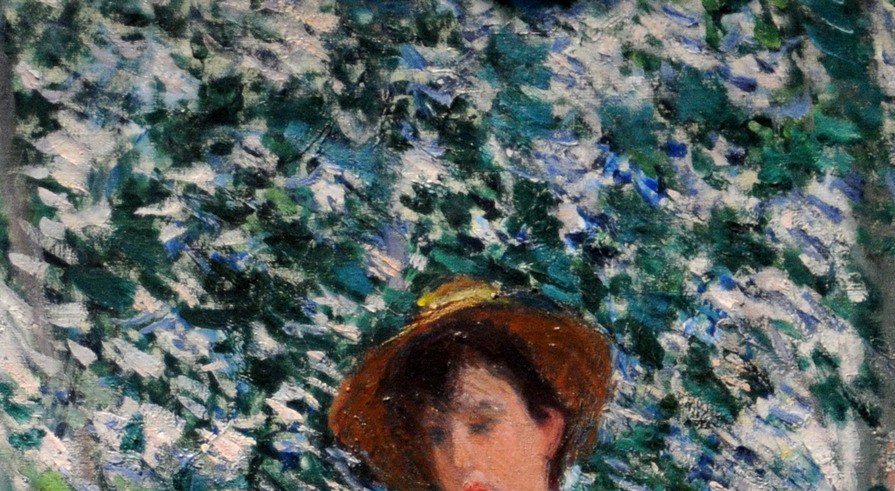
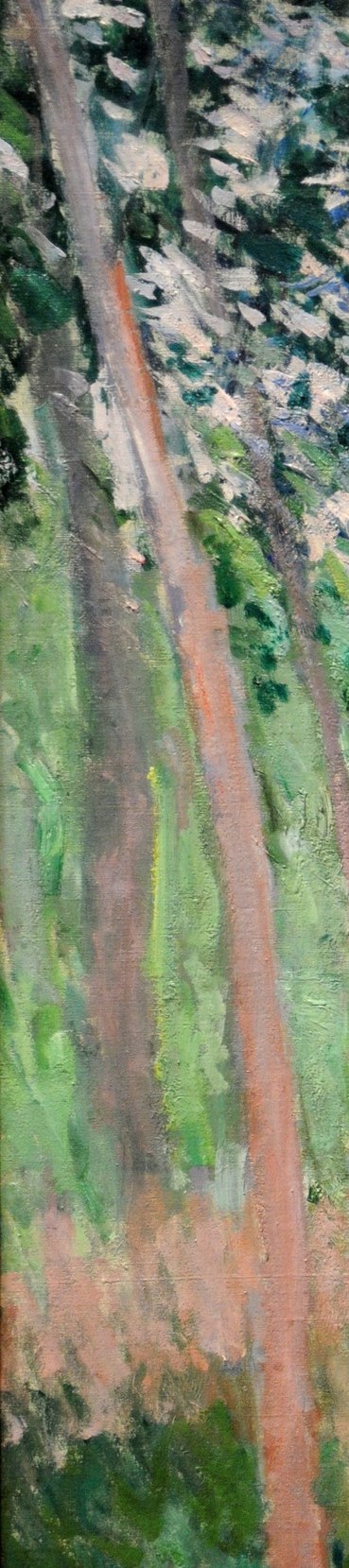
The gallery framing and the bright whites pull your eye upward, to the face and the canopy of broken green brushstrokes. But Monet tucked his signature into the darkest, quietest corner of the canvas: the striped shadow at the hem of her white skirt. It is practically invisible in a full-room view. Find that low contrast of blue-green and ochre, and the red "Claude Monet" emerges.
Suzanne was one of Alice Hoschedé's daughters. After the death of Monet's first wife Camille, the Hoschedé and Monet families lived together in an unconventional arrangement that scandalized the village. Monet painted the Hoschedé women repeatedly, but Suzanne received a particular, soft-focus tenderness here: a solitary figure in a woodland clearing, face partly veiled by shadow, rendered with the same flickering light he gave his haystacks.
It is a portrait made of atmosphere rather than anatomy. And the artist's name is right there, waiting in the grass.
Details
Transcript
She looks like any woman out for a summer walk. His step-daughter. Painted with unusual tenderness. Now look at the hem of her skirt. Tucked into the striped shadow. Monet signed here, where the dark strokes could hide it.