明 傳謝環 杏園雅集圖 卷|Elegant Gathering in the Apricot Garden by Xie Huan (Chinese, c. 1370-c.1450)
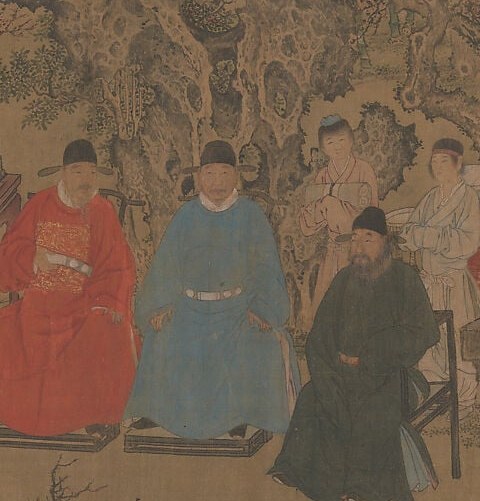
This is Elegant Gathering in the Apricot Garden, a handscroll painted around 1437 by the Ming court artist Xie Huan. It records an actual spring party hosted by senior Grand Secretaries Yang Shiqi and Yang Rong for nine of the empire's most powerful civil officials. Silk, ink, and color. And hidden in plain sight is a piece of painterly virtuosity that handscrolls rarely attempt.
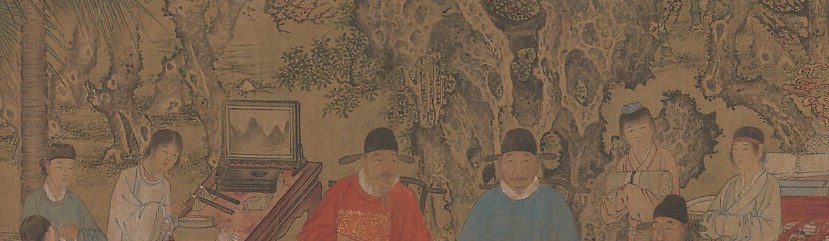
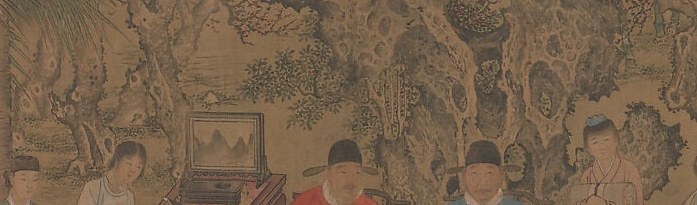
Look at the faces. Not generic scholar types. Each of the nine men is an individualized portrait, rendered so that any peer at the Ming court would recognize him. This is a group portrait posing as a garden scene. Face after face, the painter sustains the same psychological focus and physical detail. By the final sitter, the hand has not wavered.
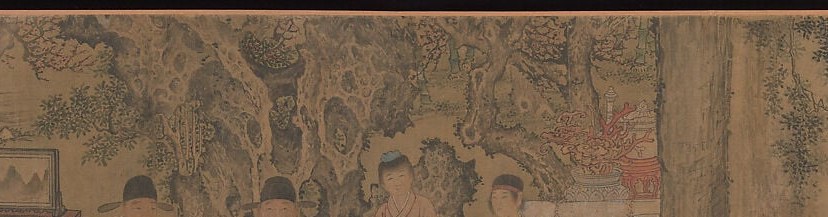
The historical context makes this even more extraordinary. The gathering occurred in early 1437, just after the Xuande Emperor ascended the throne. The cranes walking among the guests are not decoration. They are an explicit longevity emblem, a political wish for the new emperor's long reign. The blossoming apricot trees that give the party its name also invoke the apricot altar where Confucius taught. These men were not just drinking wine. They were claiming an intellectual lineage.
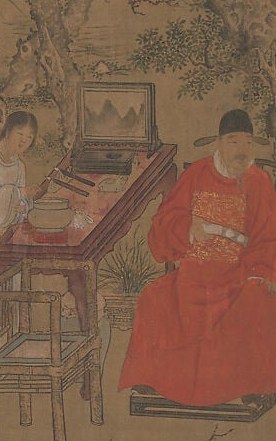
Xie Huan worked on silk, which is unforgiving. Every stroke is final. The red of the host's robe, the black gauze of the winged caps, the subtle variations of ink in the foliage: all of it had to be right the first time, across a horizontal scroll that unfolds foot by foot. The museum calls this ink and color on silk. It is that. It is also a technical argument for what a steady hand can do.
Details
Transcript
A party in a garden. Spring, 1437. Nine of the most powerful men in Ming China. Look at their faces. Not types. Portraits. Everyone at court could name each sitter. Now look at the robes. A code of color. Red was the highest civil rank. He is the host. The painter made silk hold that red for six centuries. And he did it nine times.