Madame Henriot by Renoir, Auguste
Auguste Renoir painted Madame Henriot around 1876, and the result is one of the most direct and warm-hearted portraits of the Impressionist era. The sitter, Henriette Henriot, was a successful actress at the Théâtre de l'Odéon and a friend of the artist. That familiarity shows.
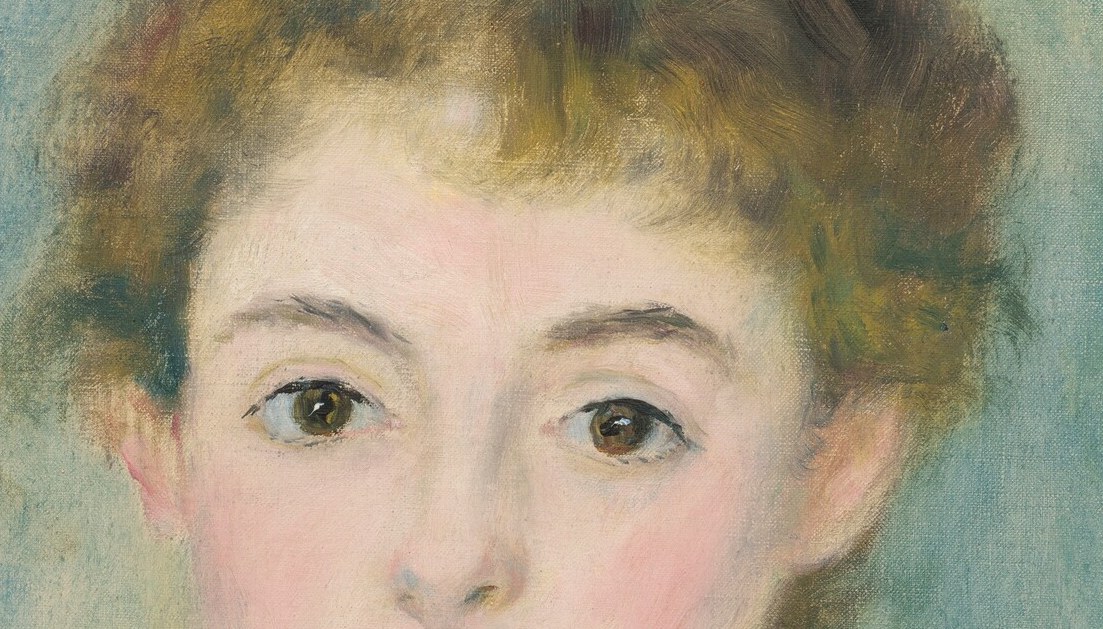
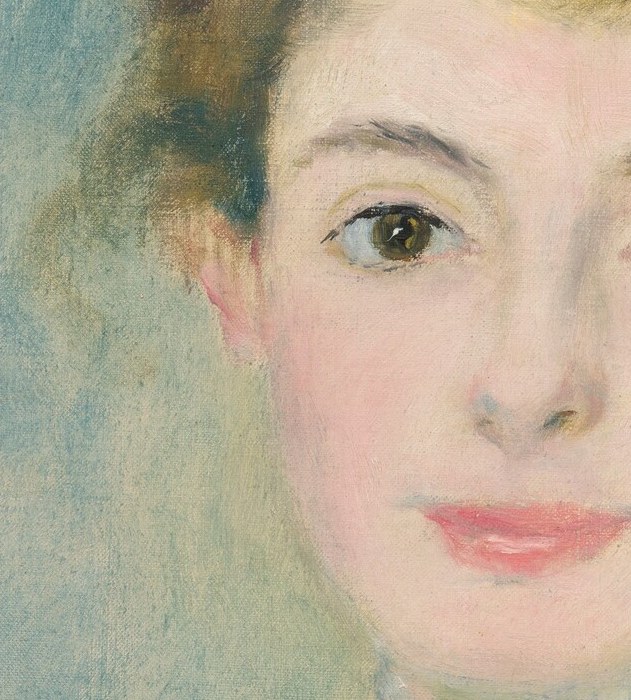
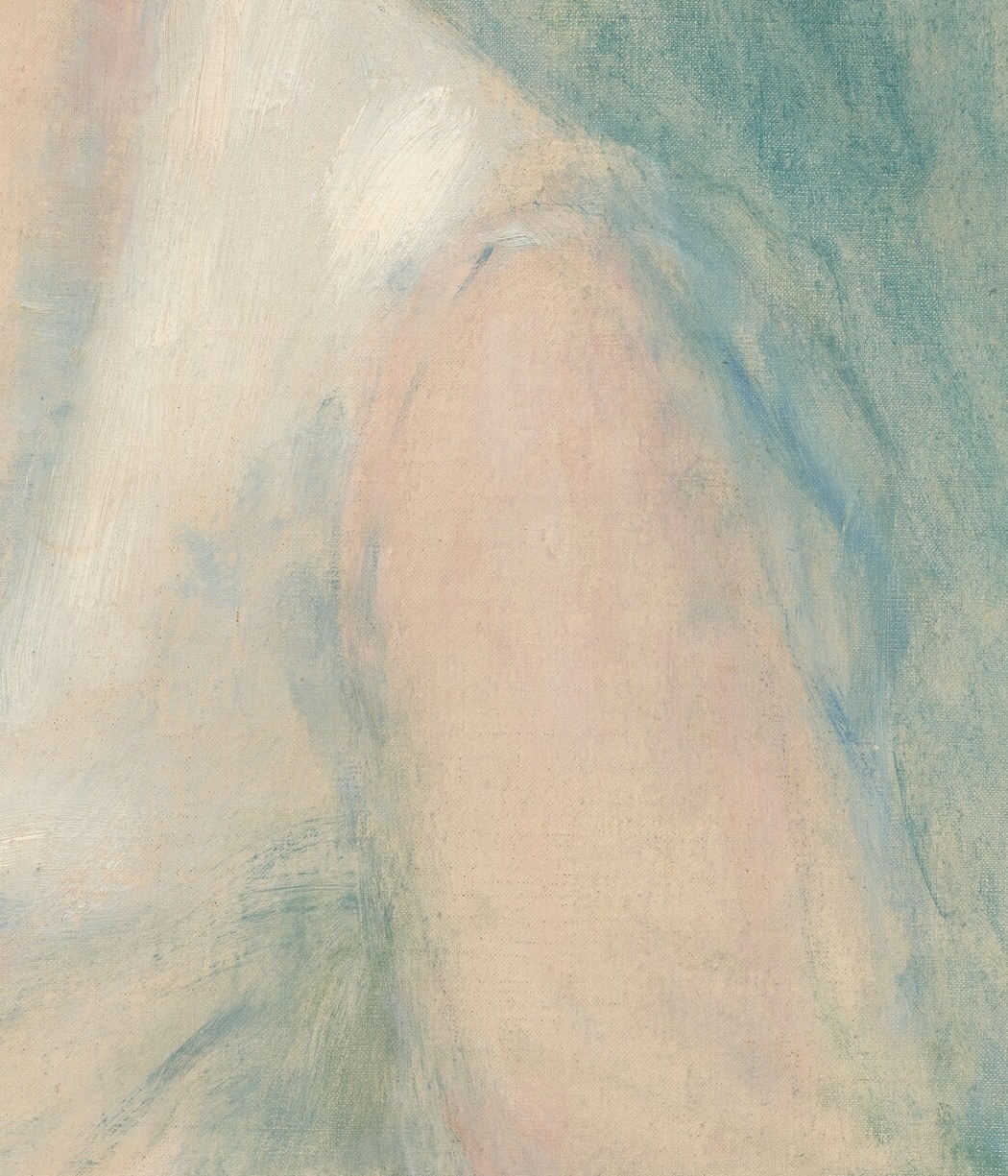
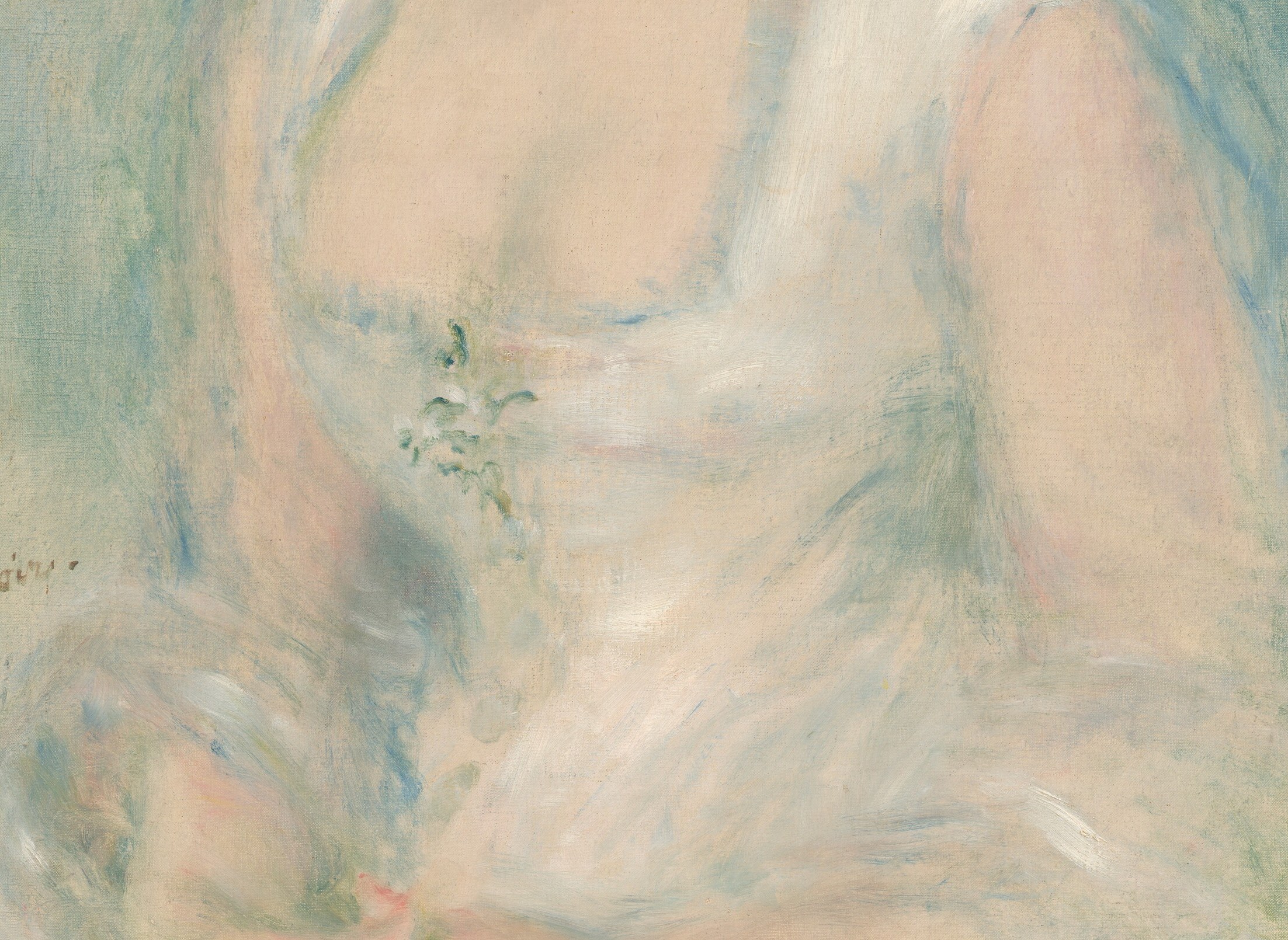
Look at how Renoir builds the portrait from the center out. Her face receives the tightest, most finished treatment, the dark eyes, the soft rosy flush on her left cheek, while her hair, shoulders, and dress dissolve into visible, energetic brushstrokes. A cool blue ribbon at her throat is a tiny compositional anchor: it sits precisely between the warm skin tones and the white fabric. The white dress itself is hardly described at all; it is built from overlapping strokes of cream, pale blue, and white, giving an impression of weight and sheen without ever drawing an outline.
This is Renoir at thirty-five, deep in the Impressionist project of capturing modern life. He had exhibited at the first Impressionist exhibition in 1874 and was two years away from his great Bal du moulin de la Galette. Henriette Henriot, meanwhile, was part of a world Renoir loved: working actresses, theaters, and the social fabric of new Paris. She sat for him multiple times, and her direct, unguarded gaze here suggests an ease that formal commissioned portraits rarely achieved.
A painting like this is a small, suspended collaboration, a working actress pausing long enough for a painter friend to pin down the light on her skin in a single moment.
Details
Transcript
She was a working actress in Paris, 1876. Henriette Henriot played roles at the Théâtre de l'Odéon. She knew Renoir well. The warmth is real, not staged. The face is tight, nearly finished. But her shoulder starts to dissolve into loose strokes. Renoir painted this at thirty-five, at the height of Impressionism. The white dress is an idea of a dress, built from separate colors. A small blue ribbon holds the whole composition together.