Saint John the Baptist Bearing Witness by Annibale Carracci
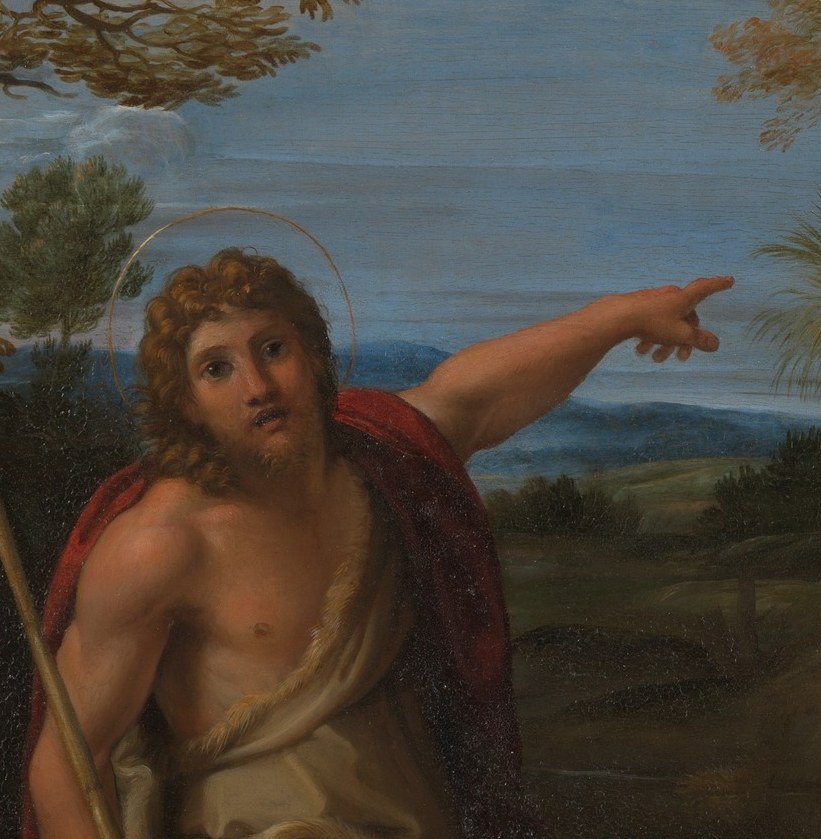
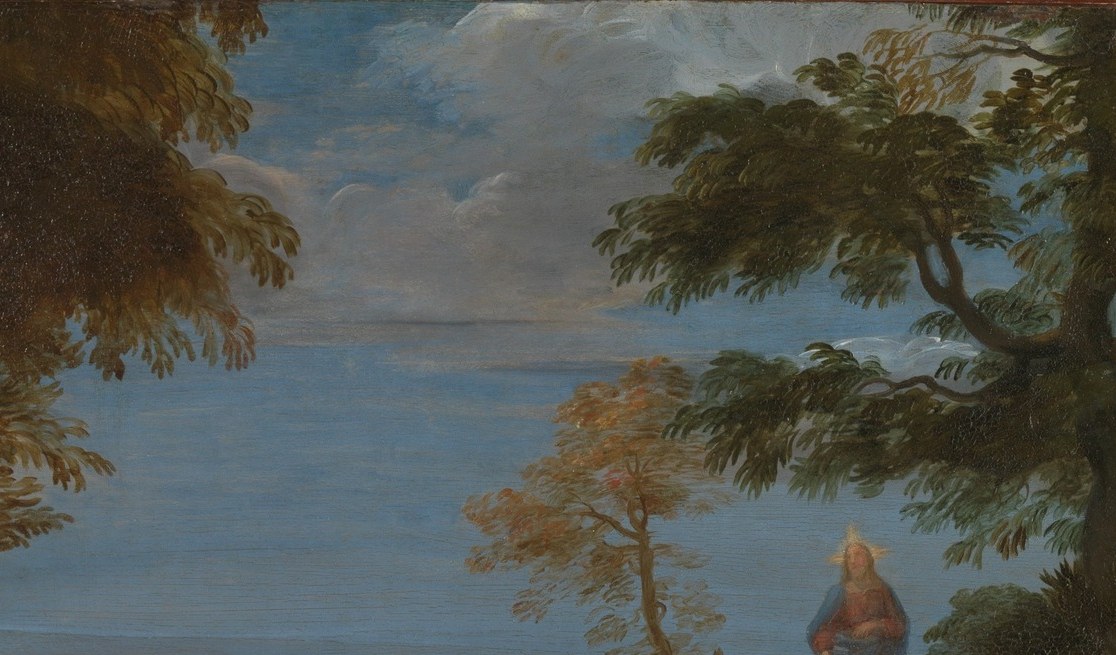
Annibale Carracci painted Saint John the Baptist Bearing Witness on copper around the year 1600, and the choice of material was a statement. Copper plates cost significantly more than canvas or wood panel, a single mistake meant losing both the work and the investment. Carracci bet his skill on it, and the payoff is a surface luminosity that still reads as faintly miraculous: the sky glows from within.
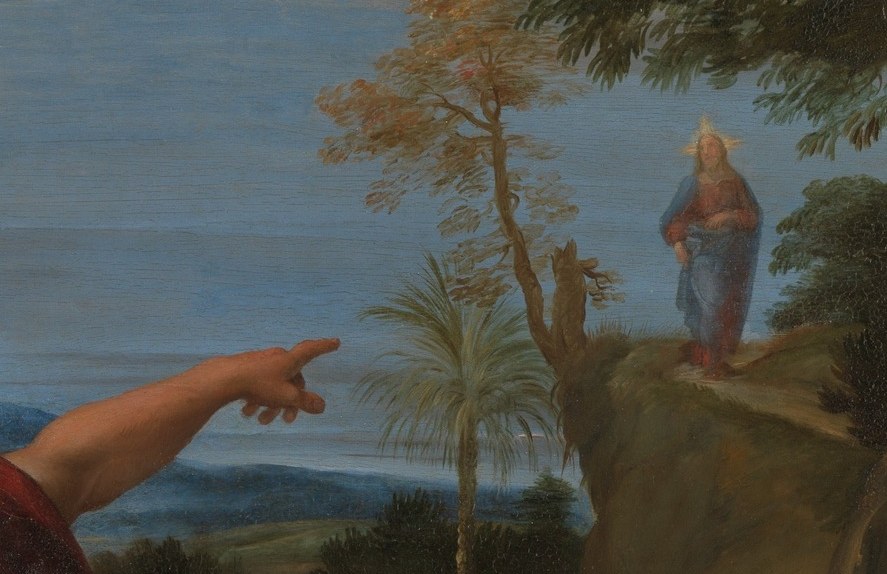
Trace the two lines that govern the image. John's right arm and his eyes aim in the same direction, off-frame, toward a figure of Christ on a distant hill. One hand points; the other grips a reed cross. The split between announcing and holding, between release and grasp, runs through his body. Carracci studied anatomy in the academies of Bologna, and the Baptist's torso carries the weight of that classical training, but the urgency belongs to the Baroque, a witness who will not let you look away.
The painting sits in the Metropolitan Museum of Art. Carracci made it shortly before moving permanently to Rome, where his workshop at the Palazzo Farnese would train the next wave of Baroque painters. This copper panel is small enough to hold in two hands. Every inch of it was risked.
Details


Transcript
Around 1600, most painters worked on canvas or wood. Annibale Carracci chose copper. Copper was expensive. It made every brushstroke a gamble. But it gave him this: an enamel-like glow no canvas could hold. Look at his outstretched arm. The whole painting turns on it. His eyes follow exactly where that hand points. Carracci taught a generation of painters in Rome. This small copper plate is one of his lessons in light.