Officer paying a woman in a stable by Pieter de Hooch
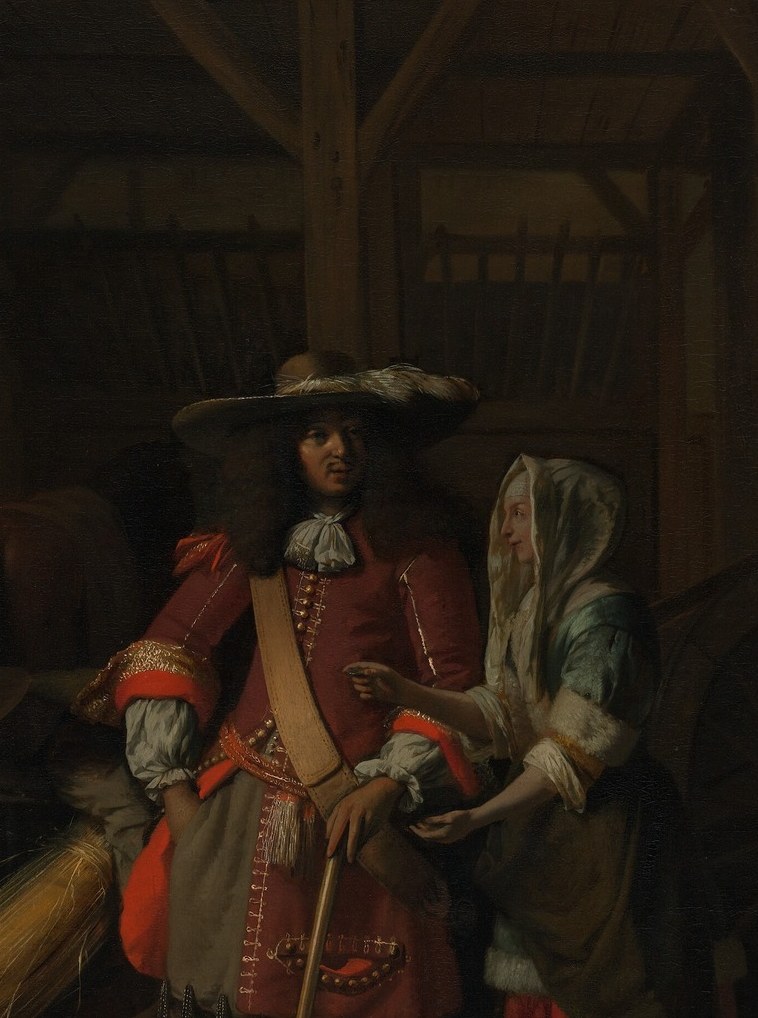
Pieter de Hooch's 'Officer paying a woman in a stable' (1670) is a quiet masterpiece of social imbalance. Painted at the peak of his career, it transforms a mundane transaction inside a humble stable into a profound study of power, vulnerability, and light.
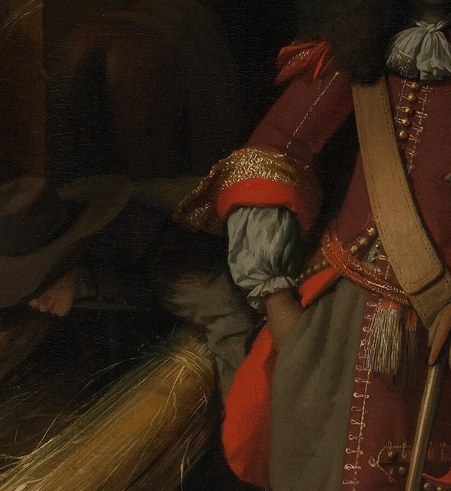
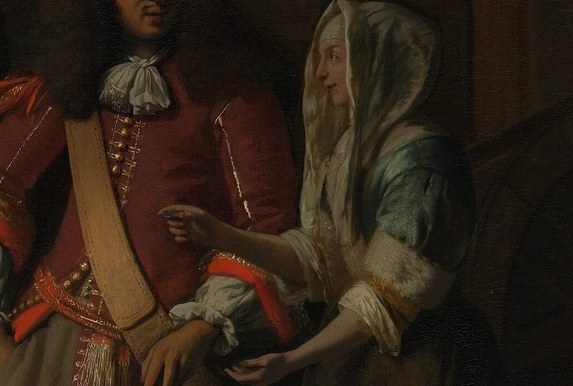
Your eye lands first on the officer's brilliant red coat, the only bold color in the room. His sword hilt is visible. His hand extends a coin. But follow the line of that transaction across to the other side: a woman, cloaked and hooded, bends forward to receive it. She is holding a small child. Her posture, and the child's presence, shift the scene from simple commerce to something far more tender and unequal.
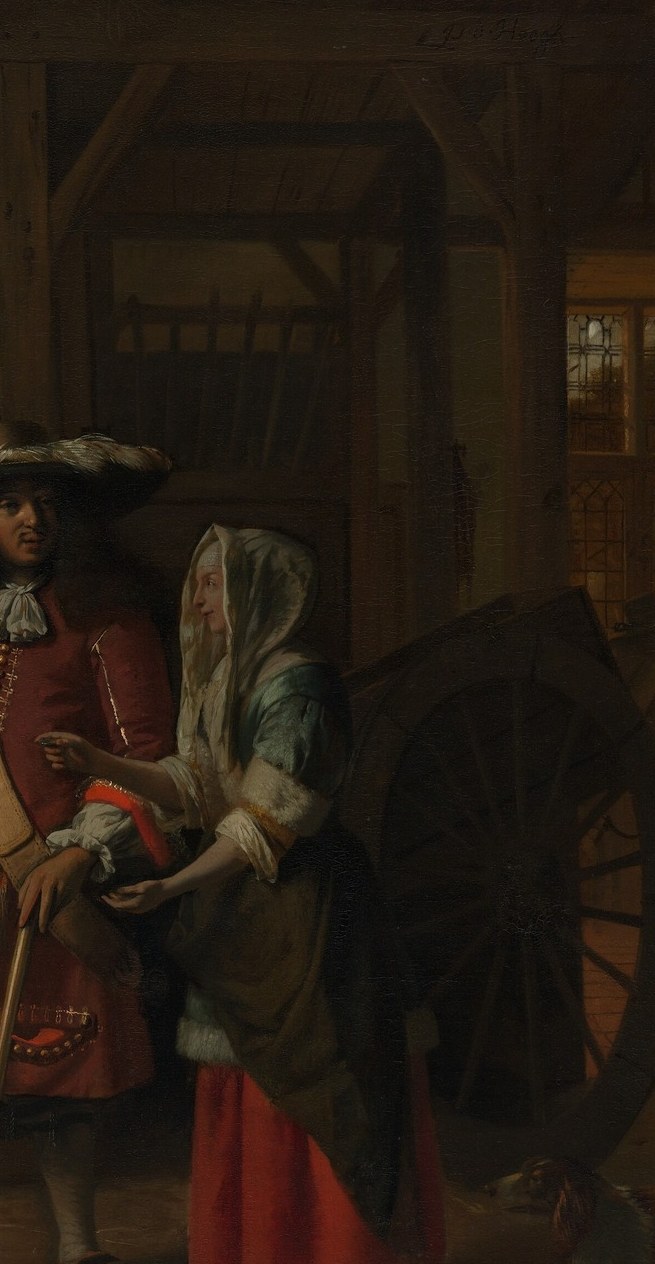
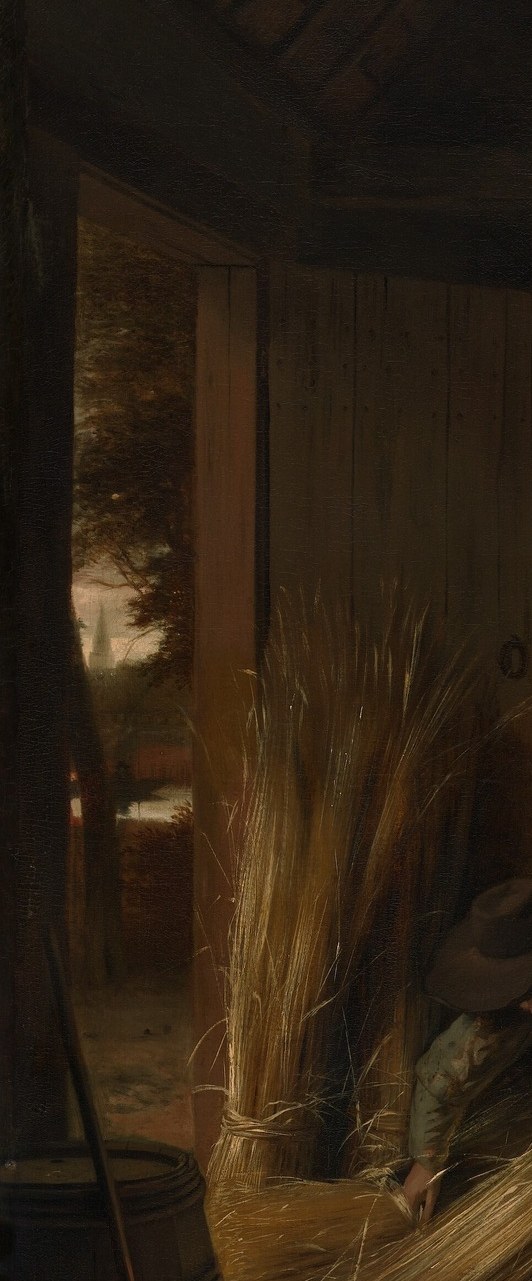
De Hooch was a contemporary of Vermeer in Delft, and here he shows why he is a master of light and space. A warm glow from a doorway rakes across the wooden ceiling beams and earthen floor. In the background, other figures sit at a table by candlelight. The dog resting on the floor grounds the scene, a traditional symbol of domestic fidelity, yet the woman's face remains in shadow.
De Hooch was last documented in 1679, and his date of death remains unknown. His son Pieter died in 1684, a date often wrongly given for the father. Looking at this woman, bowed but enduring, what do you think her life became after this moment in the stable?
Details
Transcript
A bright red coat pulls your eye immediately. Its wearer is an officer, his sword hilt visible at his hip. He extends a coin, but notice the other hand. She bends forward, holding a child. She is not his equal here. De Hooch painted this in 1670, the height of his career. He chose not a grand hall, but a rough stable with bundles of straw. The dog on the earthen floor is a quiet pledge of fidelity. But the woman's face, half in shadow, holds a deeper story.