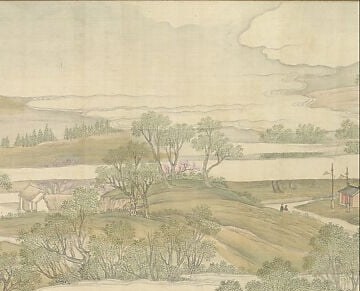
清 徐揚等 乾隆南巡圖, 第四卷﹕黃淮交流|The Qianlong Emperor's Southern Inspection Tour, Scroll Four: The Confluence of the Huai and Yellow Rivers (Qianlong nanxun, juan si: Huang Huai jiaoliu) by Xu Yang
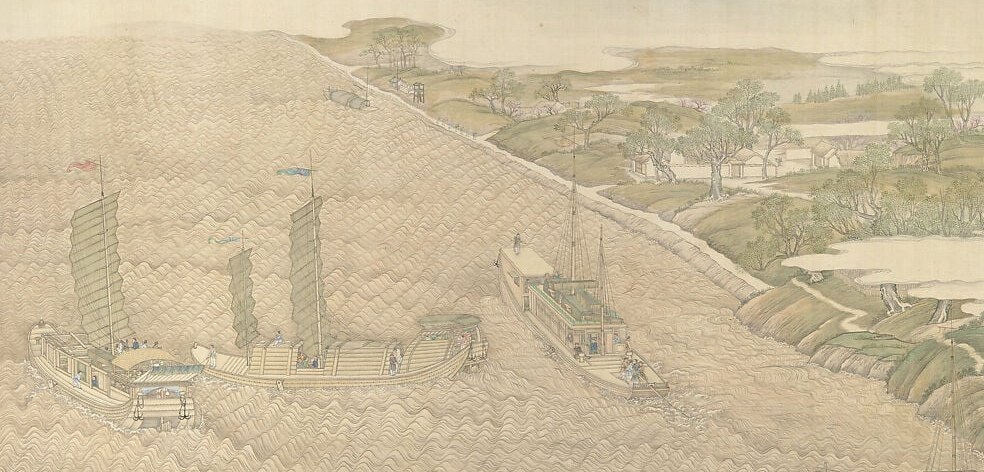
Xu Yang's "The Qianlong Emperor's Southern Inspection Tour, Scroll Four: The Confluence of the Huai and Yellow Rivers," painted in 1770, isn't just a landscape; it's a meticulously crafted piece of imperial propaganda. Housed at the Metropolitan Museum of Art, this handscroll visually asserts the emperor's power and control.
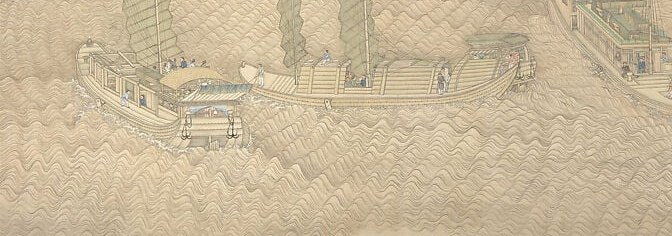
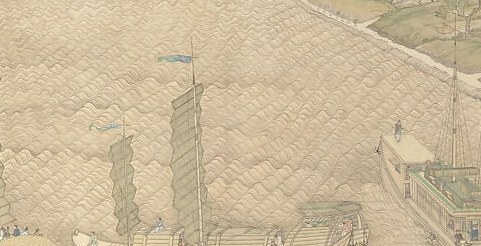
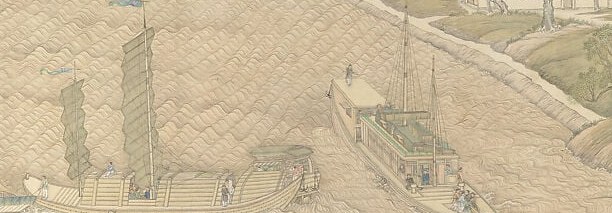
The painting depicts the convergence of the Huai and Yellow Rivers, a historically flood-prone area. Yet, it shows the waters calm and orderly, emphasizing massive hydraulic engineering like the great levee and its sluice gates. The tiny procession figures on the levee further highlight the state's grandeur over individual human scale.
Commissioned by the Qianlong Emperor himself, this work was part of a twelve-scroll series celebrating his achievements. Every detail was subject to close scrutiny by government officials, ensuring it aligned with the official narrative of imperial might and benevolent rule. It presented a desired reality of effective governance, rather than the challenging hydrological reality of the region.
This painting offers a fascinating glimpse into how art was used to shape perception and reinforce authority in 18th-century China. What aspects of imperial power do you think this work most effectively conveys?
Details
Transcript
This 1770 scroll shows an emperor inspecting his realm. It depicts the confluence of two powerful rivers. Historically, this region was prone to devastating floods. But the painting portrays calm, orderly waterways. Notice the massive levee controlling the flow. Every detail was reviewed by officials before painting began. It projects an image of stability and imperial control over nature.