Diptych of Munich by Hans Memling
Hans Memling's Diptych of Munich, painted around 1480, is a beautiful example of Northern Renaissance art, now held at the Alte Pinakothek. This oil painting combines sacred imagery with subtle symbolism, inviting contemplation.
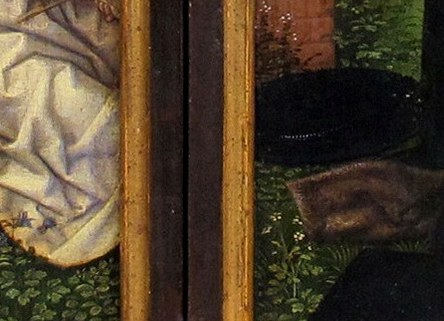
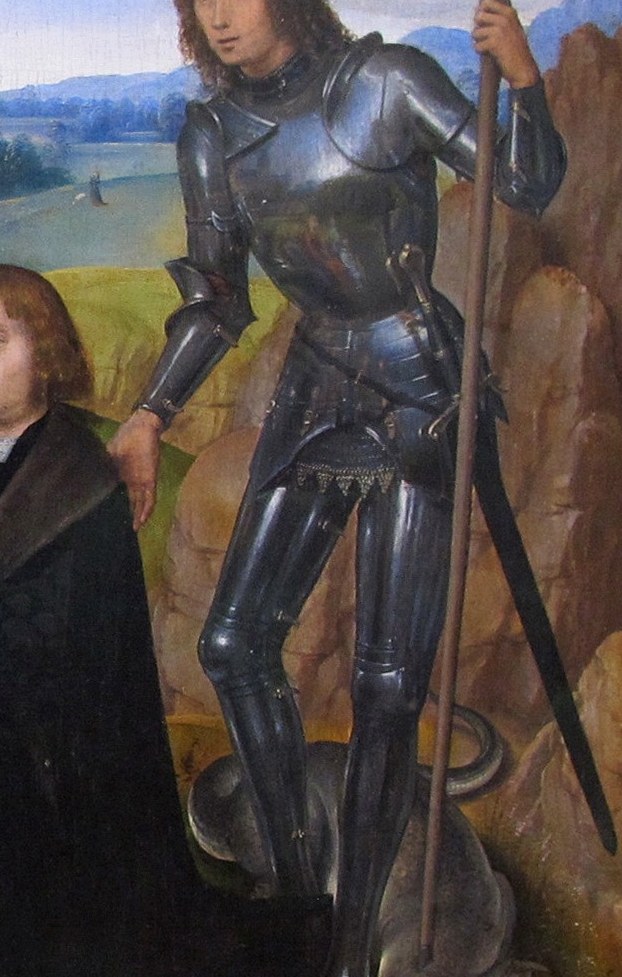
On the left panel, the Virgin Mary tenderly holds the Christ Child, surrounded by musical angels. The vibrant rose bushes behind them are not just decorative; they symbolize Mary's purity and divine grace. On the right, Saint George, a knight in gleaming armor, stands triumphant.
Look closely at the small dragon at Saint George's feet, a clear representation of evil or paganism overcome by the saint. The donor figure, likely a patron of Memling's, expresses his piety with a red rosary, a common devotional object of the time. Memling was known for incorporating portraits of his patrons into his religious commissions, blending their earthly devotion with heavenly narratives.
This diptych served as a private object for contemplation, inviting its viewer to engage intimately with these spiritual themes and their carefully woven meanings. What details resonate with you most?
Details
Transcript
This 1480 diptych combines sacred figures and symbols. On the left, the Christ Child and Mary are surrounded by music. Roses here symbolize the Virgin Mary's purity and grace. On the right, Saint George wears gleaming armor. At his feet, the dragon represents evil, now conquered. The donor figure holds a red rosary, showing his devotion. Memling often included patrons' portraits in his religious works.