Wild Weather by Frederick Judd Waugh
Frederick Judd Waugh, known for his dramatic seascapes, designed ship camouflage for the U.S. Navy during World War I. This expertise in observation and detail is evident in his painting, "Wild Weather," created in 1930.
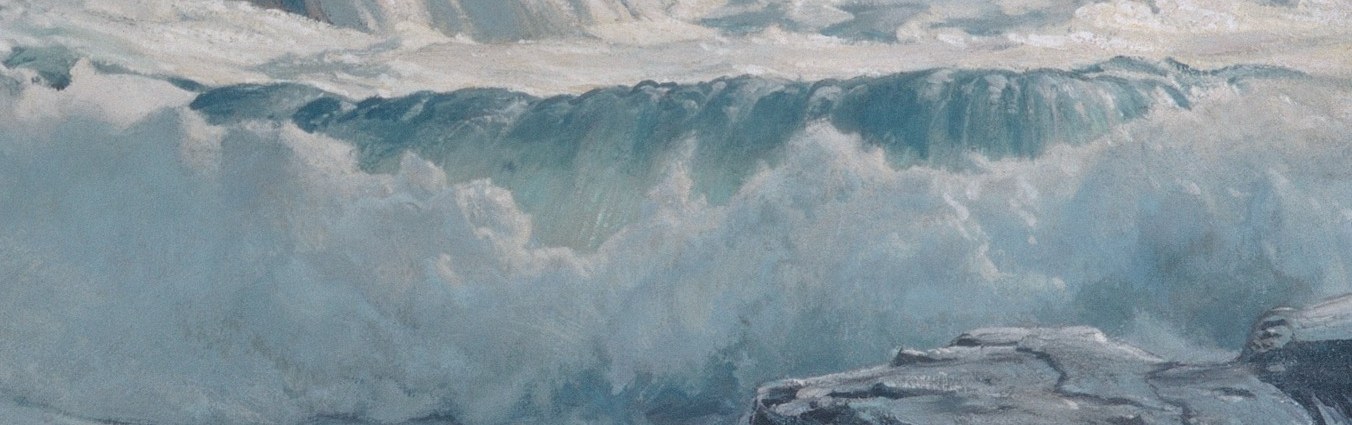
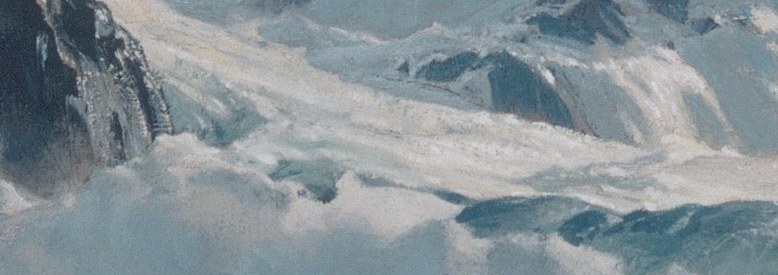
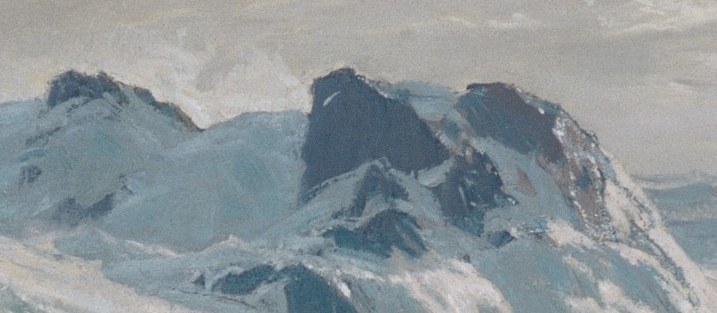
The oil on masonite work, now at The Metropolitan Museum of Art, captures the raw, untamed power of the ocean. Look closely at the crest of the crashing wave and the turbulent surface of the water, where Waugh's bold brushwork brings the scene to life.
Waugh meticulously recorded his palette for marine paintings, including colors like Permalba white, various cadmiums, and cerulean blue, allowing him to render the dynamic interplay of light and water with striking realism.
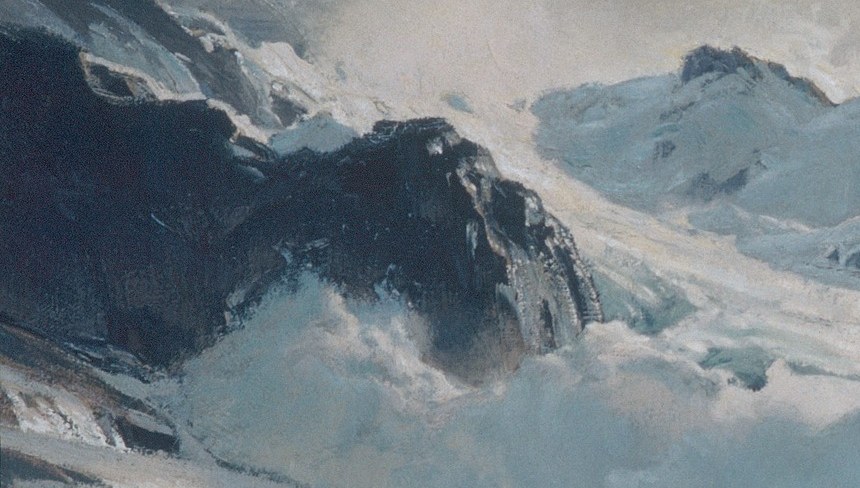
"Wild Weather" is a powerful testament to Waugh's dedication to capturing the ocean's ever-changing presence. What do you see in the clash of water and rock?
Details

Transcript
This painter recorded the ocean's raw power. He designed ship camouflage for the U.S. Navy. Look at the crest of this massive crashing wave. The artist recorded the exact colors he used. He captured the relentless motion of the water. It shows the constant battle between sea and land.