Saint John the Evangelist by Juan Ribalta
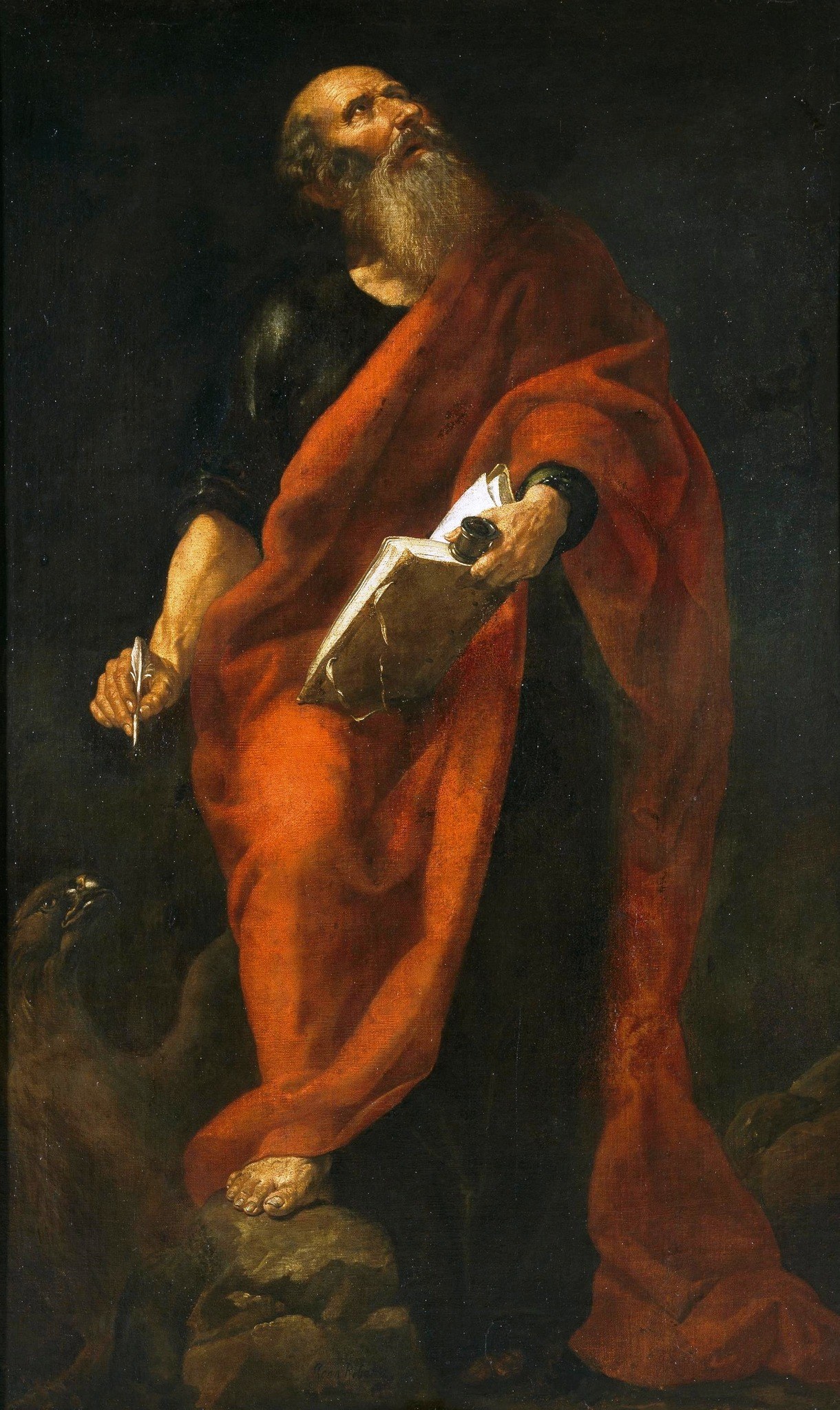
In Juan Ribalta's *Saint John the Evangelist*, painted in 1621, a subtle detail in the shadows adds a layer of traditional symbolism to this dramatic Spanish Baroque work, now housed in the Museo del Prado in Madrid.
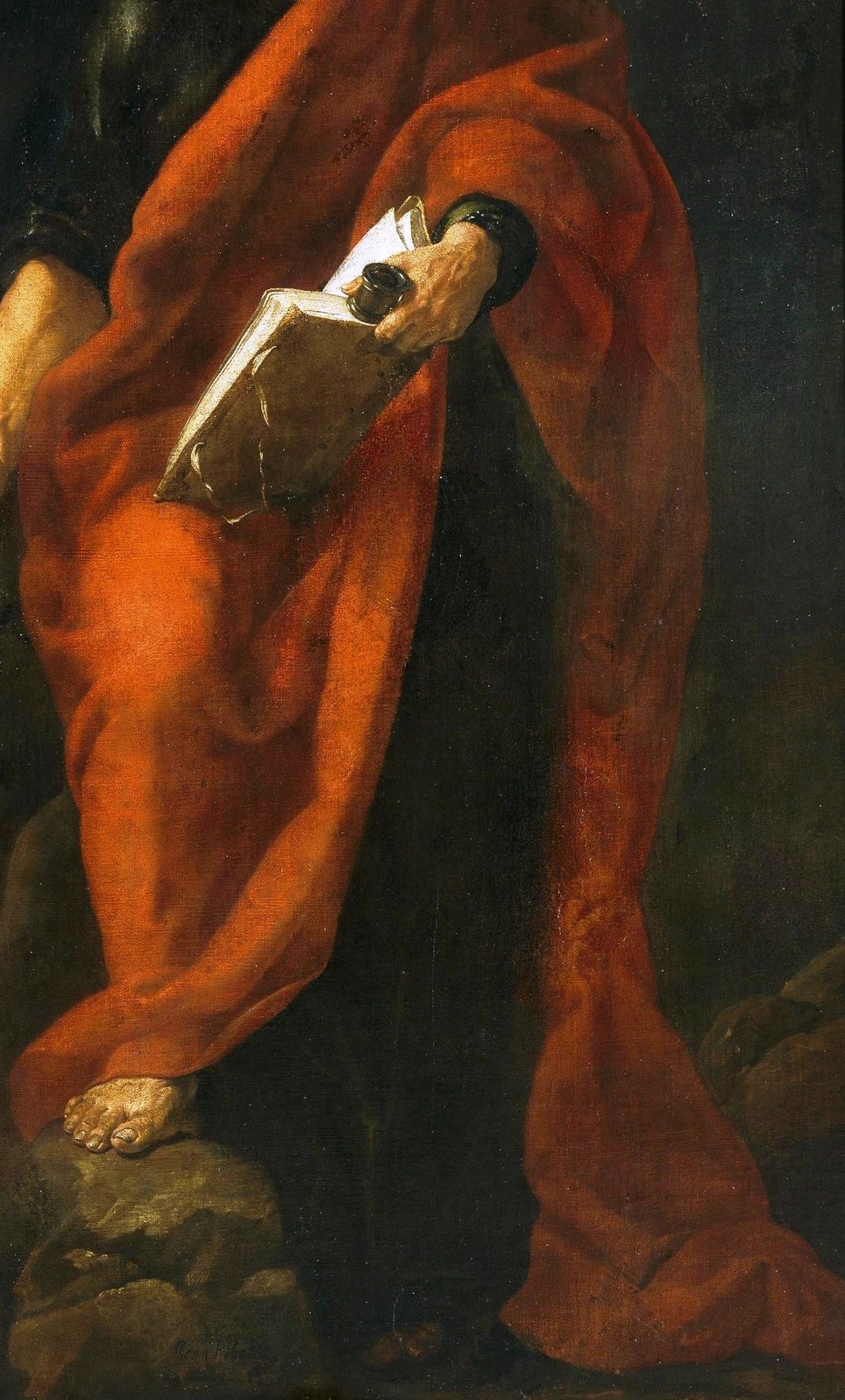
Ribalta, following in his famous father's Caravaggist style, uses chiaroscuro to highlight Saint John's illuminated face, hands, and the vibrant red robe. The saint is captured in a moment of intense focus, quill in hand, ready to transcribe divine messages into his open book.
But look closer, in the lower left corner, where a barely visible eagle emerges from the darkness. This creature is a traditional attribute of Saint John the Evangelist, representing his lofty and divinely inspired Gospel, which begins with a profound theological discourse. Its understated presence anchors the spiritual depth of the painting.
This hidden detail reminds us how much meaning can be conveyed with a quiet visual cue. Did you spot it on first glance?
Details

Transcript
This Spanish painter worked in the early 1600s. He captures Saint John the Evangelist, mid-sentence. Notice his pen, poised over the open book. The vibrant red robe glows against the darkness. Now look closely at the lower left, in shadow. Barely visible, an eagle emerges from the dark. The eagle is a traditional symbol of John the Evangelist.