The Ascension of Christ by Hans von Kulmbach
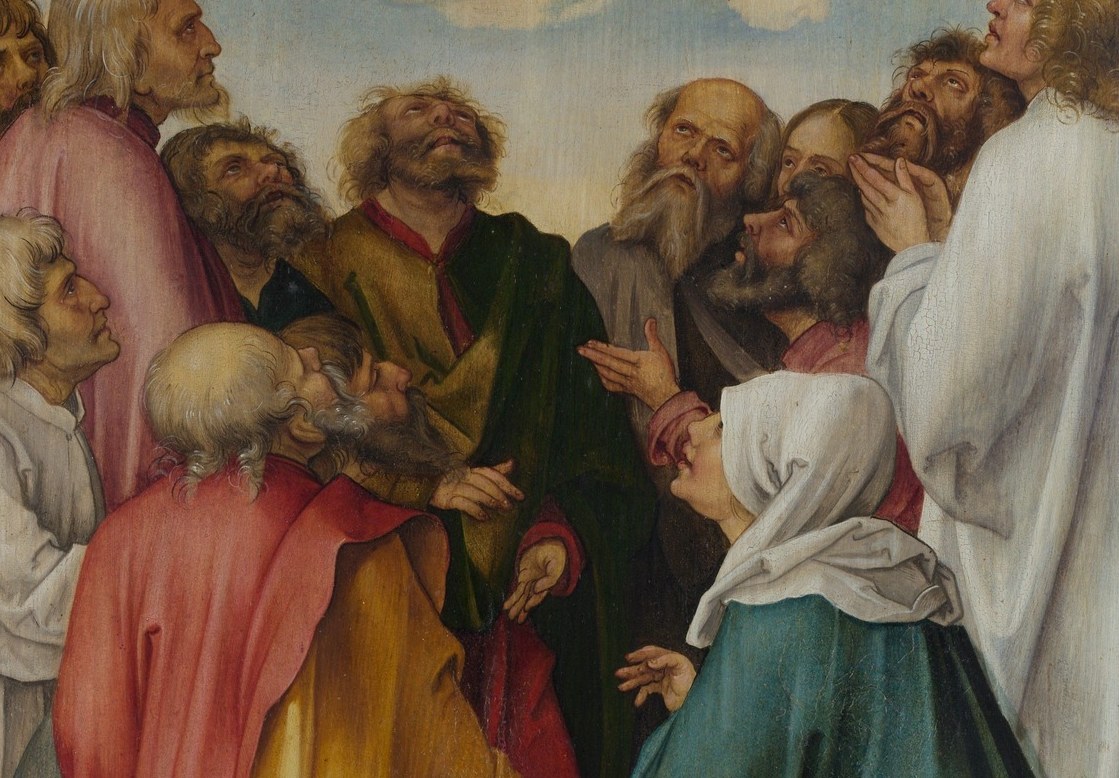
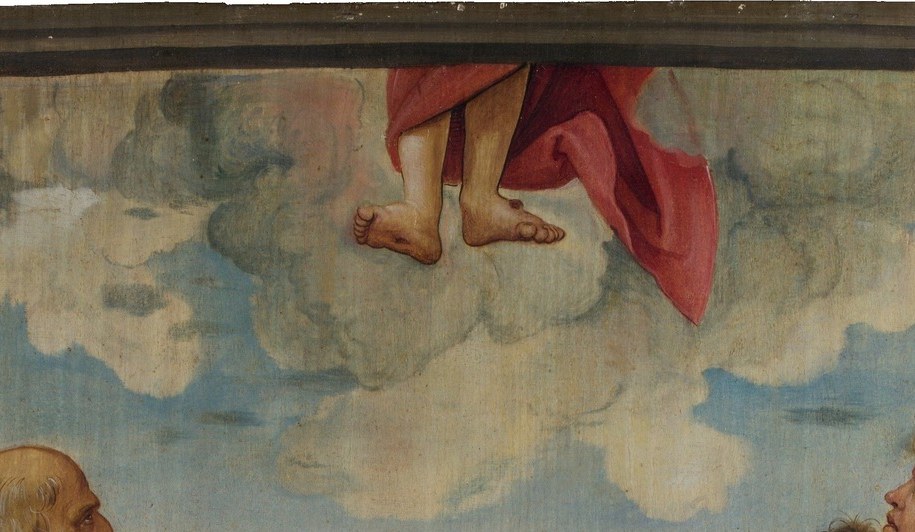
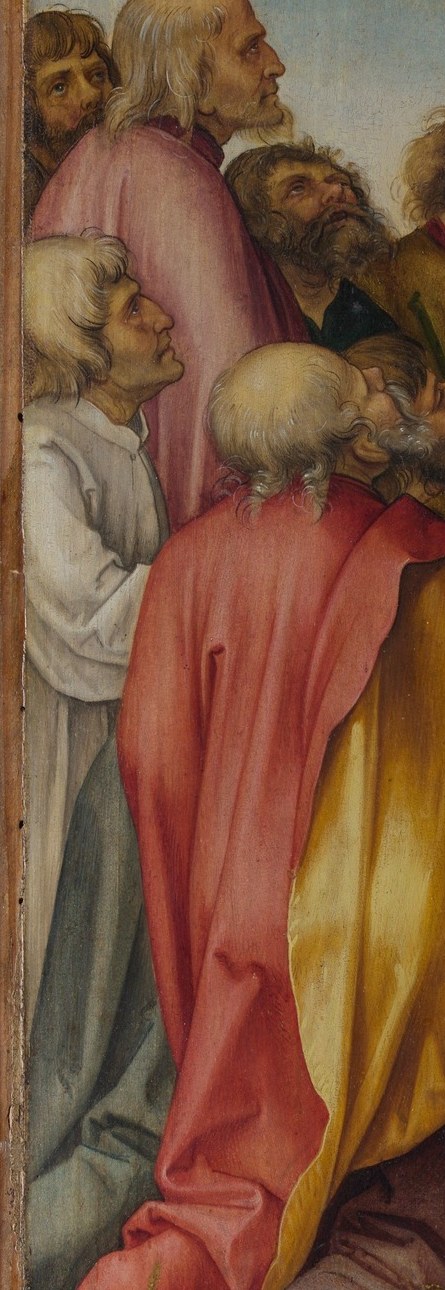
The Ascension of Christ, painted by the German artist Hans von Kulmbach in 1513, now hangs in The Metropolitan Museum of Art. This oil painting captures the pivotal biblical moment when Christ rises into heaven before the eyes of his disciples.
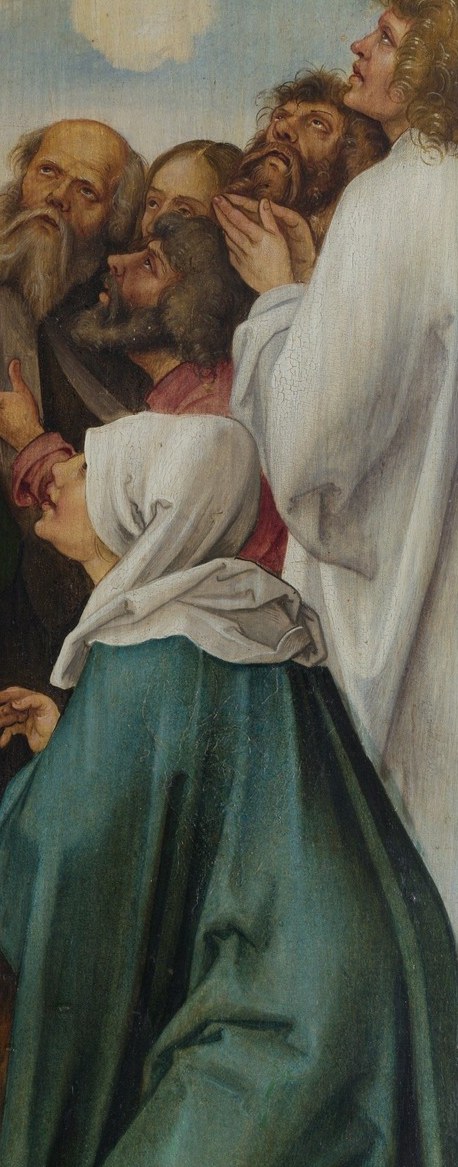
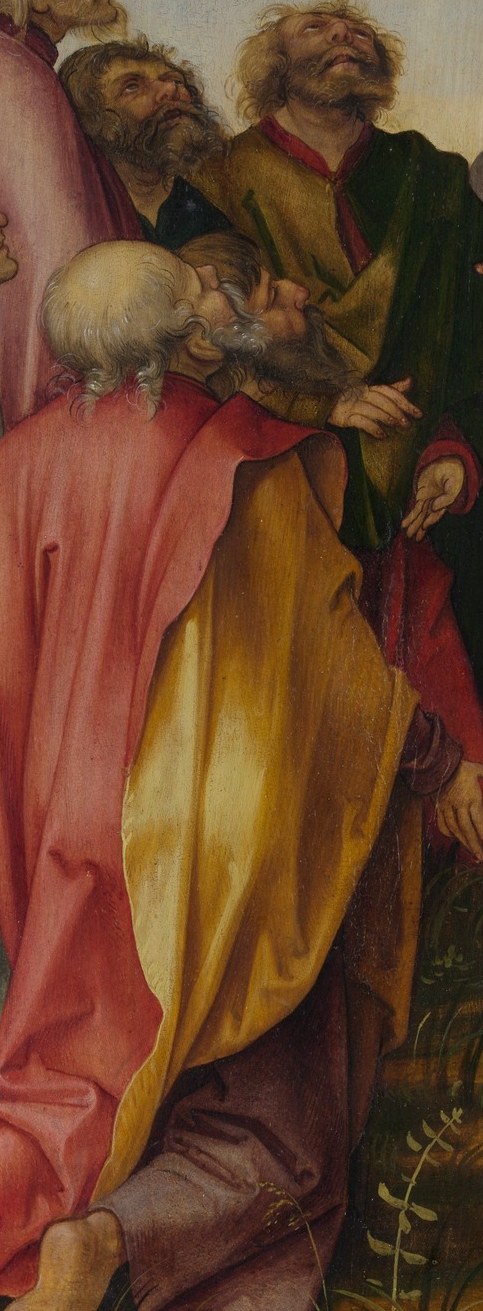
But the image is not simply a spectacle of wonder. As the apostles crane their necks, their mouths open in astonishment, one figure holds a different posture entirely. Mary stands in her white head-veil, wrapped in a green mantle, her face marked not by awe but by a contained, personal grief. She does not tilt her head skyward with the rest of the crowd.
Von Kulmbach, active in Nuremberg and later Poland, was a skilled colorist who understood the emotional weight of a single isolated figure. The saturated yellows and scarlets of the astonished apostles only deepen the stillness of Mary's white veil against the teal drapery. The onlookers witness a miracle; she is experiencing a goodbye.
The scene suggests that the deepest faith is not always the most demonstrative. Sometimes it is the one who stands in silence while everyone else shouts.
Details
Transcript
Look at the crowd of upturned faces. This is a miracle happening right above them. The apostles watch in awe. Every mouth is open. Now look at the woman in the white veil. Mary does not look up. She has already lost him once. She is watching him go. The painter Hans von Kulmbach finished this in 1513.