Christ Blessing the Children by Lucas Cranach the Younger
Lucas Cranach the Younger painted <i>Christ Blessing the Children</i> in 1547, a generation after his father became Martin Luther’s closest artistic ally. The painting now hangs at The Metropolitan Museum of Art, and it is essentially a theological argument made visible in oil.
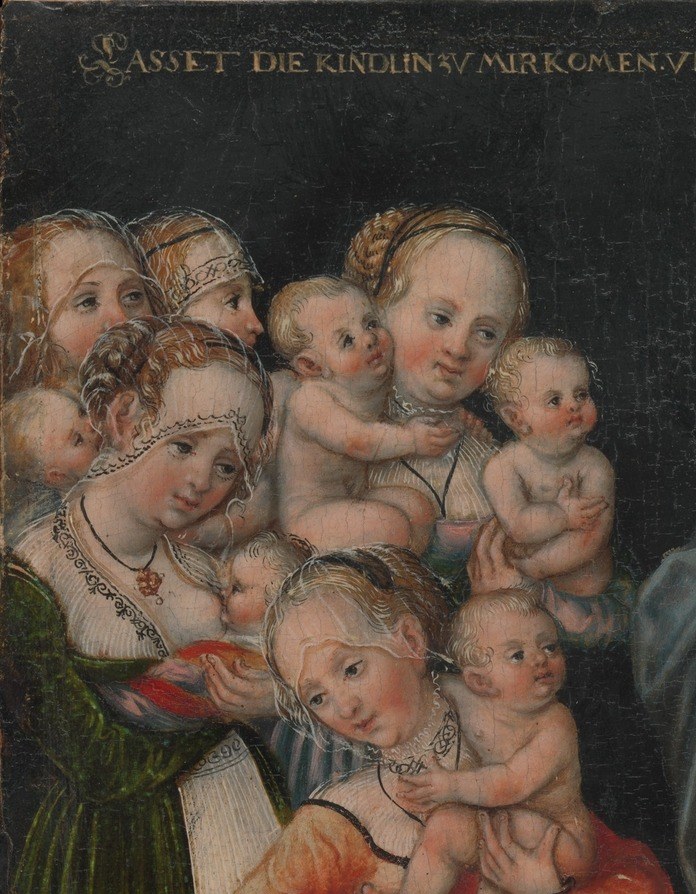
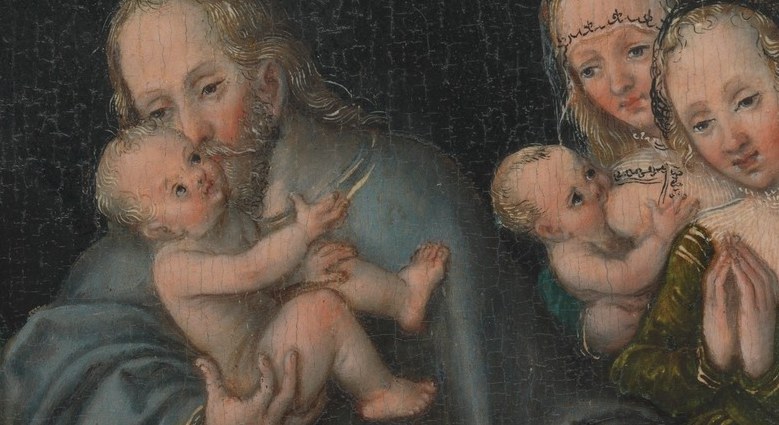
Stand close and let your eye follow the hands. Parents on both sides lift their infants toward Christ, who blesses them without distinction. The elderly man on the right, the woman in red on the left, the mother pressing in from behind, none is privileged over another. Christ’s face tilts downward with an expression Cranach has painted as pure reception. The crowded, frieze-like composition and the flat green background refuse any illusion of depth, keeping your attention on the human encounter at the center.
The context is the young Lutheran church. Catholic teaching had long placed ordained clergy between ordinary people and divine grace. Luther read the Gospels differently and found there a Christ who welcomed children directly, over the objections of the disciples themselves. Cranach the Younger, inheriting a family workshop that had already produced the great Lutheran altarpieces, paints exactly that moment. The disciples are present on the right but peripheral, the real action belongs to the parents and the children.
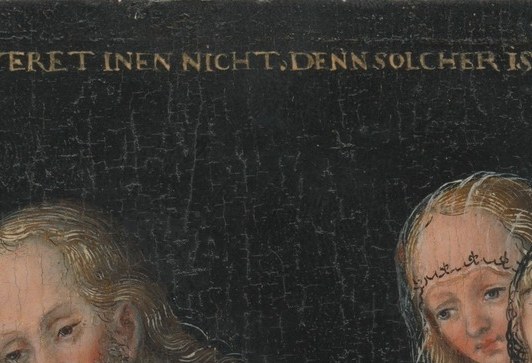
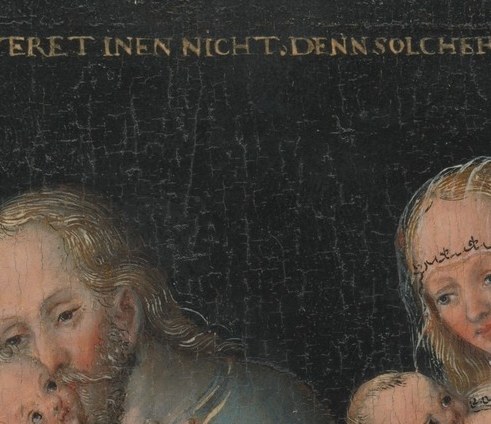
The Latin inscription across the top cites Mark 10:14, the verse that anchored Luther’s argument for a priesthood of all believers. The painting is a devotional object, but it is also a 16th-century billboard for a Reformation that had, by 1547, remade most of northern Europe’s religious landscape. Cranach’s workshop produced this scene in multiple versions because demand was steady. A painting like this did more than decorate a home, it declared which side of history its owner stood on.
Details

Transcript
Germany, 1547. Martin Luther’s Bible is 25 years old. The Protestant Reformation has rewritten who can approach God. No pope, no priest, no payment stands between these families and Christ. Look at the hands. Christ blesses every child who is brought to him. His gaze is not judgment. It is welcome. The inscription above quotes the Gospel: suffer the children to come.