Portrait of a Man by Hyacinthe, Rigaud
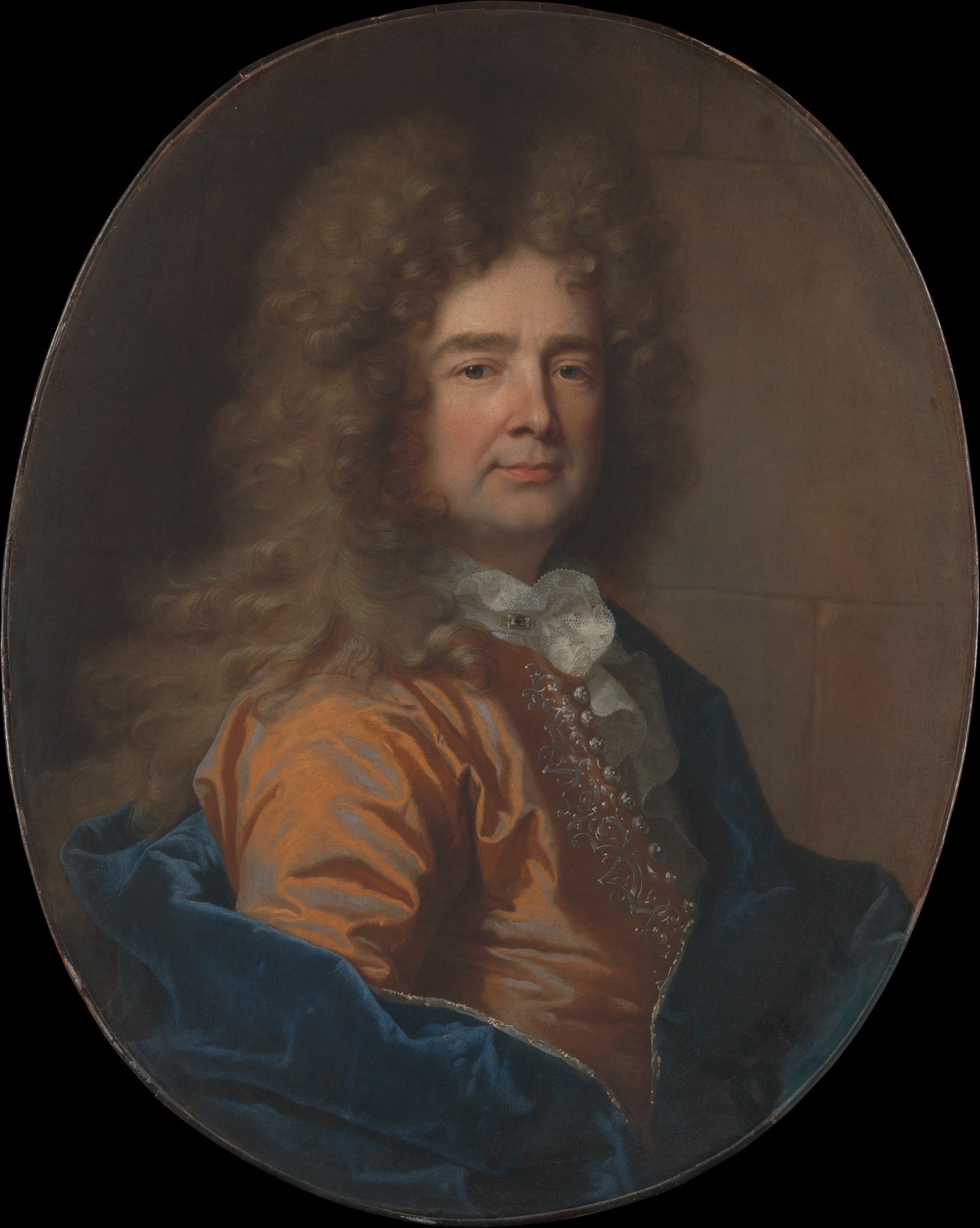
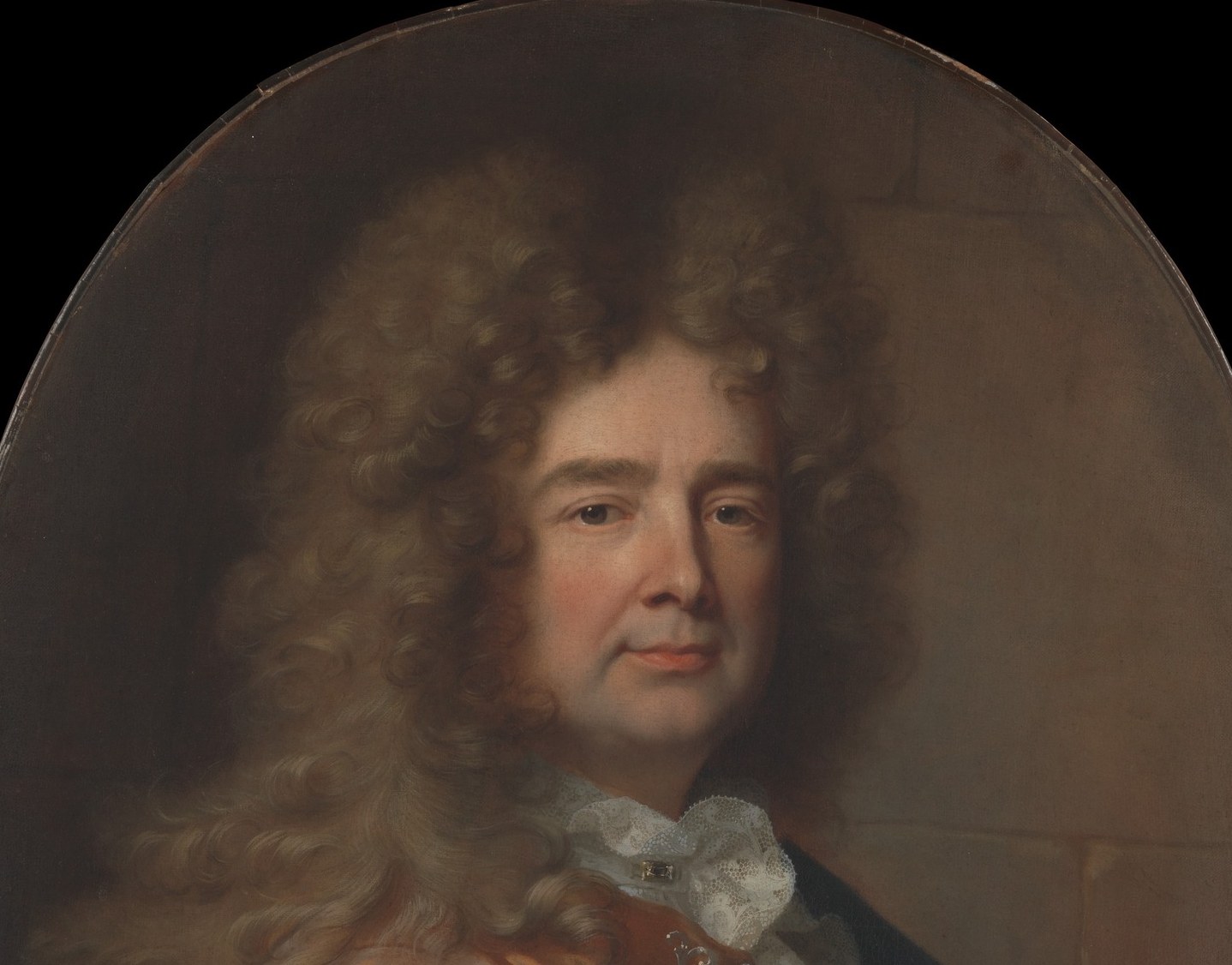
This is Hyacinthe Rigaud's Portrait of a Man, painted in 1697 and held at the Metropolitan Museum of Art. We don't know who he is. His name and his title were lost somewhere in the last three centuries, which is a strange fate for a man who paid for a Rigaud portrait.
Rigaud was the preeminent portraitist of Louis XIV's France. His sitters were dukes, cardinals, and the Sun King himself. The visual language here is deliberate: the chestnut periwig nearly doubles the width of the head, the blue cape implies military or ceremonial rank, and the orange silk jacket is a calculated burst of warmth against the dark ground. Every element is an argument for importance.
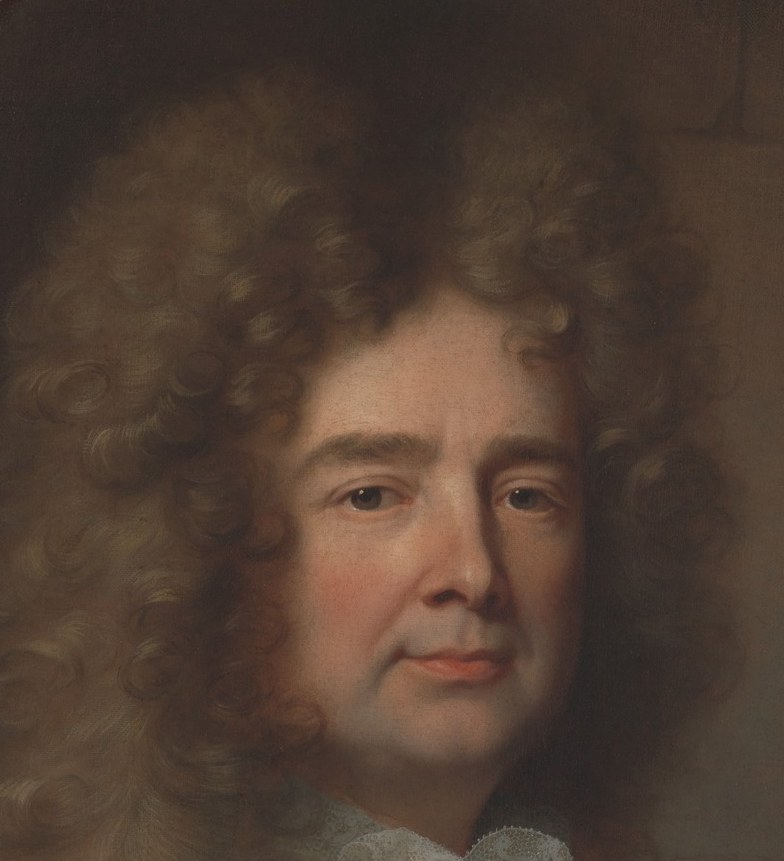
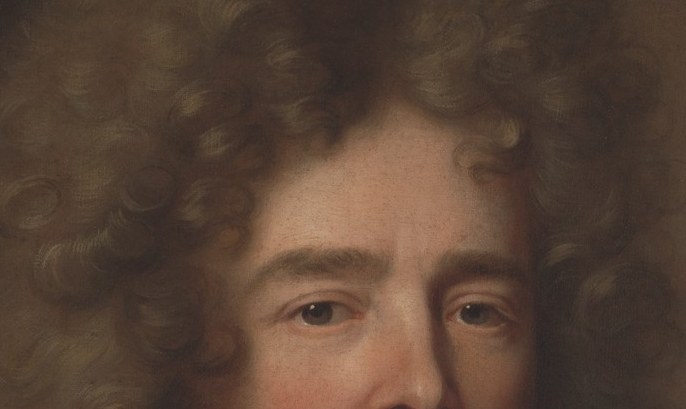
Pause on the face. The eyes don't meet the viewer head-on, they slide slightly off-axis, which Rigaud used to convey a kind of distracted authority. The mouth is set in the sealed, controlled line that court protocol demanded. And yet the face is specific: the slight asymmetry, the modeling shadow under the cheekbone. Rigaud's job was to record a particular man, not a type. He did it so well that the loss of the sitter's name feels like an injustice.
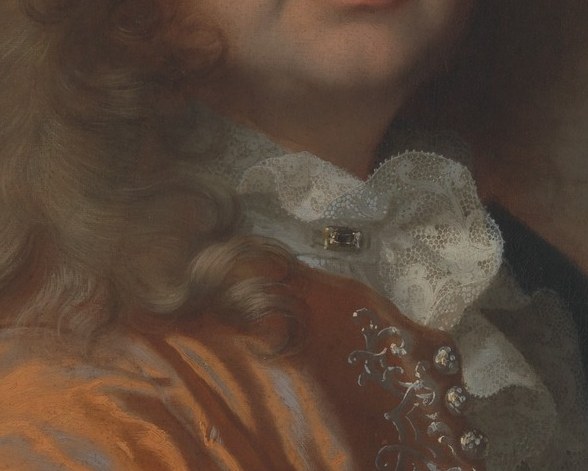
Rigaud ran a large studio and is known to have used assistants for drapery and hair in his larger commissions. In this relatively intimate bust-format portrait, the brushwork on the lace and the silk sleeve is worth examining closely. Some of it may be his own hand. We can't ask the sitter who he was anymore, but we can still stand in front of him and look.
Details
Transcript
The Met owns this portrait. They know almost nothing about him. His name, his title, his story, all lost. But Rigaud painted every man as if he mattered to the king. Look at the lace. A single mistake there was unthinkable. He held still while a man he never met decided how he'd be remembered. Three hundred years later, we're still looking.