Study from Nature by William Stanley Haseltine
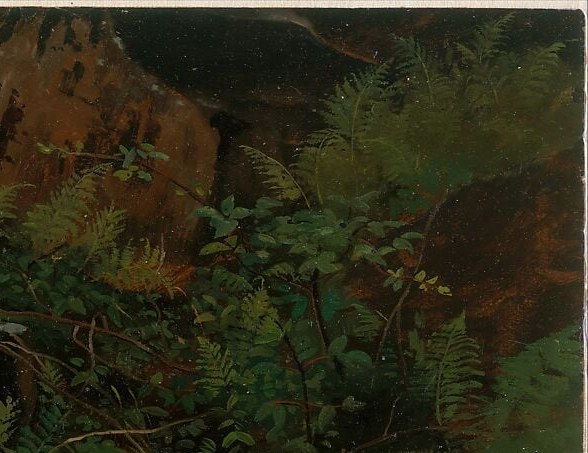
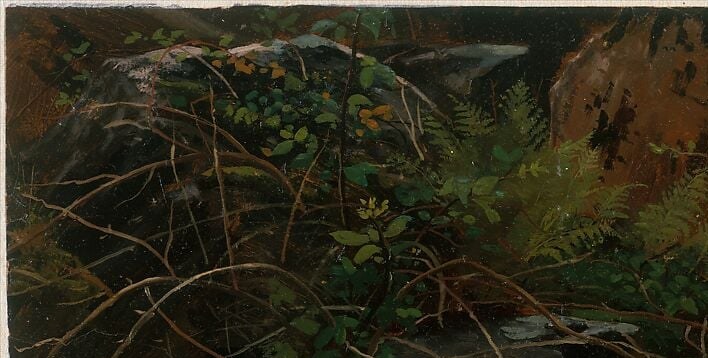
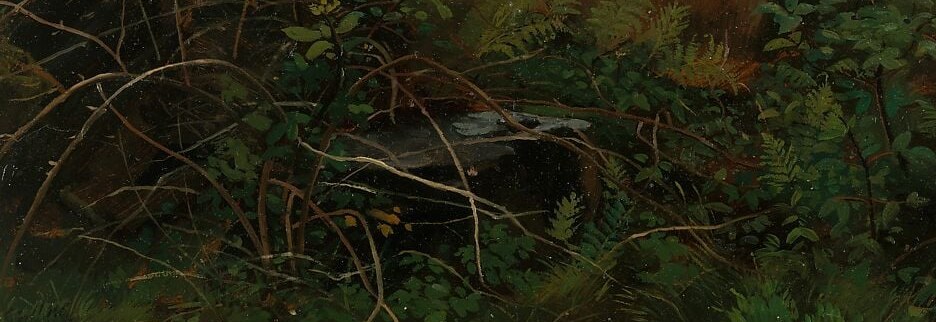
William Stanley Haseltine painted Study from Nature in 1867, working outdoors on a sheet of paper. It is not a finished exhibition piece but a direct, rapid encounter, the kind of oil sketch the Hudson River School painter used to train his eye and hand. The work is held at the National Gallery of Art in Washington, D.C.
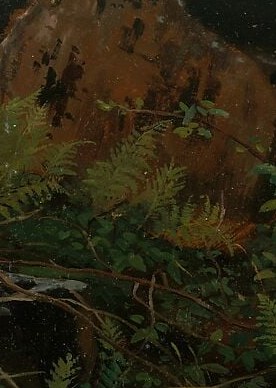
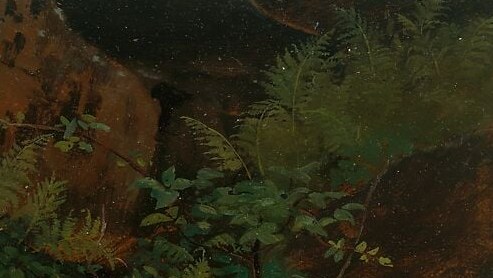
Look at the boundary where dark green foliage cuts against sunlit amber rock. Haseltine laid down the cool shadow passage first, then loaded his brush with warm ochre and dragged it right up to that edge, wet paint over wet paint. The short, stippled strokes on the cliff face are not blended smooth; they sit as distinct ridges that catch light the way rough stone does. You are watching someone translate geology into gesture at high speed.
Haseltine learned this discipline in Düsseldorf and Rome, but he was born in Philadelphia and became an Academician of the National Academy of Design in 1861. He was known for his meticulous, almost geological paintings of New England coastlines. A study like this shows the other half of his craft: the plein-air scramble to fix a transient lighting effect before it vanished. Sunlight on a cliff face changes in minutes. So does the paint in this study.
Next time you stand before a vast, polished landscape in a museum, remember the hundreds of studies like this one, painted in woods and on windy coasts, that made the big pictures possible.
Details
Transcript
He set his easel in deep shade. And aimed it at one thing. That amber glow is painted over dark green. Wet into wet. He had minutes. Oil on paper, 1867. America before the studios.