The Birth, Naming, and Circumcision of Saint John the Baptist by Baronzio, Giovanni
View the artwork: The Birth, Naming, and Circumcision of Saint John the Baptist →
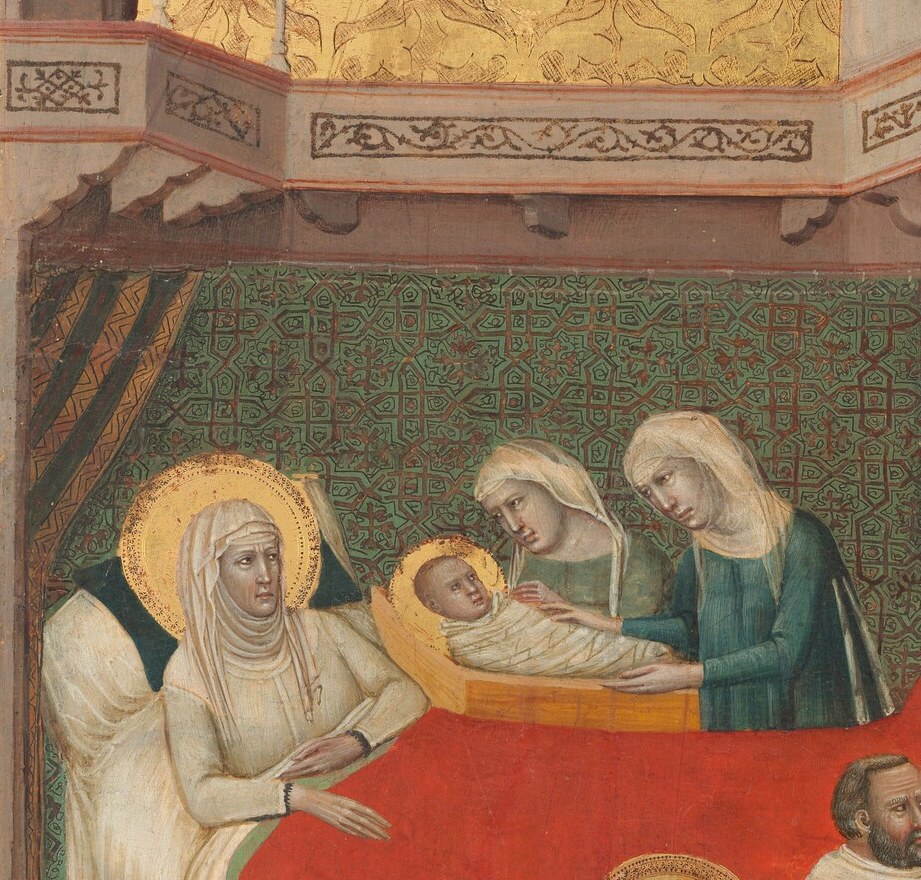
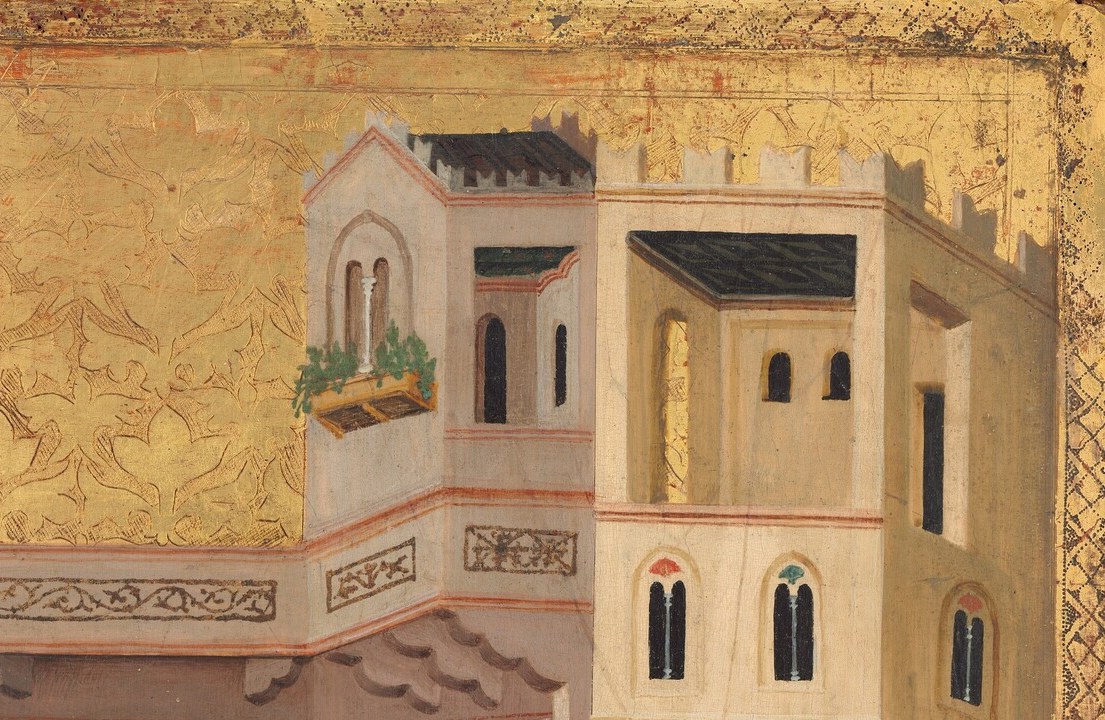
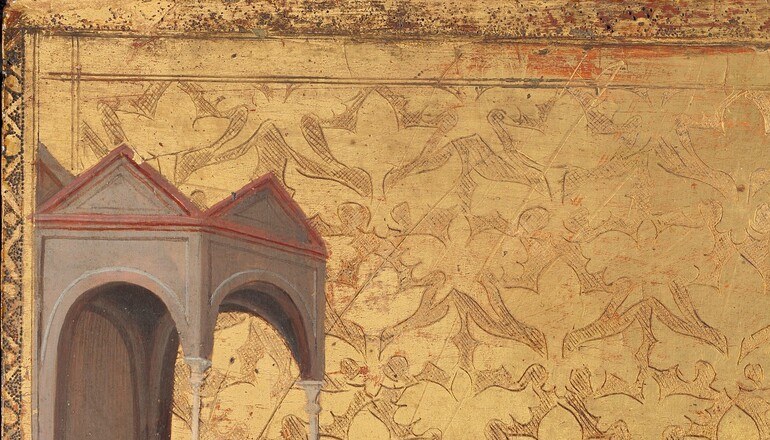
This is 'The Birth, Naming, and Circumcision of Saint John the Baptist' by Giovanni Baronzio, painted around 1335. It compresses three sequential Gospel events into a single unified room, and it is packed with coded objects that would have been instantly legible to a 14th-century viewer.
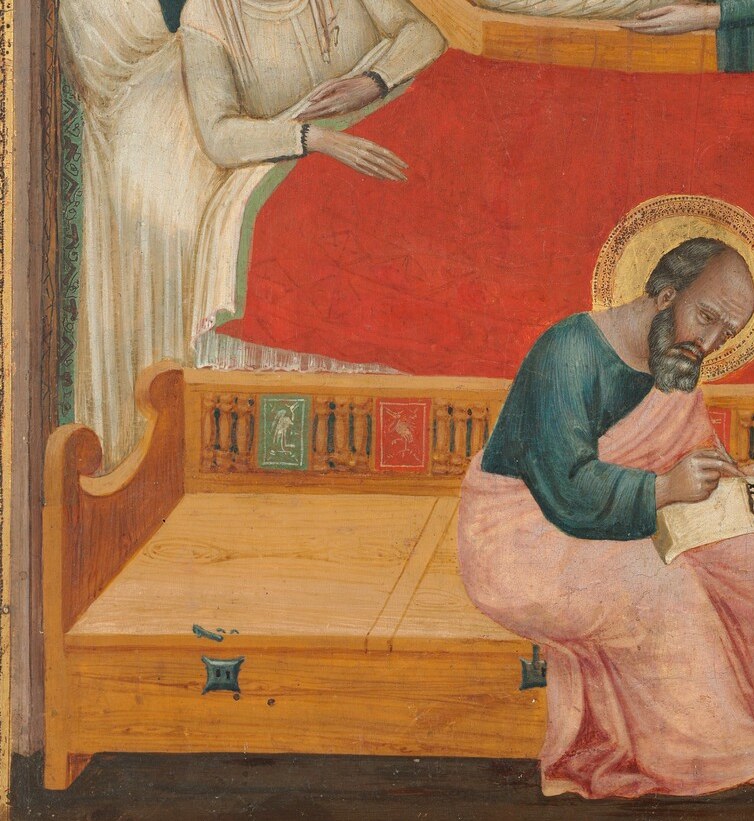
Scan the painting for the halos. Only Elizabeth and Zacharias wear them. The other figures, the attendants and the priests, are bare-headed: holy story and ordinary life side by side. Then find the tablet at the center. Zacharias has been mute since an angel first announced the pregnancy; his voice returns only when he confirms the child's miraculous name by writing it. The artist renders the Latin clearly: NOMEN EST IOHANNES (His name is John). That inscription is the literal hinge of the story.
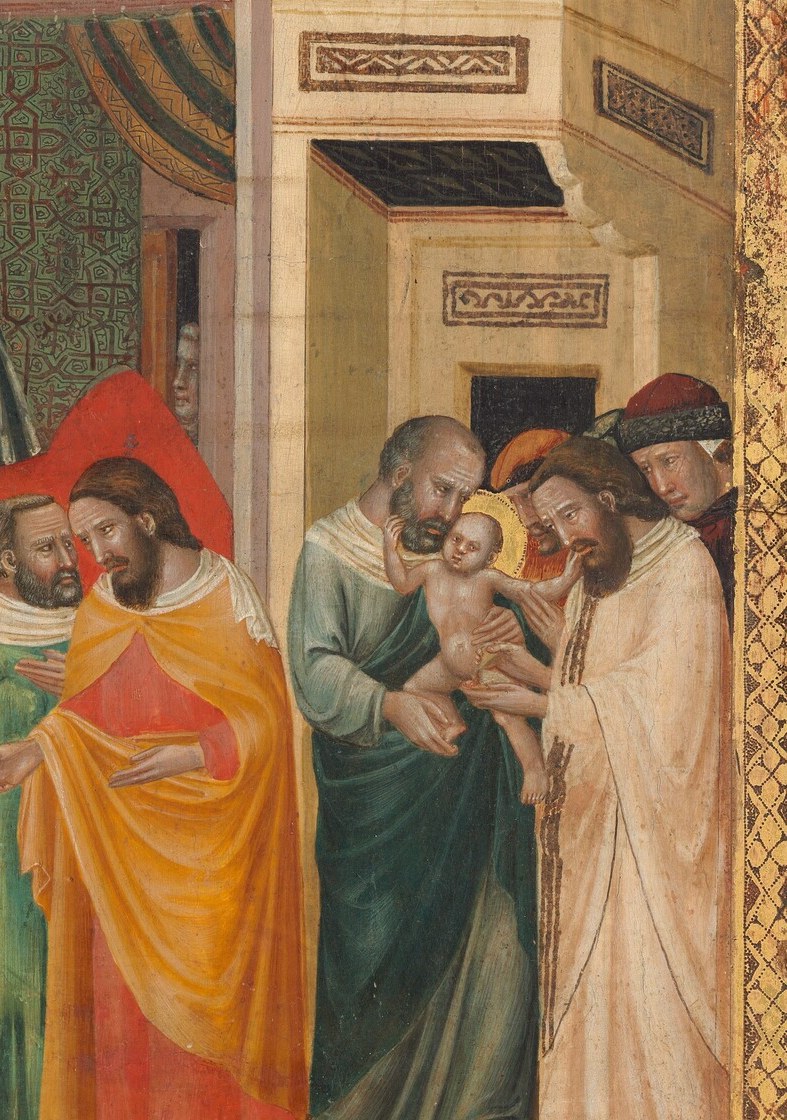
The circumcision knife drawn at the right is the final coded element. In medieval theology, the first shedding of John's blood prefigures the sacrifice of Christ. Baronzio makes sure you see the blade. The painting was once part of a large altarpiece dedicated to John the Baptist, now dispersed. The National Gallery of Art acquired this panel in 1952, and art historians have since reunited its scattered companions through shared gold-tooling patterns.
Next time you see a swaddled infant in a Renaissance painting, look for what the cloth hides and what it promises.
#arthistory #trecento #nationalgalleryofart
Details
Transcript
A birth, a naming, a ritual cut. Three moments in one room. First, look for the halos. Only two people wear them. The mother, Elizabeth, recovering from the birth. And the father, Zacharias, who has been mute for nine months. Now his silence breaks. He writes the child's name on a tablet. His name is John, written in Latin, legible in the paint. To the right: the knife is already drawn. The infant will bleed. The coded objects all tell one story: a holy child, marked from birth for sacrifice.