Artwork
The Birth, Naming, and Circumcision of Saint John the Baptist
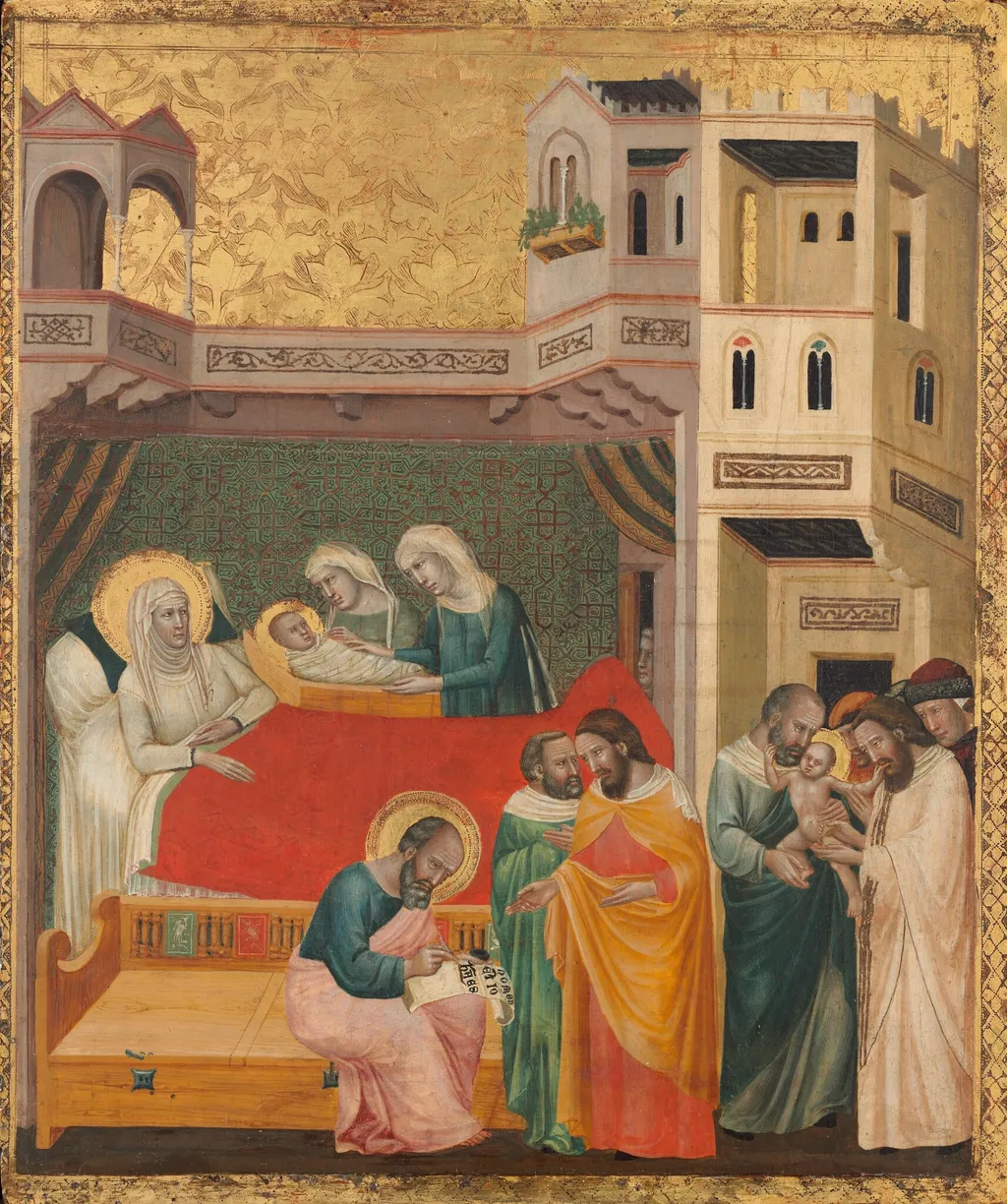
The Birth, Naming, and Circumcision of Saint John the Baptist is a tempera painting by the Byzantine icon painting artist Giovanni Baronzio. It dates from 1335 and is held in the collection of the Samuel H. Kress Collection.
- Inscription
- Inscribed:on the sheet on which Zacharias is writing: NOMEN / E[S]T IO / HA[NN]ES (The name is John)
About this work
In a single panel from a dismantled Riminese altarpiece, Zacharias writes 'NOMEN EST IOHANNES' on a scroll while the infant John the Baptist is swaddled, named, and circumcised under gilt loggias. Giovanni Baronzio, active in Rimini around 1320–1350, packed three Gospel episodes into this tempera scene destined for a church in Emilia-Romagna or the Marche. The panel bears a brocade pattern incised into its gold ground, a technical fingerprint linking it to seven other dispersed scenes and a central Madonna now in the Samuel H. Kress Collection at the National Gallery of Art.
Subject & Meaning
The subject was likely chosen to reinforce the devotion of the intended church, which was probably dedicated to Saint John the Baptist.
The painting illustrates three sequential events from the Gospel of Luke (chapter 1): the birth of Saint John the Baptist, his circumcision on the eighth day, and his naming, during which his father Zechariah confirmed the divinely ordained name 'John' after being struck mute. The iconography typically includes the infant John, his mother Elizabeth, and Zechariah. By combining these episodes into a single altarpiece panel, the work emphasizes John's providential role as the forerunner of Christ, his sanctity from birth, and the fulfillment of Old Testament prophecy.
The subject was likely chosen to reinforce the devotion of the intended church, which was probably dedicated to Saint John the Baptist.
Technique & Style
Giovanni Baronzio executed this work in tempera on a wooden panel, a medium and support characteristic of Italian trecento altarpieces. The paint was applied in thin, translucent layers typical of egg-tempera technique, allowing for precise linear details and luminous color. The panel support likely provided a smooth, rigid ground for the gesso preparation.
The surviving fragments from the original dismantled altarpiece suggest that the work originally formed part of a larger polyptych, consistent with contemporary practices in the region.
History & Provenance
The painting was likely commissioned as a component of a high altarpiece for a church dedicated to Saint John the Baptist in Emilia Romagna or the Marche. By 1880 it belonged to London architect George Edmund Street, who exhibited it alongside two other panels from the same dismantled altarpiece at the Royal Academy. After Street's death, it passed to his son Arthur Edmund Street in Bath, and by 1917 it was owned by Harold Irving Pratt of New York.
The work then passed through Wildenstein & Co. before being sold to the Samuel H. Kress Foundation in 1947; it was gifted to the National Gallery of Art in 1952. The painting is dated to circa 1402.
The painting is held in the National Gallery of Art, Washington, D.C., as part of the Samuel H. Kress Collection (gifted in 1952). It was previously in the collections of George Edmund Street, his son Arthur Edmund Street, Harold Irving Pratt, and Wildenstein & Co. before entering the Kress Foundation. Exhibition history includes display at the Royal Academy in 1880 (nos. 231 and 234) alongside two companion panels, and again at an exhibition in Bristol in 1937.
Context
The painting has been examined in art-historical scholarship, notably in Richard Offner's _Corpus of Florentine Painting_ (1947, updated 2001), which discusses it alongside two missing companion panels from the same dismantled altarpiece, possibly destroyed during World War II; Federico Zeri also contributed research to the entry. Attributed to Giovanni Baronzio and dated circa 1402, the work is valued as a surviving fragment of a larger altarpiece, and its inclusion in the Samuel H. Kress Collection and subsequent gift to the National Gallery of Art highlight its institutional importance.
Overview
Giovanni Baronzio's tempera on panel painting, created around 1335, depicts three distinct moments from the early life of Saint John the Baptist within a single, unified interior space. This work was originally part of a larger altarpiece, now dispersed, that once adorned a church in the Emilia-Romagna or Marche regions of Italy. The artist, active in Rimini, employed a detailed narrative approach, characteristic of the period, to convey the sacred events.
Own this work as a print
Artist & collection
Artist
Giovanni Baronzio, also known as Giovanni da Rimini, (died before 1362), was an Italian painter who was active in Romagna and the Marche region during the second quarter of the 14th century.
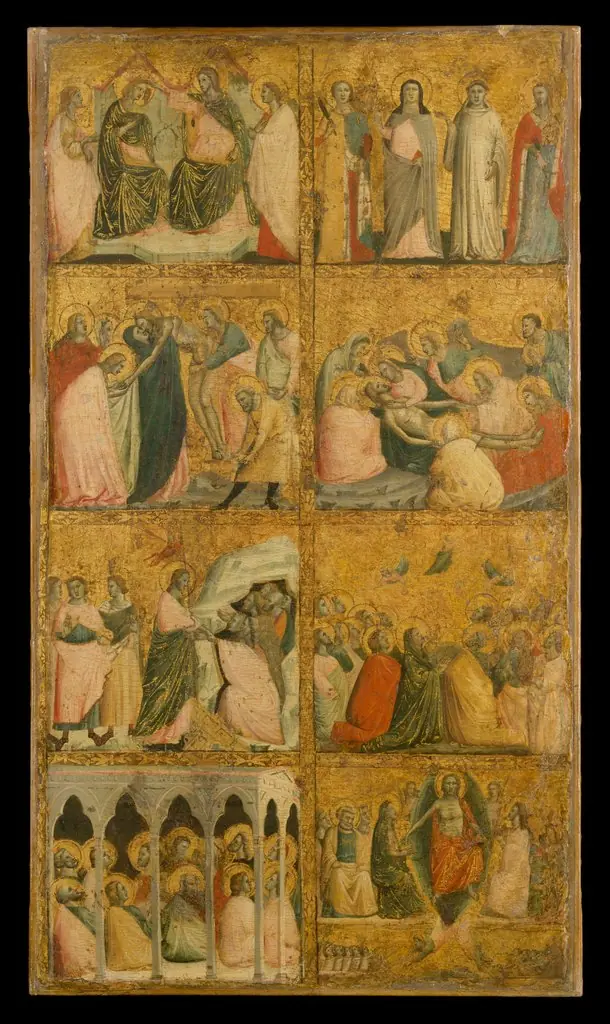
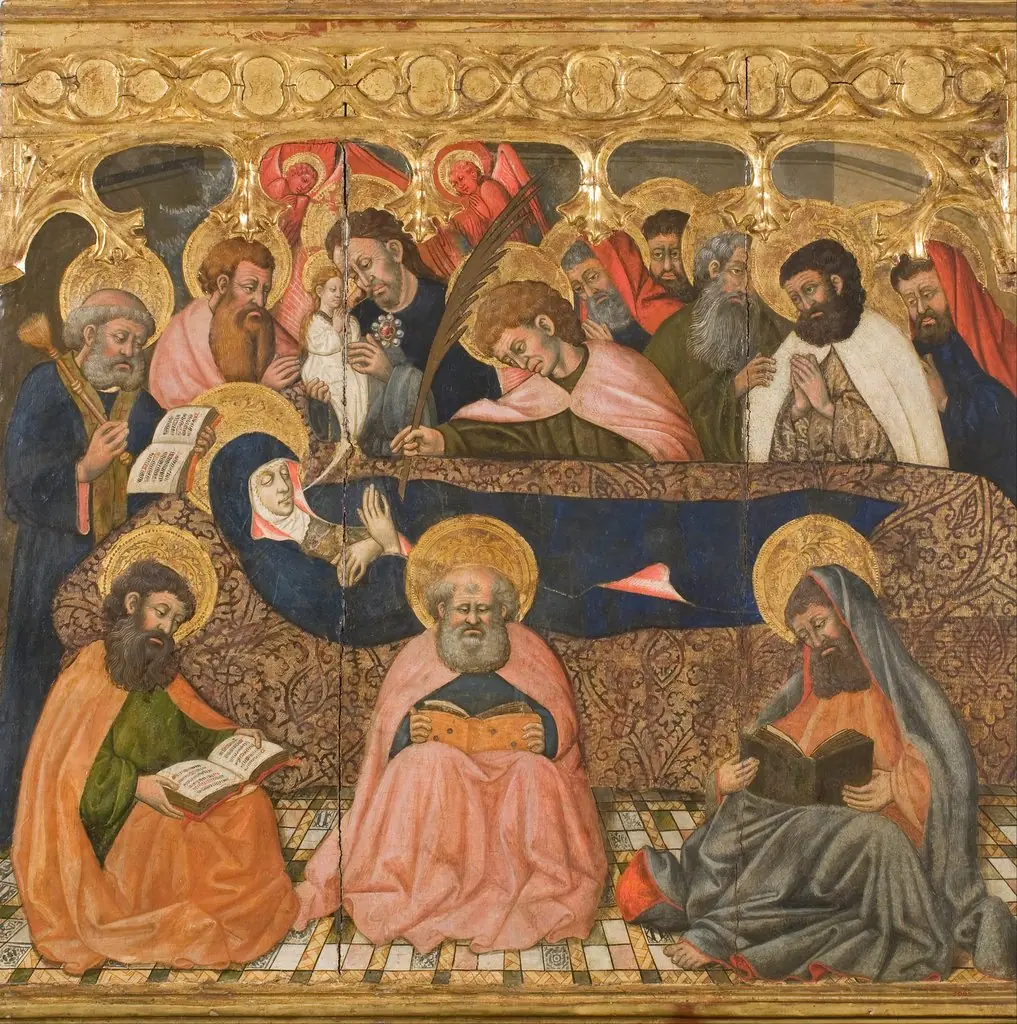 Dormition of the Virgin
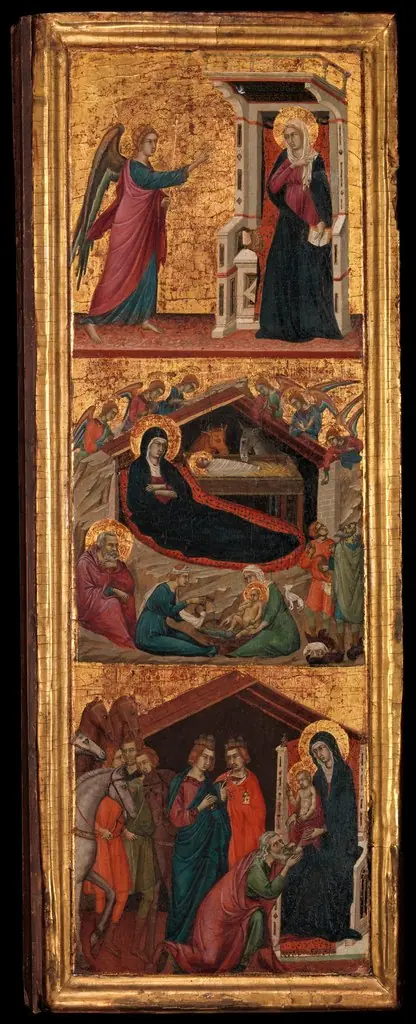 Saints and Scenes from the Life of the Virgin
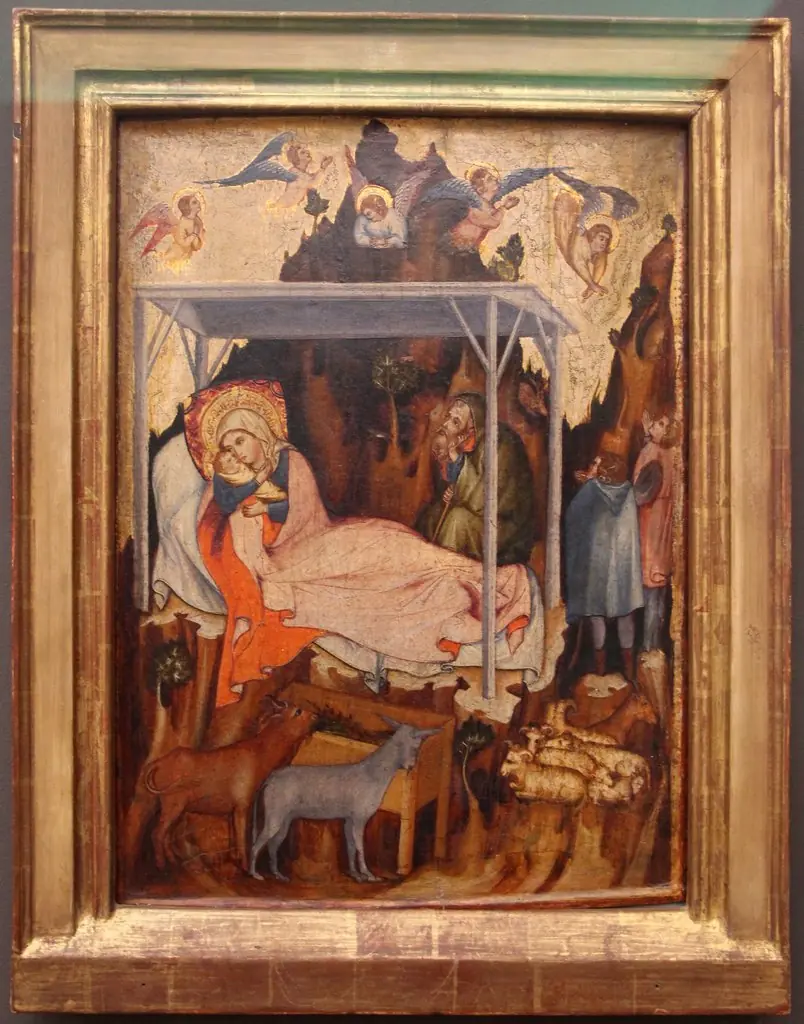 The birth of Christ
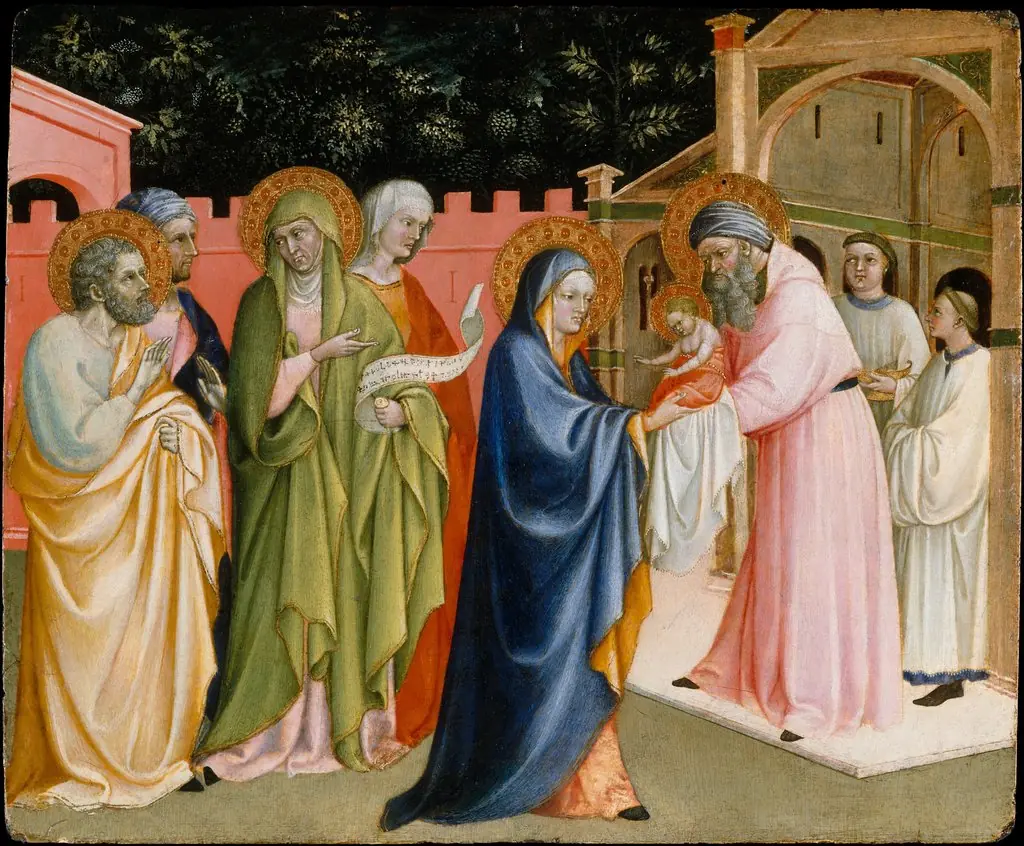 The Presentation in the Temple
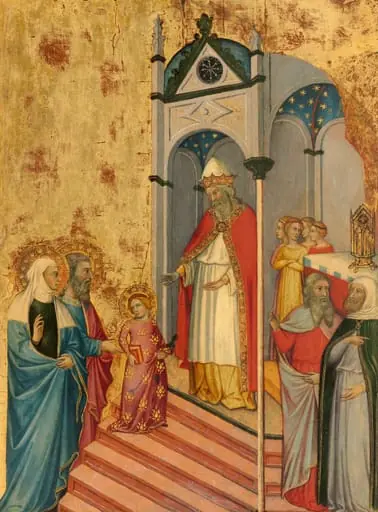 The Presentation of the Virgin in the Temple
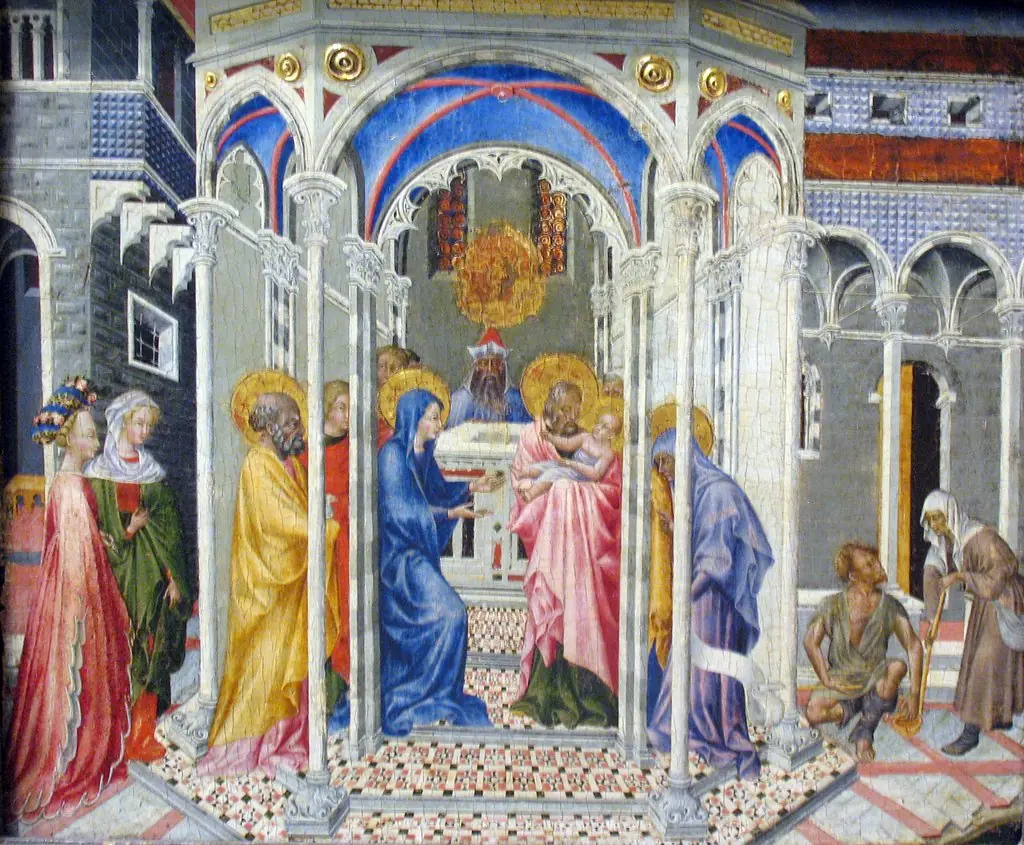 The Presentation of Christ in the Temple
 The Adoration of the Magi
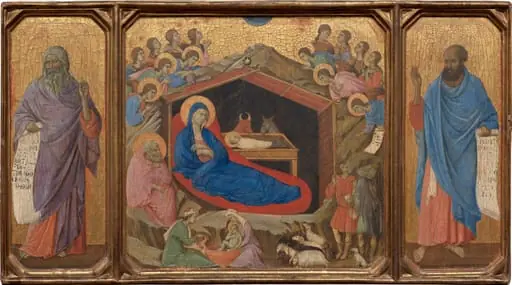 The Nativity with the Prophets Isaiah and Ezekiel
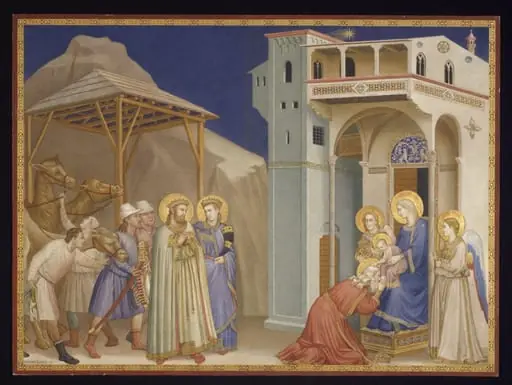 Copy after the painting Adoration of the Magi by Taddeo Gaddi in Lower Church, San Francesco, Assisi
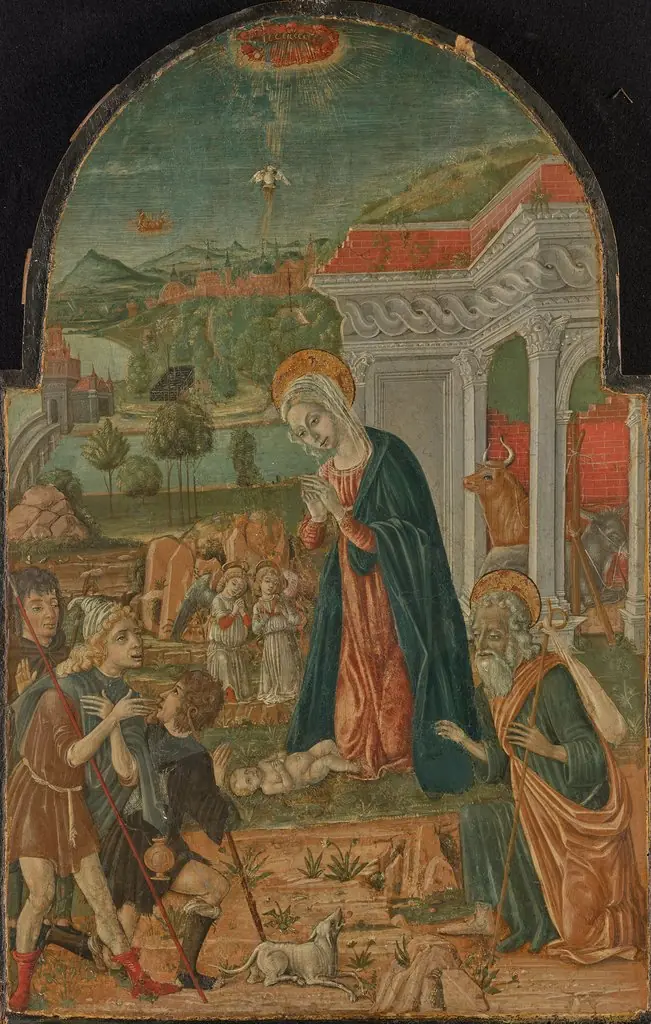 The adoration of the Shepherds