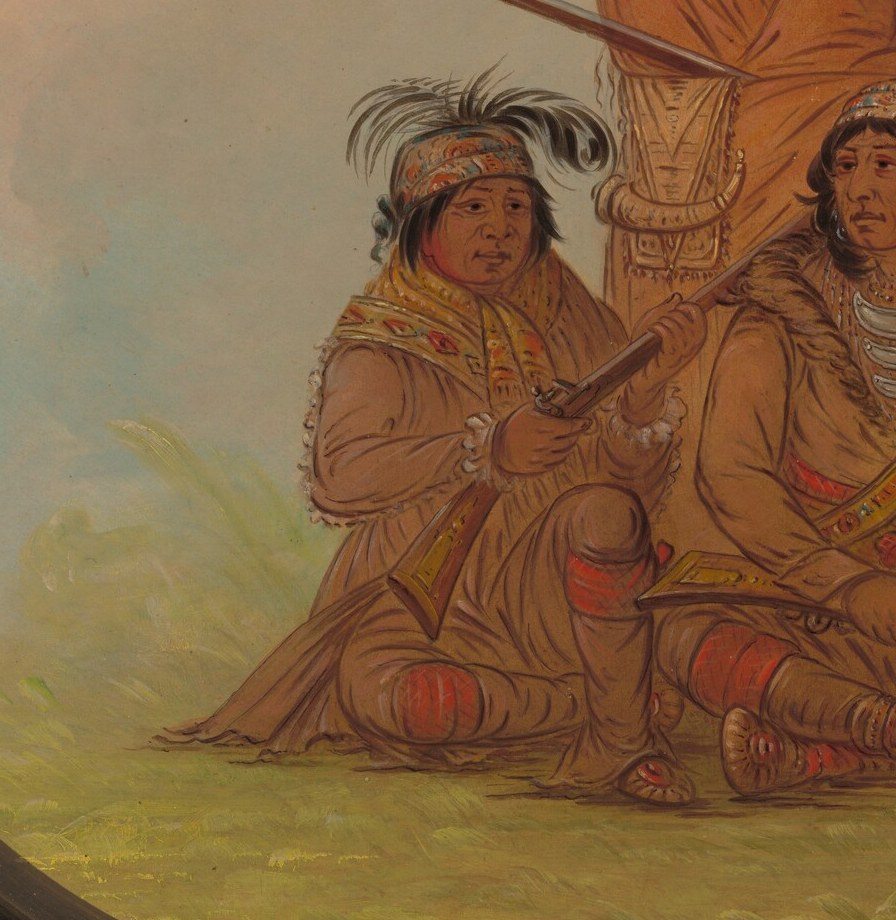
Seminolee Indians, Prisoners at Fort Moultrie by Catlin, George
George Catlin, known for his dedication to documenting Native American life, painted "Seminolee Indians, Prisoners at Fort Moultrie" in 1861. This oil on card, now in a museum collection focused on American folk and historical art, captures a moment of forced displacement and military confinement, a stark contrast to his earlier portraits of thriving communities.
Observe the details: the vibrant feathered ornaments on the figures, the intricate beaded necklace of the seated woman, and the plain rifle in the seated man's hand. These elements speak to both the rich cultural identity of the Seminole people and the harsh realities of their captivity. The young boy with a bow and arrow and the child hidden behind the seated woman underscore the impact of this struggle on all ages.
Catlin, an American lawyer and painter, undertook five journeys to the American West in the 1830s to record the lives of Plains Indians. This later work, produced in the post-Civil War era, reflects his continued commitment to chronicling Native American experiences, even under tragic circumstances. Though primarily known for his Plains portraits, this painting serves as a visual document of the Seminole during Reconstruction.
The painting's quiet dignity, despite the somber subject, invites reflection on the resilience of the human spirit in the face of adversity.
Details

Transcript
This painter devoted his life to documenting Native American people. He sought to record their cultures before they disappeared. But sometimes, he painted them in tragic circumstances. These are Seminole leaders, held prisoner at Fort Moultrie. This man's rifle symbolizes the power that confined them. The child behind his mother adds a layer of vulnerability. Yet, their expressions are stoic, almost defiant.