Study for "The Destruction of Sodom" by Jean Baptiste Camille Corot
This is Jean-Baptiste-Camille Corot's Study for "The Destruction of Sodom," painted in 1843 and held at The Metropolitan Museum of Art. It is a preparatory oil sketch for a larger biblical composition Corot never completed, and its real subject may be less the story of Sodom than a single technical question: how do you paint fire against a cold sky?
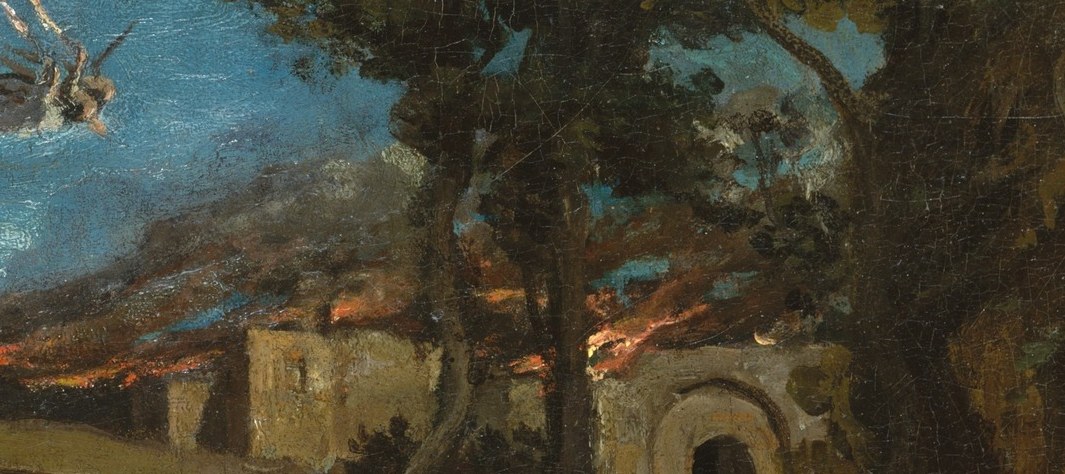
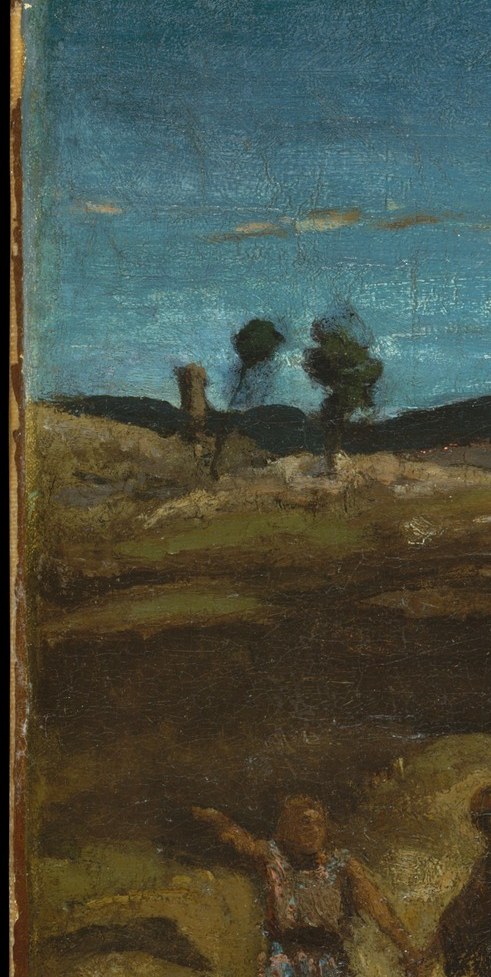
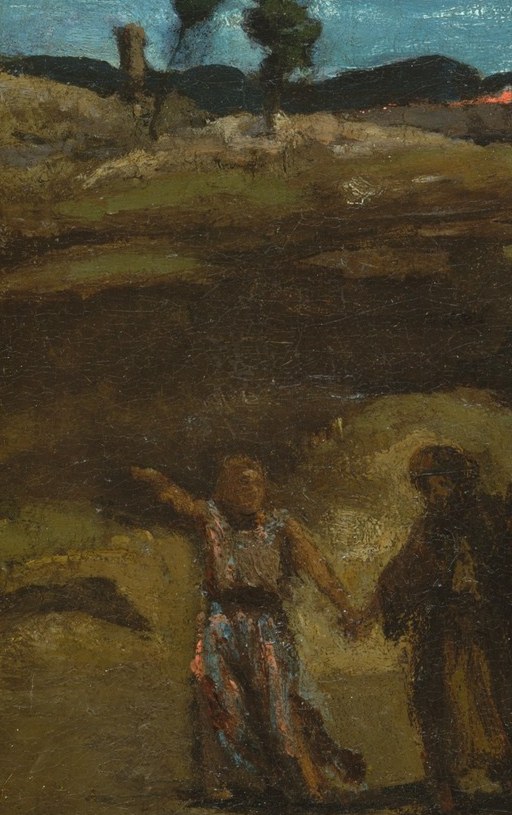
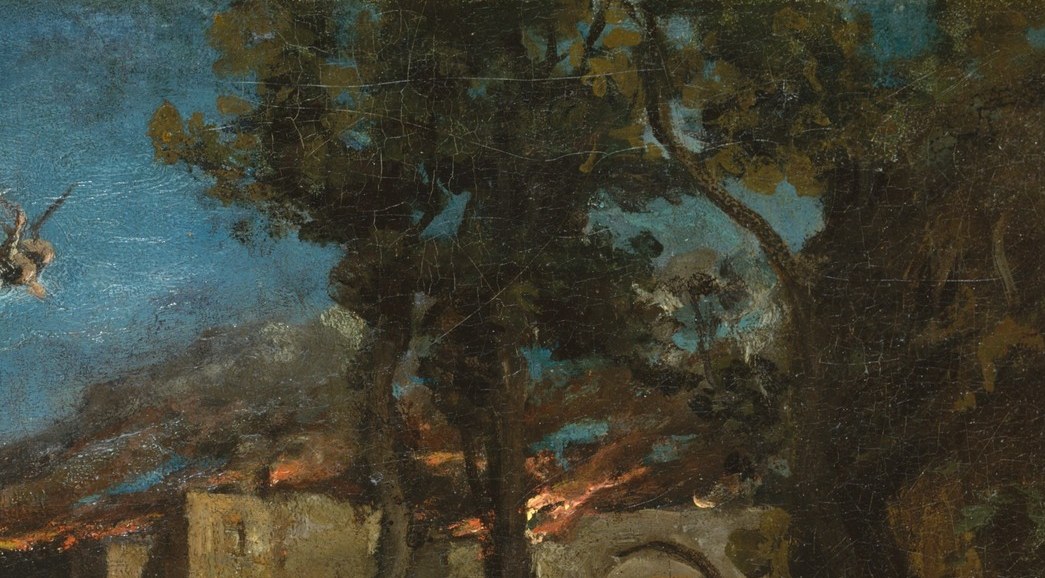
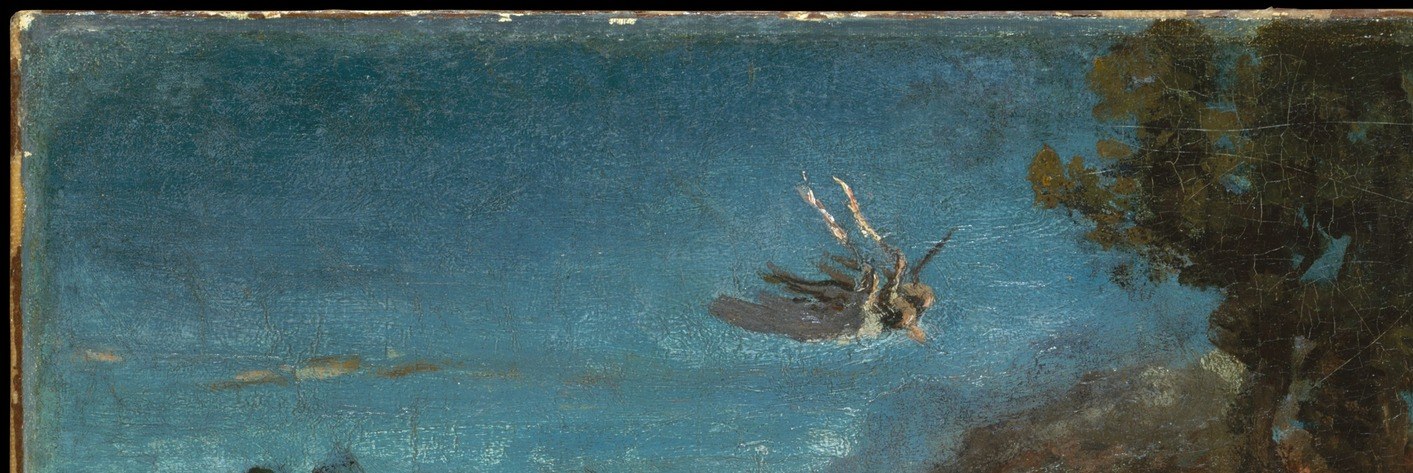
Watch the temperature split. Corot rendered the storm clouds in deep blue-green, an unearthly coolness that makes the orange horizon flare by pure contrast. The fire itself is laid in with fast, loose strokes, almost abstract flashes of paint, while the foreground figures and dark trees stay solid and withheld. This is a painter testing how little warmth he needs to make a whole canvas burn.
Corot was in his late forties when he painted this, already a master of the French landscape tradition and beginning to bridge the Neo-Classical structured view with the direct observation that would open the door to Impressionism. A biblical subject like Sodom was a chance to push Romantic emotion into a landscape without losing compositional control. The dark tree mass on the left is a device he used for decades, a coulisse, a wing of shadow that forces the eye toward light.
The study sat quietly in collections until it entered the Met. It has never been among Corot's famous pictures, but it shows his mind working in real time: how to make catastrophe feel luminous, not just dark. Where does your eye land first, the fire, or the strange cold sky above it?
Details
Transcript
A city is burning. But look at the sky. Corot cools the whole apocalypse with a blue-green storm. Against that cold, the fire becomes a single heat source. He laid the horizon glow down fast, in loose flashes. The dark tree on the left presses your eye into the flame. Corot used this dark wing shape in landscape after landscape. The foreground figures are nearly silhouette. Cold, solid, spare. He painted this in 1843. A study for a canvas he never finished.