Figures on the Beach by Boudin, Eugène
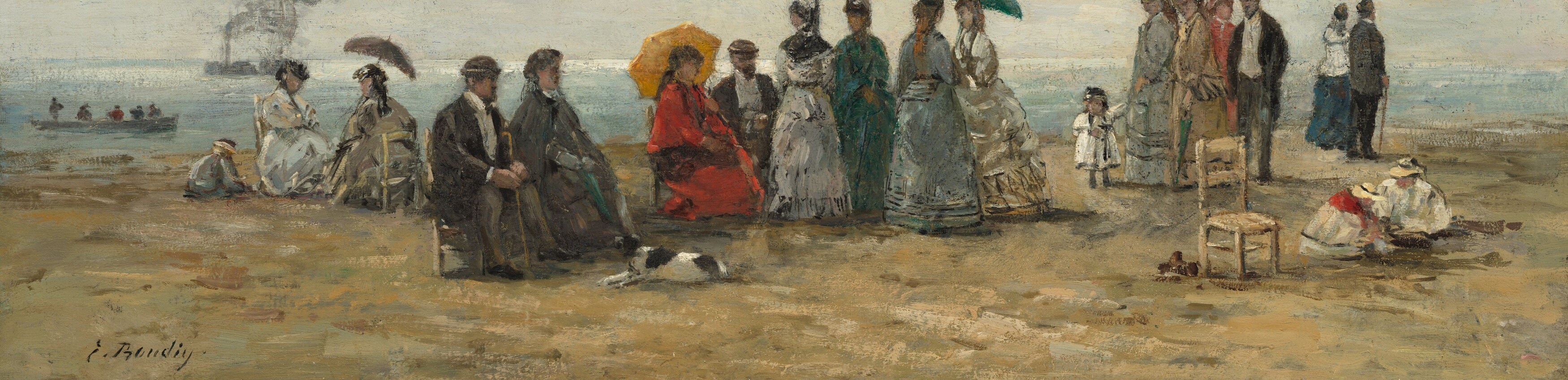
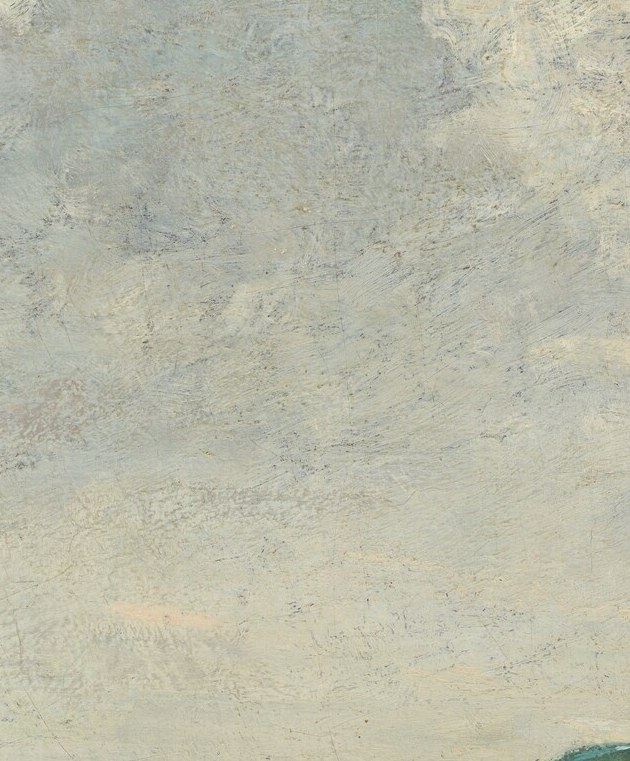
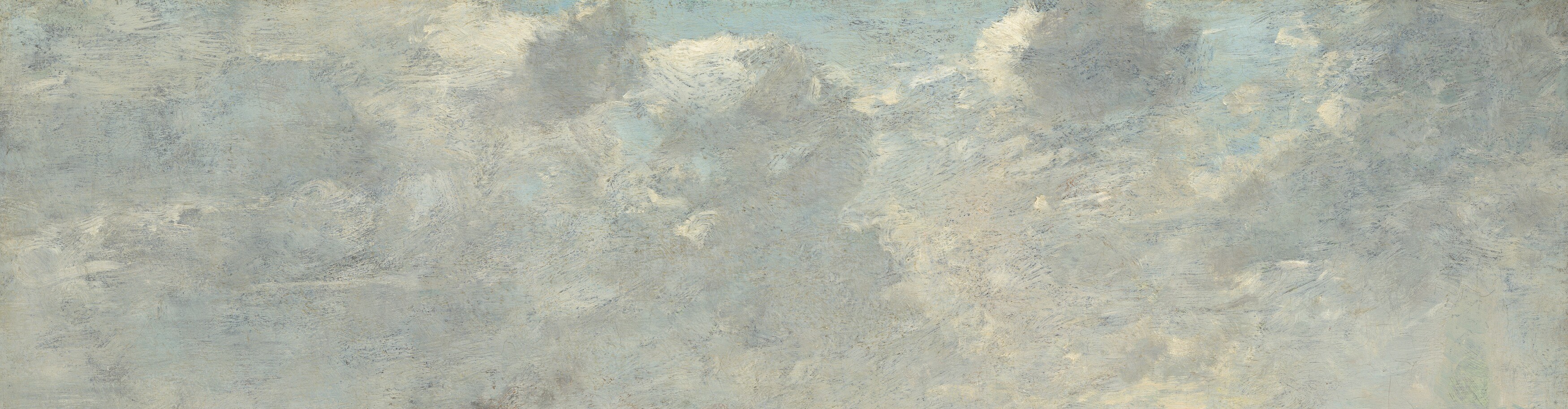
Eugène Boudin's *Figures on the Beach*, painted around 1868, records a specific moment in French social history. It hangs today in the National Gallery of Art, a small window into the new ritual of the seaside holiday. On first look it is a gentle scene of crinolines and parasols under a wide, cloud-dappled sky. Boudin was known for those skies; Corot called him the 'King of the Skies,' and they fill more than half this canvas.
Watch for the thin strip of sea at the horizon line. It is almost an afterthought in the composition, yet a dark plume of smoke cuts across it. That plume comes from a steamship, a piece of heavy industry sliding past the vacationers. The tension is quiet but real: an age of sail and silence is being overtaken by steam, right there on the horizon.
Boudin grew up on the Normandy coast and was one of the first French painters to work habitually outdoors, directly in front of the motif. He befriended the young Claude Monet and urged him to do the same, helping plant the seed for Impressionism. His beach scenes were painted rapidly, with loose, confident strokes that captured light and movement before they changed. The figures here are not individuals; they are the emerging bourgeoisie, dressing formally even on the sand, enjoying a new kind of leisure that the railroads had just made possible.
Next time you see a lazy beach painting, check the horizon. Sometimes the future is already there, barely a puff of dark smoke against the sky.
Details

Transcript
A lazy afternoon at the beach, sometime around 1868. The sand is wet, the sky is vast, and the crinolines are starched. Your eye goes straight to the saturated orange parasol. But look past it, to the horizon line. That thin strip of sea carries a trail of heavy, dark smoke. A steamship is passing exactly through their world of parasols and quiet sand. Boudin was painting a leisure class that modern industry was about to erase.