The Death of the Fox by Morland, George
George Morland's "The Death of the Fox," painted around 1791-1794, captures the somber conclusion of a hunt. This oil on canvas, housed in a private collection, reflects the artist's focus on rural life and the often-harsh realities of the natural world.
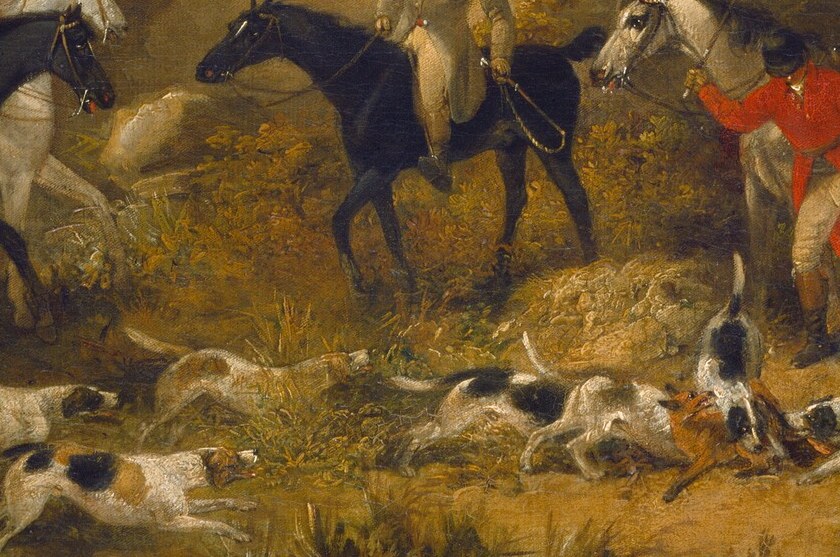
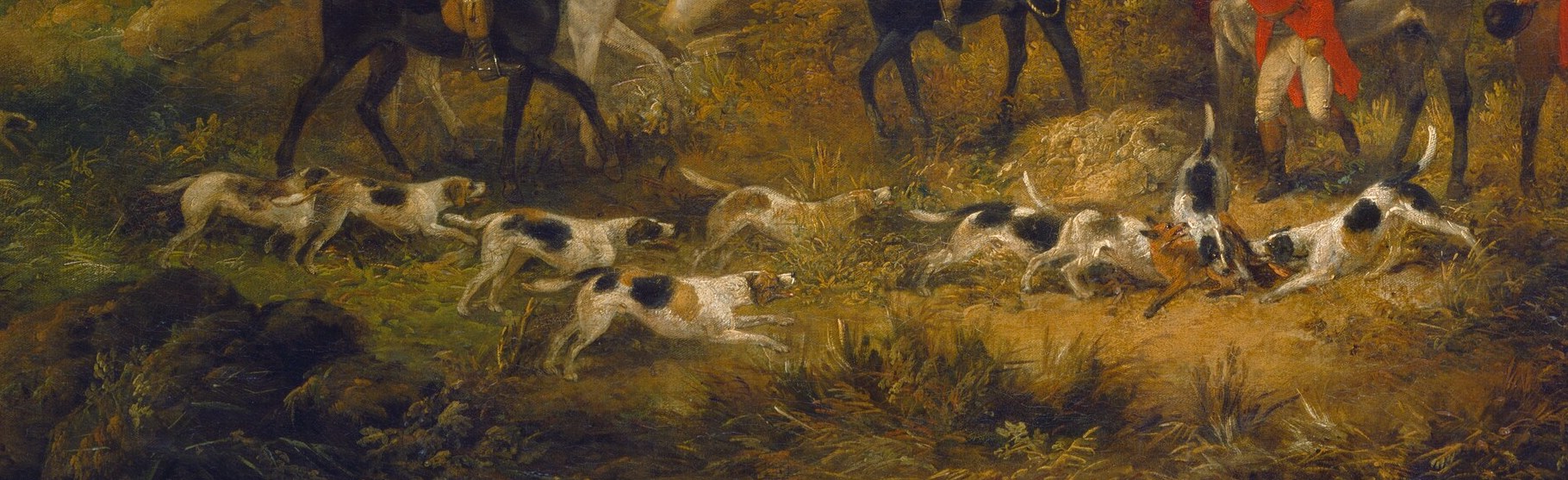
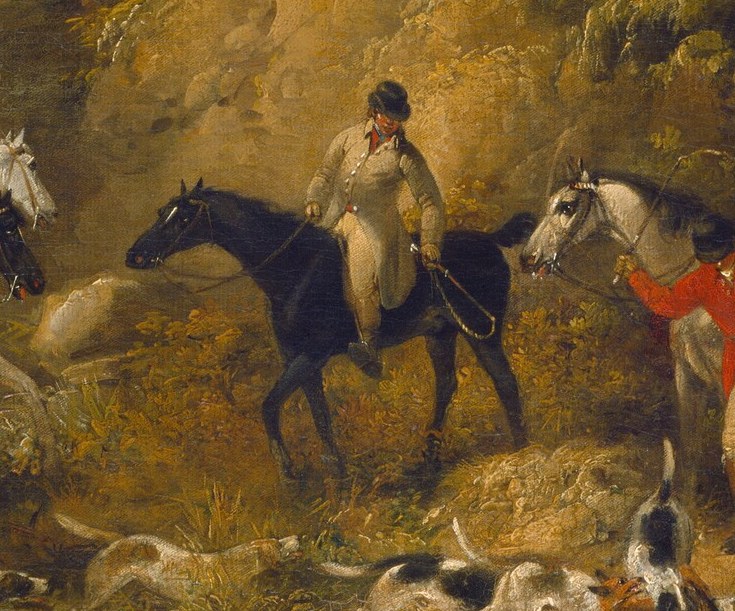
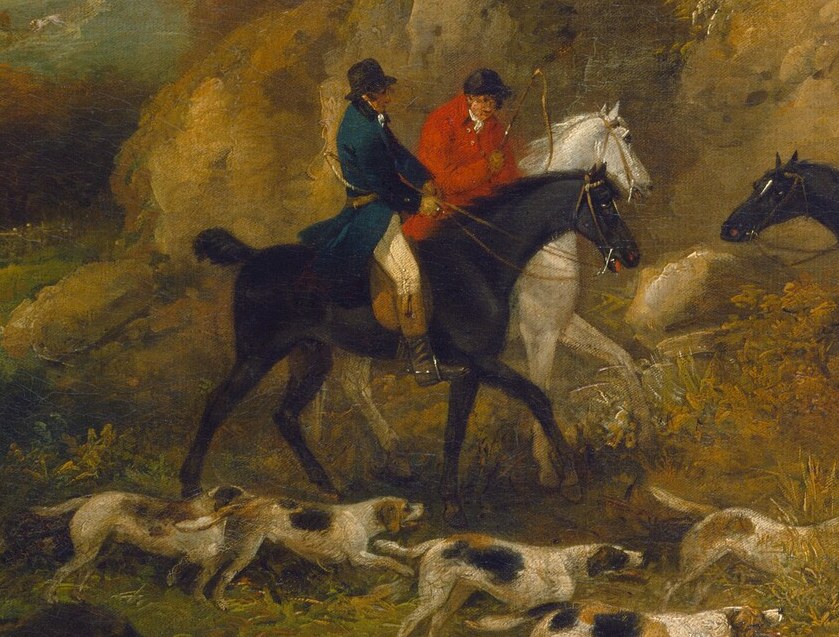
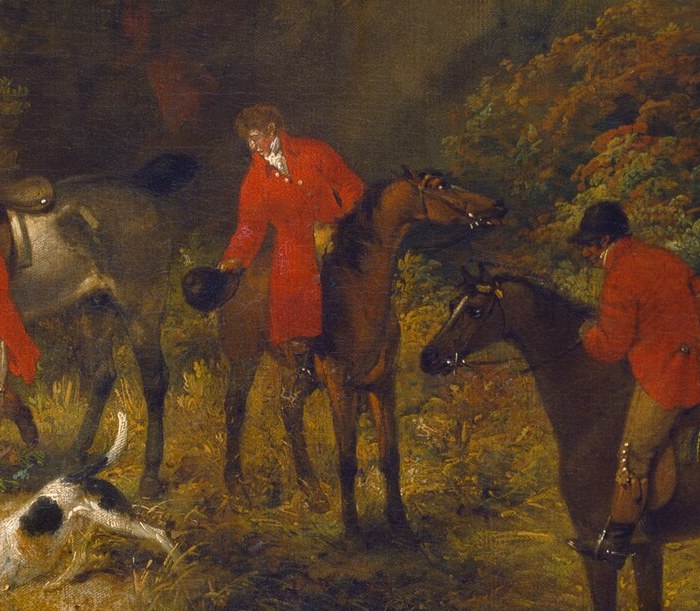
Look closely at the lifeless fox at the center, its stillness contrasting with the scattered, active hunting dogs around it. The three huntsmen on horseback survey the scene, embodying the human element in this age-old pursuit.
Morland, a prolific English painter of the late 18th century, was known for his rustic scenes and animal depictions. His work, influenced by Dutch Golden Age realism and British Romanticism, often explored the relationship between humans and nature. Despite the popularity of his prints, Morland himself saw little financial gain from his art.
The painting offers a glimpse into 18th-century British fascination with hunting imagery, serving as both a celebration of sport and a commentary on country existence. What feelings does this scene evoke for you?
Details
Transcript
This painting by George Morland shows the end of a fox hunt. The dead fox is the central, somber subject. Morland often painted animals, showing the harsh realities of nature. Hunting dogs scatter, active even after the chase. Three huntsmen on horseback survey the scene. Their presence reflects 18th-century British hunting culture.